

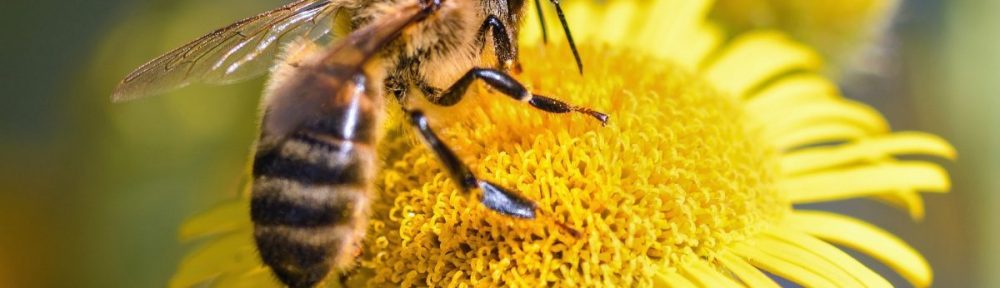
The importance of bees for the ecosystem.
Bees are real heroes for humanity. Why are they so important?
When it comes to bees, the most common thing is to think only of honey bees. That is a group of these animals that live in a hive, with a queen, drones, and workers that fly from flower to flower collecting pollen, making honey, and, from time to time, stinging someone with their nasty stinger.
However, honey bees make up only a small part of the bee population. And their companions, the wild bees, can be the most varied.
- In fact, there are more than 20,000 species of bees, more than 85% of which are solitary and do not live in hives.
- 80% of wild bee species nest in underground tunnels or other structures made of mud, plant resin, pebbles, and even snail shells. Some even live in the nests left by the beetles.
- Wild ones can be very selective in their diet. Over time and to varying degrees, they have adapted to different types of plants, and some of them feed exclusively on a specific plant.
- The smallest bee in the world, the Australian Quasihesma bee, is only 2mm. The largest, the Indonesian leaf-cutter bee, can measure up to 4 cm, the size of a walnut.
Pollination is essential.
Pollination – The transfer of pollen from male to female parts of a plant – is vital to plant reproduction, and 90% of flowering plants are assisted by some pollinating animal species. In agriculture, it is estimated that approximately one-third of the total volume of food produced benefits from animal pollination.
Many animals act as pollinators, from mammals such as bats and monkeys to hummingbirds and even some types of lizards. But insects are the main group of pollinators, with these being by far the biggest contributors.
However, not all bee species are equally important for agricultural pollination. In fact, only 2% of bee species are responsible for 80% of crop pollination. And not all foods need pollination by insects like bees. However, without their help, our diets would become much less rich and varied; fruit, in particular, is highly dependent on pollinators. In total, the value of the world’s crops that depend directly on animal pollination is estimated to be between $ 236 billion and $ 577 billion annually. And bees are an essential part of this equation.
At HICH LTD, we are staunch defenders of the environment. We know that this planet belongs to all of us, and that is why we put our grain of sand in the front line to defend our beloved planet earth from the harm we cause it. Now, at Bees Needs Week, we have partnered with Save the Bees to help protect these little pollinator friends.
For this reason, HICH LTD will donate a portion of the proceeds from our property surveys to help save bees worldwide. By requesting our property surveys, you are contributing to the cause of saving bees and making the earth a better place.
For more information on Bees Needs Week, Save the Bees, and what you can do to help, you can visit https://www.bbka.org.uk/appeal/save-the-bees.
Protecting the environment is everyone’s job!