

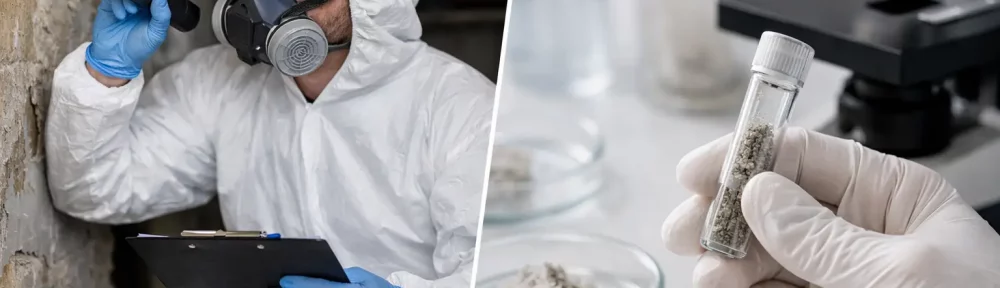
A bathroom ceiling with an Artex-style finish, old floor tiles beneath a carpet, or an ageing garage roof can all raise the same question: is asbestos present? In the asbestos survey vs asbestos test decision, the right answer depends on what you need to know, what work is planned, and how much of the property must be assessed.
An asbestos test answers a narrow question about one specific material. An asbestos survey assesses the wider property, identifying suspect asbestos-containing materials, their condition, location and the risk they present. Choosing the wrong service can leave gaps in your refurbishment plans, delay contractors or create unnecessary cost.
The key difference between an asbestos survey and asbestos test
An asbestos test usually means taking a small sample from a material suspected of containing asbestos and sending it to a specialist laboratory for analysis. The result confirms whether that individual sample contains asbestos and, if it does, the asbestos type present.
This is useful where there is one clearly defined concern. For example, a homeowner may want to identify the material in a damaged textured ceiling before arranging repairs, or a buyer may wish to clarify a specific item highlighted during a building survey.
An asbestos survey is a systematic inspection of a building or the relevant area within it. The surveyor looks for materials that could contain asbestos, records their location, assesses their condition and considers how likely they are to be disturbed. Samples may be taken as part of the survey where necessary, but sampling is only one part of the process.
The practical distinction is simple: a test tells you what one sample is. A survey helps you understand the asbestos risk across a property or before a planned project.
When an asbestos test is the sensible option
A targeted test can be a proportionate choice when the material is accessible, the area of concern is limited and no broader works are being considered. It may suit an isolated section of pipe insulation, a single ceiling coating, a vinyl floor tile or a garage roof panel where you need confirmation before deciding on the next step.
Testing can also be appropriate where a previous survey has already identified a suspect material but it was not sampled at the time. In that situation, laboratory analysis can provide the certainty needed to plan encapsulation, removal or safe maintenance.
However, a negative result from one sample should not be treated as proof that the entire room or building is asbestos-free. Similar-looking materials can vary between locations, and other concealed or overlooked materials may still be present. This is especially relevant in properties built or refurbished before 2000, when asbestos-containing materials were widely used in UK construction.
A test is therefore best for answering a specific question. It is not a substitute for a wider inspection where work could disturb several parts of a property.
When you need an asbestos survey
An asbestos survey is normally the stronger option when you are buying an older property, managing a building, planning refurbishment or preparing for demolition. It gives you a usable record of what has been found, where it is located and what action may be required.
For an occupied building where no major intrusive work is planned, a management survey is commonly used to locate asbestos-containing materials that could be disturbed during normal occupation, routine maintenance or minor repairs. It supports sensible management rather than automatic removal. Asbestos in good condition, left undisturbed and properly recorded, may often be safer to manage than to remove unnecessarily.
Where refurbishment is planned, the inspection needs to be more targeted and intrusive. A refurbishment survey focuses on the specific areas affected by the works, such as a kitchen, loft conversion, bathroom or roof space. It may require access behind finishes, within voids and beneath floor coverings because these are the areas contractors could disturb.
Demolition surveys are more extensive. They are designed to identify asbestos-containing materials throughout the structure before demolition proceeds. The property or relevant part of it usually needs to be vacant, as the survey can be destructive in nature.
Why scope matters before building work
A general inspection of accessible areas will not provide the same certainty as a refurbishment survey of a room being stripped back to its structure. If builders are removing ceilings, opening wall linings, replacing soil pipes or lifting floors, hidden materials must be considered.
Booking an asbestos test because it appears cheaper can become a false economy if your contractor later requires a full survey before starting. Equally, commissioning an extensive survey for a single undisturbed material may be more than the situation requires. The scope should match the work, not simply the age of the building.
What each service should give you
A clear asbestos test report should identify the sample location, describe the material tested and provide the laboratory result. It should make clear that the conclusion applies only to the sample provided or collected.
A professional asbestos survey report should go further. It should include the survey type and limitations, areas inspected, accessible areas not inspected, photographs, material descriptions, locations and an assessment of condition. Where asbestos is identified or presumed, the report should explain the recommended management action, such as labelling, monitoring, encapsulation or removal by a competent contractor.
For property buyers, this distinction has commercial value. A test may confirm that one suspicious material needs attention. A survey can reveal whether the issue is isolated or part of a larger maintenance and refurbishment cost. That information can support negotiations, budgeting and a more realistic programme of works.
The asbestos survey vs asbestos test decision for buyers and owners
If you are purchasing a house or flat and an older material has been noted during a condition or structural survey, start by considering your plans for the property. If you will leave the area untouched and only need clarity on one material, testing may be enough. If you intend to renovate soon after completion, a refurbishment survey of the affected areas is likely to be more useful.
For landlords and duty holders responsible for non-domestic premises or common parts, the need is often broader. The Control of Asbestos Regulations place duties on those who manage maintenance risks in non-domestic buildings. A suitable survey and asbestos register can be essential for protecting occupants, contractors and maintenance staff.
Domestic homeowners are not generally subject to the same duty to manage requirements inside their private home. Nevertheless, contractors still have legal duties to protect workers. Before work starts, they need adequate information about possible asbestos. A homeowner who can provide a relevant survey helps prevent last-minute disruption and unsafe assumptions.
Developers should consider asbestos early, before finalising costs and programme dates. Unexpected asbestos can affect strip-out methods, waste disposal, contractor availability and the sequence of other trades. Early investigation is usually less disruptive than stopping a site after demolition or refurbishment has begun.
Do not rely on appearance alone
Asbestos cannot be identified reliably by sight. Some asbestos-containing materials look almost identical to non-asbestos products, while others may be painted, covered or incorporated into later repairs. Textured coatings, insulating boards, cement sheets, floor tiles, pipe lagging, sprayed coatings and loose-fill insulation are all examples of materials that require competent assessment.
Avoid drilling, sanding, breaking or peeling back suspect materials to investigate them yourself. Disturbing asbestos can release fibres into the air, particularly where the material is friable or damaged. Leave sampling to trained professionals using suitable methods and controls.
The condition of the material also matters. A sound asbestos cement sheet on an outbuilding may present a different level of risk from damaged insulation around old pipework. The material type, surface treatment, accessibility and likelihood of disturbance all affect the appropriate response.
Questions to ask before booking
Before arranging an inspection, establish the age of the property, the rooms or elements involved, and the exact work proposed. Tell the surveyor whether you are planning cosmetic redecoration, a full kitchen replacement, a loft conversion or demolition. These details determine whether sampling alone is appropriate or whether a defined survey scope is needed.
Ask what areas will be inspected, whether samples are included, how inaccessible areas will be recorded and what limitations apply. You should also check that analysis is carried out by a suitably accredited laboratory and that the report provides practical recommendations, not simply a list of materials.
For a purchase, it can be efficient to coordinate asbestos advice with a wider property inspection. A building survey may identify defects, water damage or ageing finishes that make asbestos assessment more urgent before repairs or alterations are commissioned.
Before you authorise any intrusive work in an older property, make sure the information in hand matches the work about to happen. A well-scoped asbestos survey or a targeted asbestos test is not just paperwork – it is a practical safeguard for your budget, your contractors and the people using the building.