
Thermal Imaging Versus Moisture Meter: Which Works?
A dark patch beneath a bedroom window, peeling paint beside a chimney breast or a musty smell in a loft can all point to moisture. They can also be caused by condensation, failed insulation, air leakage or an old leak that has already dried. That is why thermal imaging versus moisture meter is not a choice between two competing gadgets. They answer different questions, and reliable diagnosis often depends on using each at the right stage of an inspection.
For property buyers, homeowners and landlords, the distinction matters. Misidentifying the cause of a damp-looking area can lead to unnecessary chemical treatment, missed roof repairs or a costly dispute over who is responsible. A qualified surveyor uses the evidence from the building as a whole, rather than treating one screen image or one meter reading as a final verdict.
Thermal imaging versus moisture meter: the essential difference
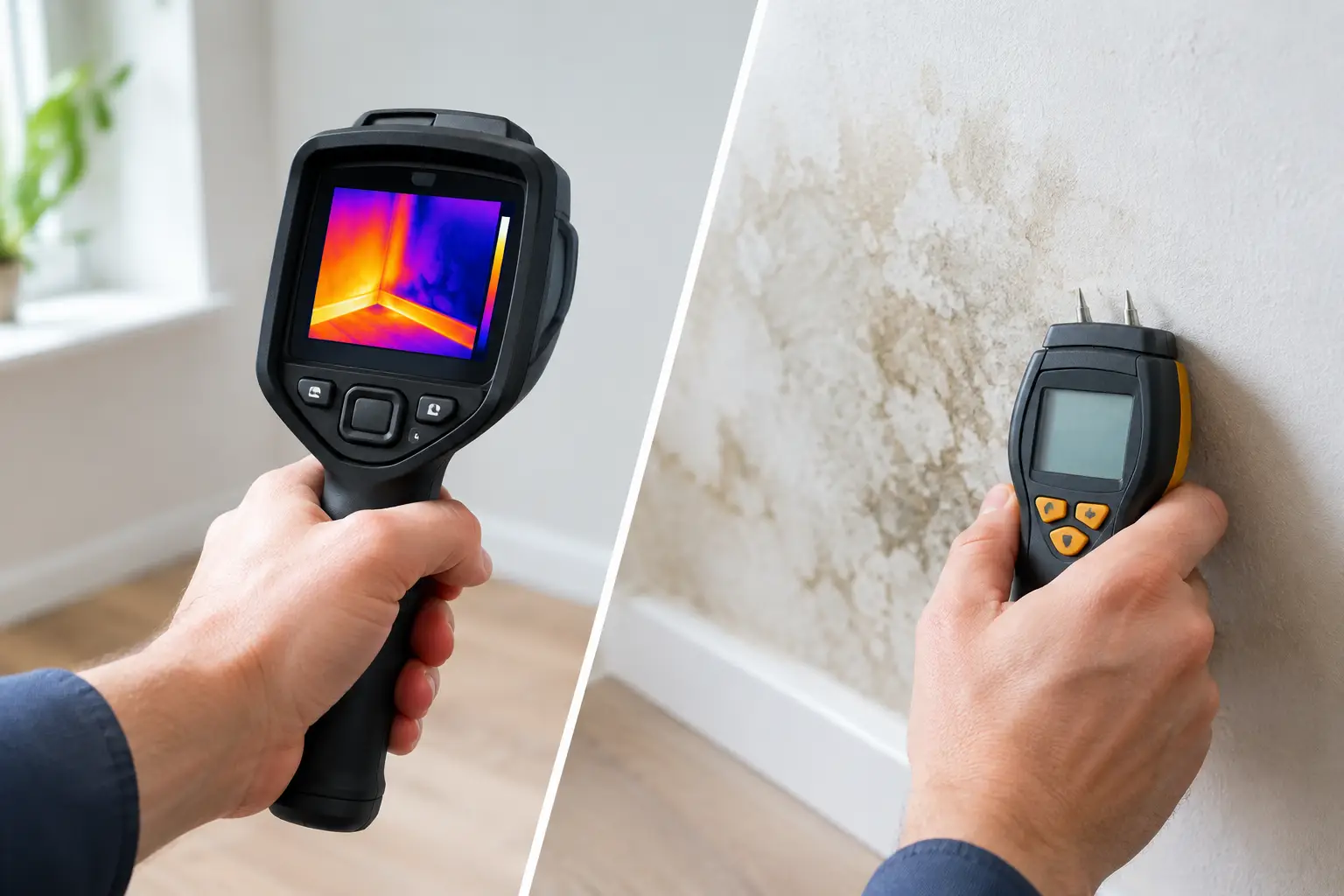
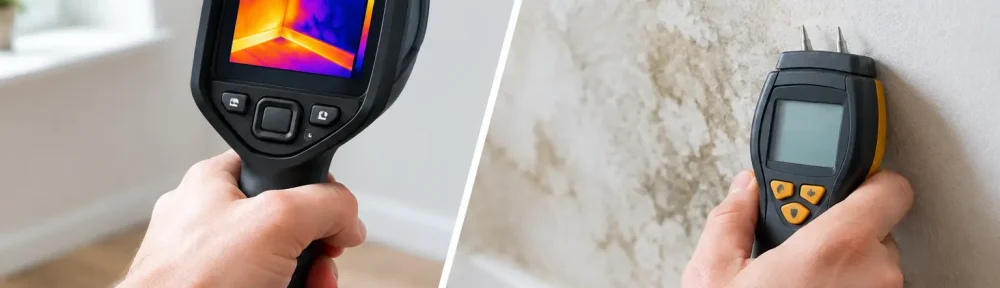
A thermal imaging camera records variations in surface temperature. The result is a thermogram, usually displayed in colours that represent warmer and cooler areas. It does not see through walls and it does not directly detect water. What it can do is identify a pattern worth investigating, such as a colder section of ceiling below a flat roof, a cool vertical stain below a gutter outlet or an unusually warm area around a hidden heating pipe.
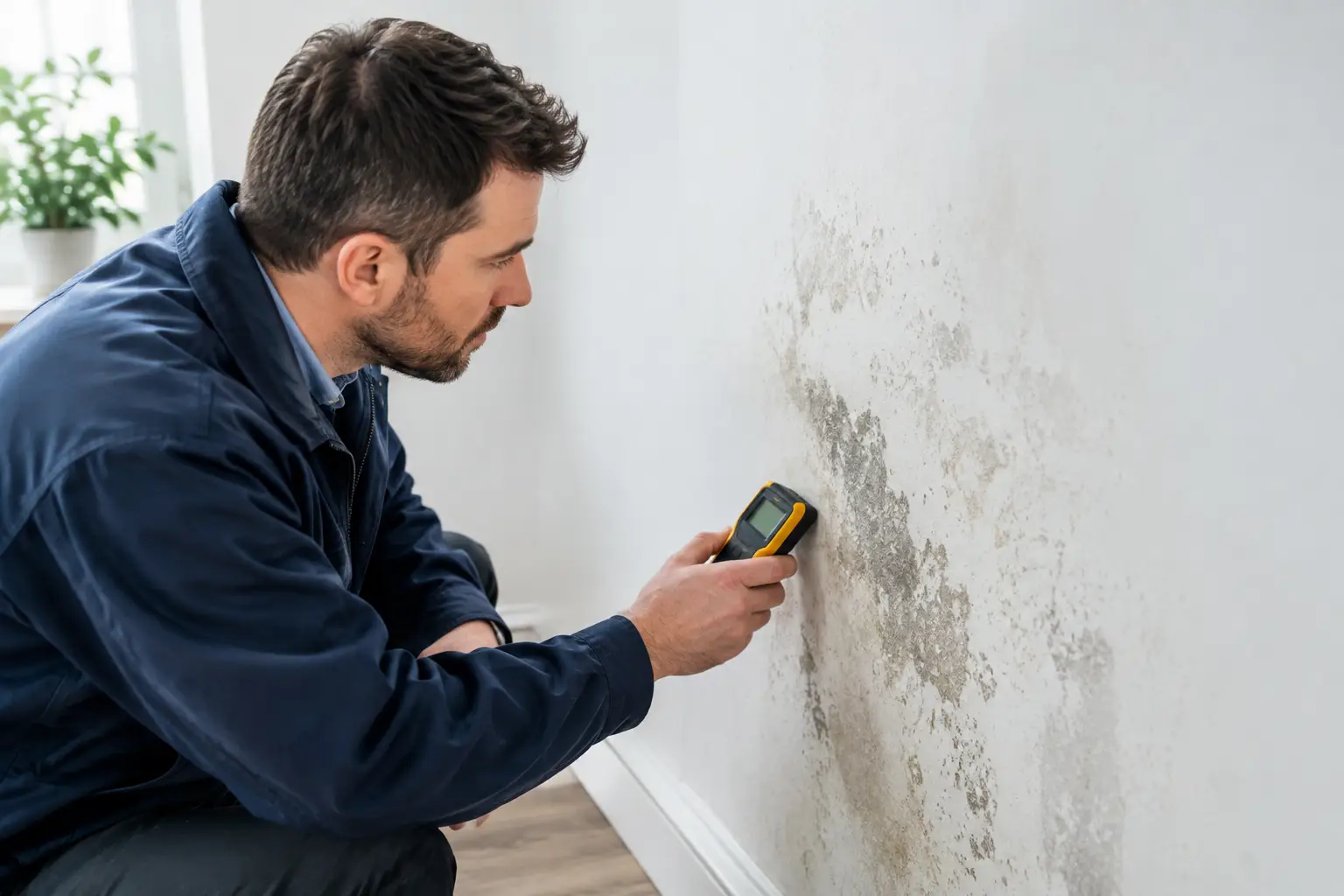
A moisture meter measures the electrical properties of a material. Pin meters insert two probes and assess electrical resistance between them. Pinless meters scan an area using an electromagnetic field and provide comparative readings without puncturing the finish. Higher readings may indicate increased moisture, but the reading must be interpreted against the material, its thickness and the meter’s setting.
In simple terms, thermal imaging helps locate anomalies over a wide area, while a moisture meter helps test whether an area may contain elevated moisture. Neither tool identifies the source of a defect on its own.
What a thermal camera can reveal
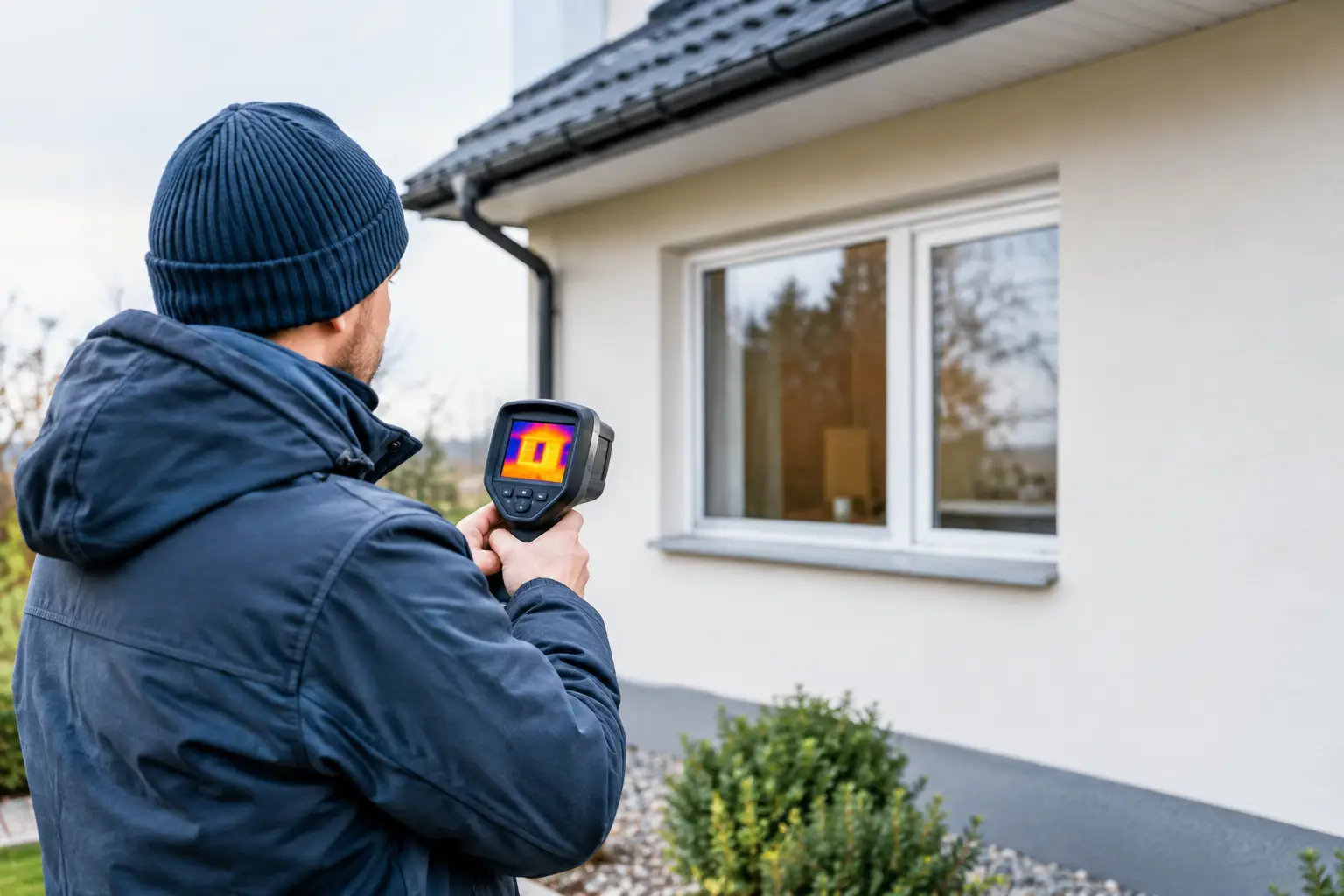
Thermography is particularly useful when an inspector needs to examine large surfaces efficiently and non-invasively. In a typical home, it can reveal patterns associated with missing or compressed insulation, cold bridging at structural junctions, air movement around windows and doors, underfloor heating routes, and potential water ingress around roofs, chimneys or external walls.
A leak often cools a surface as moisture evaporates. In the right conditions, that cooling may show clearly on a thermal image before staining becomes obvious. This can be valuable after heavy rain, when investigating a suspected roof defect, or when tracing the likely extent of an issue around a bathroom or plumbing run.
The phrase “in the right conditions” is crucial. Thermal cameras need a meaningful temperature difference between the building interior and exterior to show insulation defects clearly. For moisture-related investigations, recent weather, heating patterns, ventilation and the time since a leak occurred can all alter the image. A cold patch may be damp, but it may equally be a solid concrete lintel, a poorly insulated cavity, an air leak or a reflection from a cold surface.
Surface finish matters too. Glossy tiles, metal, mirrors and some dark paints can reflect surrounding temperatures, creating misleading results. A competent thermographic inspection accounts for emissivity, reflected temperature and the building’s construction before reaching a conclusion.
What a moisture meter can confirm – and cannot
A moisture meter provides a more direct indication that a material may contain elevated moisture. Pin readings can be especially helpful in accessible timber, including roof timbers, skirting boards, joists and window frames. Where wood moisture content is genuinely raised, the risk of fungal decay becomes more relevant and further investigation may be justified.
For plaster, brickwork and finishes, the picture is less straightforward. Many handheld meters give a relative or comparative reading rather than a precise percentage of moisture within masonry. A high reading on a wall may arise from moisture, but it can also be influenced by salts left behind by historical damp, conductive plaster, foil-backed insulation, metal corner beads, wall ties or concealed services.
Pinless meters have the advantage of quickly comparing a suspect area with a known dry control area. They are useful where unnecessary damage must be avoided, such as on decorated internal walls. Their sensing depth varies, however, and they can be affected by density changes and materials behind the surface. A shallow high reading does not necessarily prove that the full wall construction is wet.
This does not make moisture meters unreliable. It means their readings need context. A useful inspection records the meter type, the materials tested, comparative locations and visible evidence, rather than quoting a number without explanation.
Why one tool can produce the wrong diagnosis
Consider a cold patch on an external wall behind a sofa. Thermal imaging may show a pronounced cool area. A pinless moisture meter may also record a higher reading than elsewhere. It would be tempting to call this penetrating damp, yet the actual cause could be restricted air circulation and surface condensation on a cold bridge. The appropriate remedy might be improved insulation, controlled ventilation and furniture spacing, not external wall treatment.
The opposite problem is also common. A roof leak can wet insulation above a plasterboard ceiling, while the room-side surface appears dry and a basic meter gives little indication of moisture. A thermal survey carried out after suitable weather conditions may reveal the cooler affected area and direct the inspection towards the roof covering, flashing or drainage detail.
Central heating leaks can be equally deceptive. A thermal image may identify a warm linear pattern, but that may simply be a functioning pipe. Comparing temperatures, monitoring the system and checking for associated moisture evidence helps distinguish normal operation from a concealed leak.
Building defects rarely respect neat categories. Moisture may enter through a roof junction, travel along a timber member and become visible some distance from the original fault. A meter confirms a condition at one point. Thermography can show a broader pattern. Visual inspection of the roof, external walls, drainage, ventilation and internal finishes is what connects those findings to a credible cause.
When both methods should be used
Using thermal imaging and moisture testing together is often appropriate where there is a suspected leak, recurrent staining, mould growth, a disputed defect, unexplained heat loss or concern about the condition of a roof or external wall. The thermal camera can guide the surveyor to the most relevant locations. Moisture measurements, taken carefully and comparatively, can then support or challenge the initial observation.
The sequence matters. An inspector should first understand the building: its age, construction type, recent alterations, occupancy, heating and ventilation arrangements, previous repairs and the timing of the symptoms. External inspection may identify slipped tiles, defective pointing, overflowing gutters, failed sealant or high external ground levels. Internal testing then becomes targeted instead of speculative.
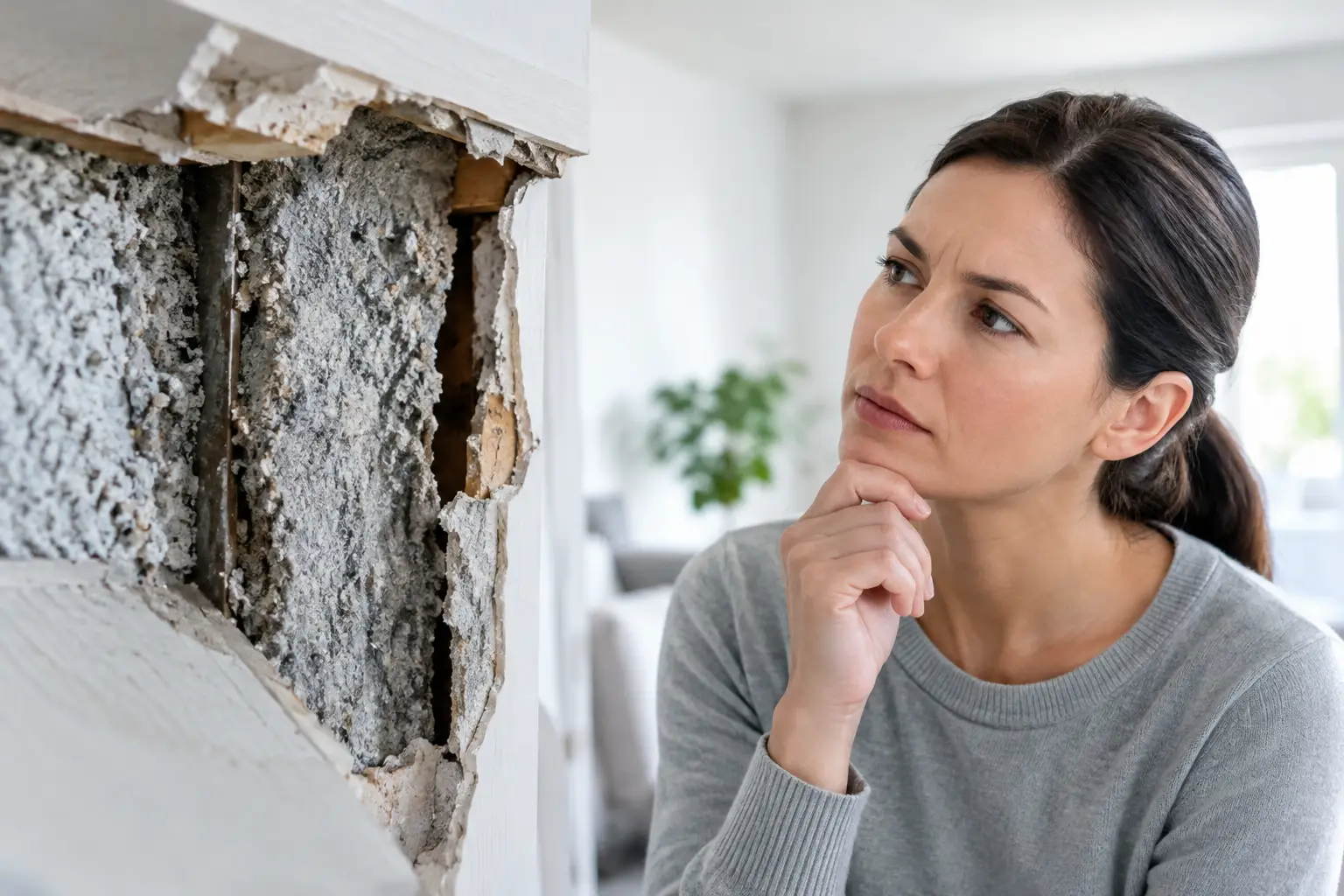
Where the stakes are high, further methods may be needed. These can include humidity and temperature monitoring, borescope inspection, roof-level examination, drainage checks, pressure testing or limited opening-up works. The least invasive method should be used first, but non-invasive does not mean conclusive.
Choosing the right approach for your property
For a buyer, a thermal image can be a useful part of a wider pre-purchase survey when it helps identify insulation defects, possible ingress or areas requiring closer review. It should not be relied upon as a stand-alone guarantee that a property is dry.
For an owner dealing with an active stain or mould, moisture readings can help establish whether conditions are currently elevated and whether drying is progressing after repairs. If the source remains uncertain, thermography can add valuable direction, particularly around roofs, pipework and external envelope defects.
For landlords, developers and parties in a construction dispute, clear evidence is vital. The report should distinguish observed facts from likely causes, explain the limitations of each test and set out proportionate next steps. This is more useful than an unqualified statement that a wall is “damp”.
HICH thermographic and building inspection services are designed around this practical approach: identify the defect pattern, assess likely causes, explain urgency and help clients plan sensible repairs. The objective is not to sell a particular testing method. It is to provide evidence that supports a confident property decision.
Ask for diagnosis, not just readings
If you are arranging an inspection, ask what the survey will cover beyond the camera or meter. A useful scope should include visual assessment, consideration of construction details, comparison of readings, photographs where appropriate and a written explanation of limitations. It should also make clear whether the inspector can assess related roof, structural or maintenance defects that may be contributing to the problem.
A thermal image is powerful evidence when it is interpreted properly. A moisture meter is equally valuable when its readings are understood in context. The most cost-effective answer is rarely the tool with the most dramatic display. It is a careful diagnosis that identifies the real source of the issue before money is spent on repairs.