

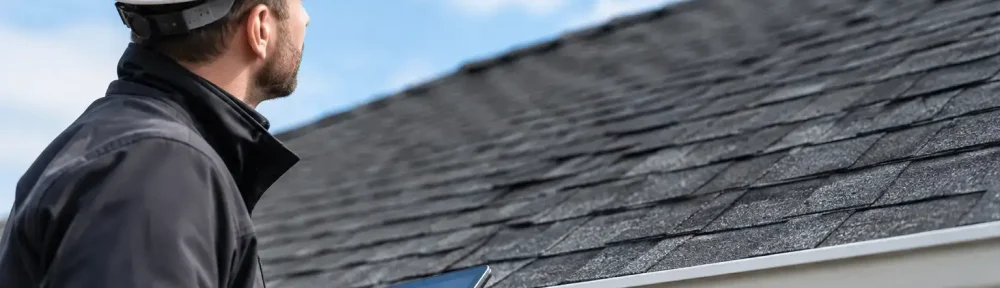
Can a Survey Find Roof Leaks? What It Can Reveal
A brown ceiling stain rarely tells the full story. Water can enter at one point on a pitched or flat roof, travel along a rafter, insulation layer or wall cavity, and become visible several metres away. So, can a survey find roof leaks? In many cases, yes – but the accuracy of the diagnosis depends on the roof construction, access, weather conditions and the inspection method used.
A professional roof survey is designed to identify the likely source of water ingress, assess the condition of the covering and supporting elements, and explain what repair work is likely to be required. It is far more useful than simply confirming that a ceiling is damp. The report should distinguish between an active leak, historic staining, condensation and moisture caused by another building defect.
Can a survey find roof leaks accurately?
A roof survey can often identify the cause of a leak through a close visual inspection, particularly where there are clear defects in the roof covering or associated details. Cracked or slipped tiles, failed flashing, damaged leadwork, deteriorated flat-roof membranes, blocked valleys, defective gutters and poorly formed roof penetrations are common causes of water ingress.
The surveyor will consider the full route that water may take. This includes the roof surface, ridges and verges, chimney stacks, abutments, rooflights, dormers, valleys, gutters, downpipes and soil vent pipes. Internally, they will assess ceilings, walls, loft timbers, insulation and accessible voids for staining, mould, moisture damage and decay.
However, no responsible surveyor should guarantee that a roof is leak-free following a visual inspection alone. Some defects only admit water during wind-driven rain, after prolonged rainfall, or when snow and debris obstruct drainage routes. A leak can also be concealed beneath finishes, insulation or inaccessible roof sections. A good report will be clear about the evidence found, the likely cause and any limitations on certainty.
What a professional roof survey can identify
The strongest value of a specialist inspection is not just finding a visible hole or broken tile. It is identifying why the roof has failed and whether the issue is isolated or part of a wider maintenance problem.
For pitched roofs, this may include loose, cracked or missing slates and tiles; worn mortar at ridge or verge tiles; defective lead flashings; failed chimney soakers; damaged underfelt; inadequate ventilation; and degraded pointing to chimney stacks. Older roofs can also suffer from nail fatigue, timber movement and previous repairs that have been carried out with unsuitable materials.
For flat roofs, the survey may identify splits, open laps, blistering, ponding water, perished felt, failed liquid coatings, damaged edge trims, blocked outlets or deterioration around upstands and rooflights. A flat roof that looks broadly sound from ground level can still have small weaknesses at joints and penetrations that allow water into the structure.
Internally, a surveyor can assess whether staining is fresh or historic, whether plasterboard has softened, and whether roof timbers show signs of prolonged moisture exposure. This matters because a minor leak left untreated can lead to wet insulation, mould growth, timber decay and more extensive reinstatement costs.
Why the location of a stain can be misleading
The point where water appears indoors is not necessarily the point where it enters. On a sloping roof, water may run down the underside of underfelt, follow a roof batten, track along electrical cables or collect against a timber junction before dripping onto the ceiling below. In a terraced house or flat, defects in adjoining construction can also complicate the diagnosis.
This is why a survey should not focus only on the room with the stain. A methodical inspection checks the roof above and around the affected area, then considers details higher up the roof slope. Chimney flashings and valleys are frequent culprits because they concentrate water and involve several material junctions.
Condensation can create similar symptoms. Poor loft ventilation, cold bridging and insufficient insulation can lead to moisture droplets, mould and damp-looking patches without a failure in the roof covering. A survey helps separate these issues so that money is not spent replacing roof materials when ventilation or insulation improvements are the real solution.
When additional testing is needed
Where a leak is intermittent or concealed, a visual roof survey may need to be supported by further diagnostic work. The right method depends on the roof type and the evidence already available.
Moisture meters can help establish whether internal materials are currently damp, although readings must be interpreted carefully. Plaster, salts, foil-backed insulation and different substrates can affect results. Thermal imaging may help identify temperature patterns associated with damp insulation, cold bridges or air leakage, especially when conditions are suitable for the survey.
Targeted water testing can be useful for rooflights, flashings, parapets and complex junctions. This involves applying water in controlled stages while the internal area is monitored. It should be carried out carefully, as indiscriminate flooding can introduce water where it would not normally enter and can make the diagnosis less reliable.
In some cases, limited opening-up works are the only way to confirm the condition of concealed timbers, underlay, insulation or deck materials. This is particularly relevant where a flat roof has repeated leaks, where moisture is trapped within the build-up, or where there are signs of structural deterioration. The need for opening-up is not a failure of the survey – it is a transparent recommendation when non-invasive evidence cannot provide a definitive answer.
What to expect from a roof leak survey report
A useful report should provide more than photographs of damaged tiles. It should set out the areas inspected, the defects observed, the probable cause of water ingress and the consequences of delaying repairs. It should also record areas that could not be accessed safely, such as steep slopes, fragile coverings or concealed roof voids.
For buyers, this evidence can support negotiations before exchange of contracts and help avoid taking on an unexpected repair liability. For homeowners and landlords, it provides a clear scope for roofing contractors, reducing the risk of vague quotations or repeated call-outs that address the symptom but not the cause.
The report should also prioritise repairs. A small isolated flashing defect may need prompt localised work, while widespread membrane failure or decayed roof timbers may justify a larger programme of repairs. Cost certainty depends on access, materials and the extent of concealed damage, but a survey gives a sound basis for obtaining like-for-like quotations.
Choosing the right inspection for your property
A general pre-purchase building survey can flag visible roof defects and signs of damp, but it is not always the same as a dedicated roof survey. If there is an active leak, recurring staining, a known flat-roof issue or concern about a chimney, a specialist roof inspection is usually the more focused option.
Safe access is central to a meaningful inspection. Ground-level observations can identify obvious issues, but they cannot always assess the condition of valleys, flashings, rooflights and coverings in sufficient detail. Depending on the property, closer inspection may involve loft access, safe roof-level access, photography or other appropriate diagnostic methods.
HICH LTD provides roof and building diagnostic surveys that focus on defect identification, practical repair requirements and clear reporting. This is particularly valuable where a property decision, planned refurbishment, insurance matter or contractor dispute depends on evidence rather than assumption.
If water has appeared inside your home, avoid treating the stain alone. Photograph it, note when it worsens and arrange an inspection before minor water ingress becomes damaged finishes, decayed timbers or a much larger repair project.