
Damp Survey Guide for UK Property Owners
A damp patch beside a chimney breast, peeling paint in a bedroom or a musty smell in a rented flat can all point to moisture, but they do not automatically mean rising damp. This damp survey guide explains what a professional inspection should establish, why accurate diagnosis matters, and how to use the findings to make sensible repair decisions.
Damp is often treated as one problem with one cure. In practice, moisture can enter or form within a building in several ways. Applying a chemical damp-proof course, replastering an internal wall or fitting a dehumidifier before identifying the source may conceal symptoms while allowing the underlying defect to continue.
What is a damp survey?
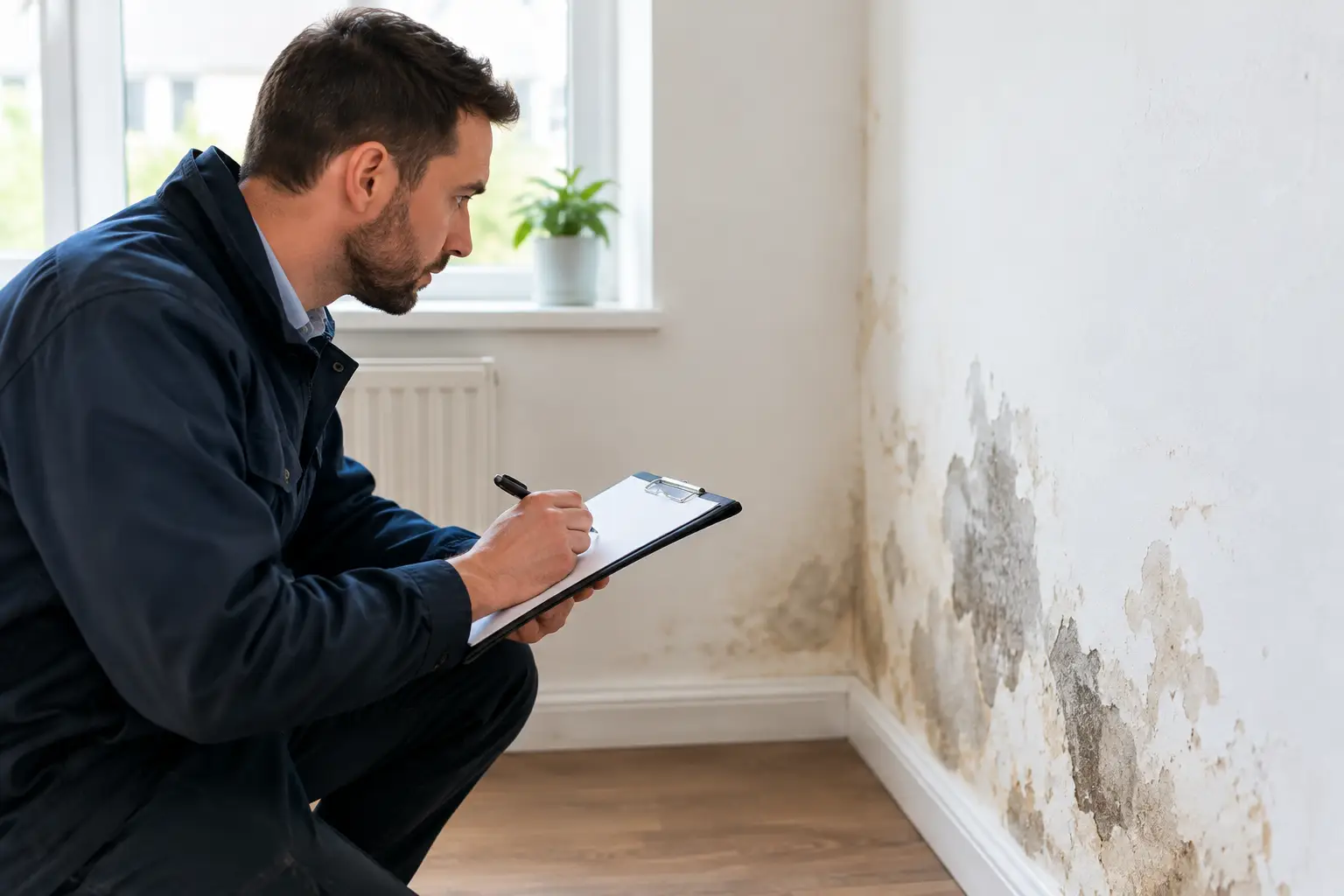
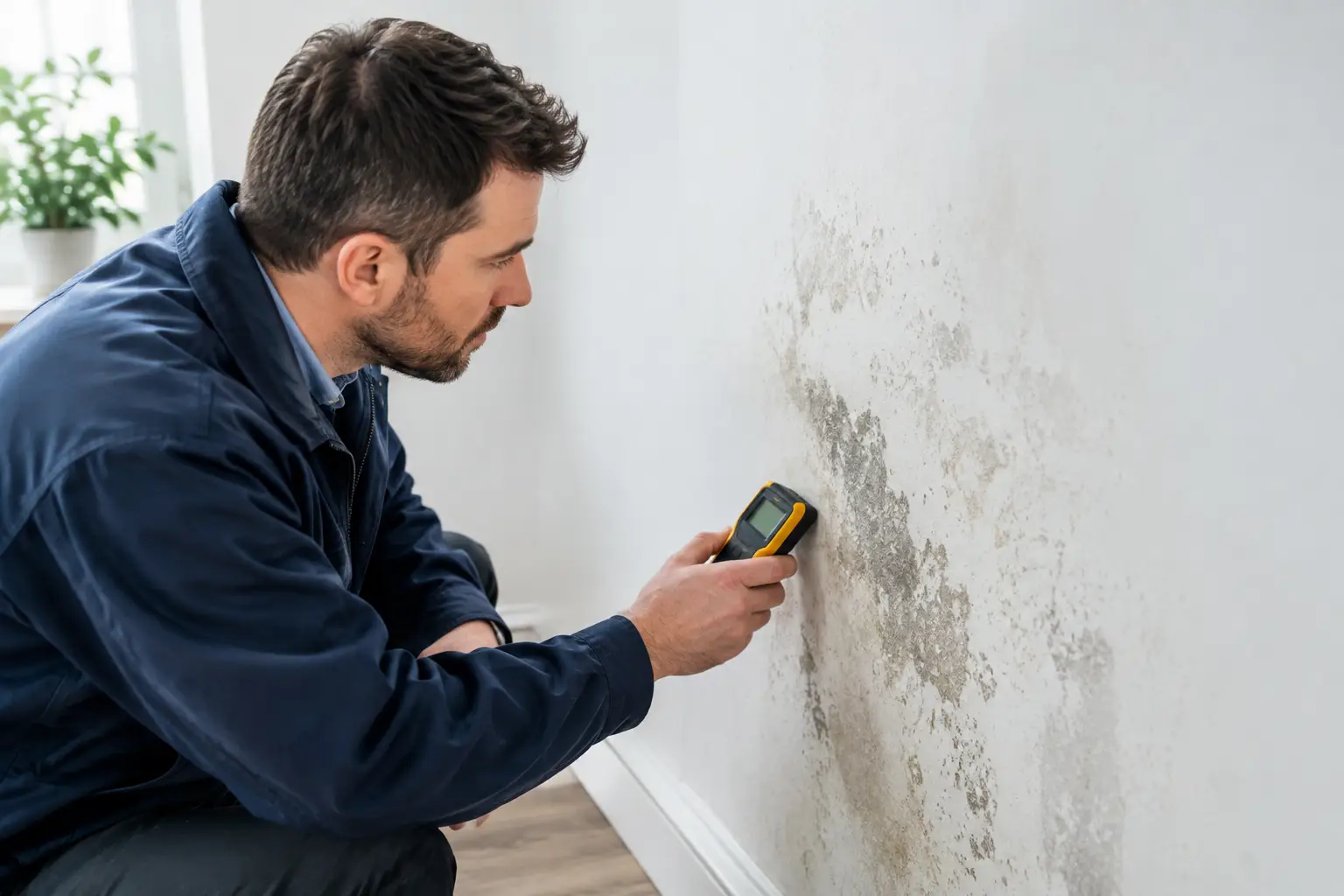
A damp survey is a targeted inspection of a property to identify the cause, extent and likely consequences of abnormal moisture. It examines affected rooms as well as the outside of the building, because the visible stain is frequently some distance from the actual entry point.
The surveyor considers the construction of the property, its age, exposure, maintenance history and alterations. A Victorian solid-wall terrace, for example, manages moisture differently from a modern cavity-wall house. Materials that were intended to breathe can develop problems when covered with impermeable render, cement-rich pointing or unsuitable internal finishes.
A useful report should do more than state that readings are high. It should distinguish between likely causes, explain the evidence supporting the diagnosis, identify any associated timber decay or mould risk, and set out proportionate repair recommendations. Where work is required, repair-cost awareness helps owners prioritise urgent items and avoid spending money on treatments that will not solve the issue.
When should you arrange a damp survey?
A survey is worthwhile when signs recur after decorating, when a property has been empty, or when you are considering buying a home with visible staining, damaged plaster, mould growth or poor ventilation. It can also be valuable before major refurbishment, particularly where walls, floors or roofs will be opened up.
For purchasers, a damp inspection can clarify whether a concern raised in a general building survey is minor condensation, a local rainwater defect or part of a more significant problem. This distinction can affect budgets, negotiations and the decision to proceed.
Landlords and managing agents may need an independent assessment where mould has been reported. The inspection should consider building defects and occupant-related moisture together. A report that simply blames lifestyle without checking ventilation provision, heating, insulation, rainwater goods and fabric condition is unlikely to provide a reliable basis for action.
The main causes a survey should investigate
Condensation and mould
Condensation occurs when warm, moisture-laden indoor air reaches a cold surface and turns to water. It is common on window reveals, external corners, behind furniture and in bathrooms, kitchens and bedrooms. Black mould may develop where surfaces remain damp for long periods.
The cause is rarely just one thing. Daily moisture from cooking, bathing and drying clothes can combine with inadequate extract ventilation, intermittent heating, cold bridging and restricted airflow. Improving extraction and background ventilation may be appropriate, but the right approach depends on the property and how it is occupied. Increasing ventilation without considering heat loss, for instance, can make a cold home harder to keep comfortable.
Penetrating damp
Penetrating damp is moisture entering through defects in the building envelope. Typical causes include slipped roof tiles, damaged flashing, cracked render, defective pointing, leaking gutters, blocked gullies, failed window seals and poorly detailed extensions.
Patterns often provide useful clues. A patch that worsens after heavy rain may indicate an external defect, while dampness beneath a leaking gutter or around a chimney stack requires close inspection of rainwater disposal and roof details. A surveyor should not assume the external wall is at fault without checking for plumbing leaks, internal condensation and other potential sources.
Rising damp and ground moisture
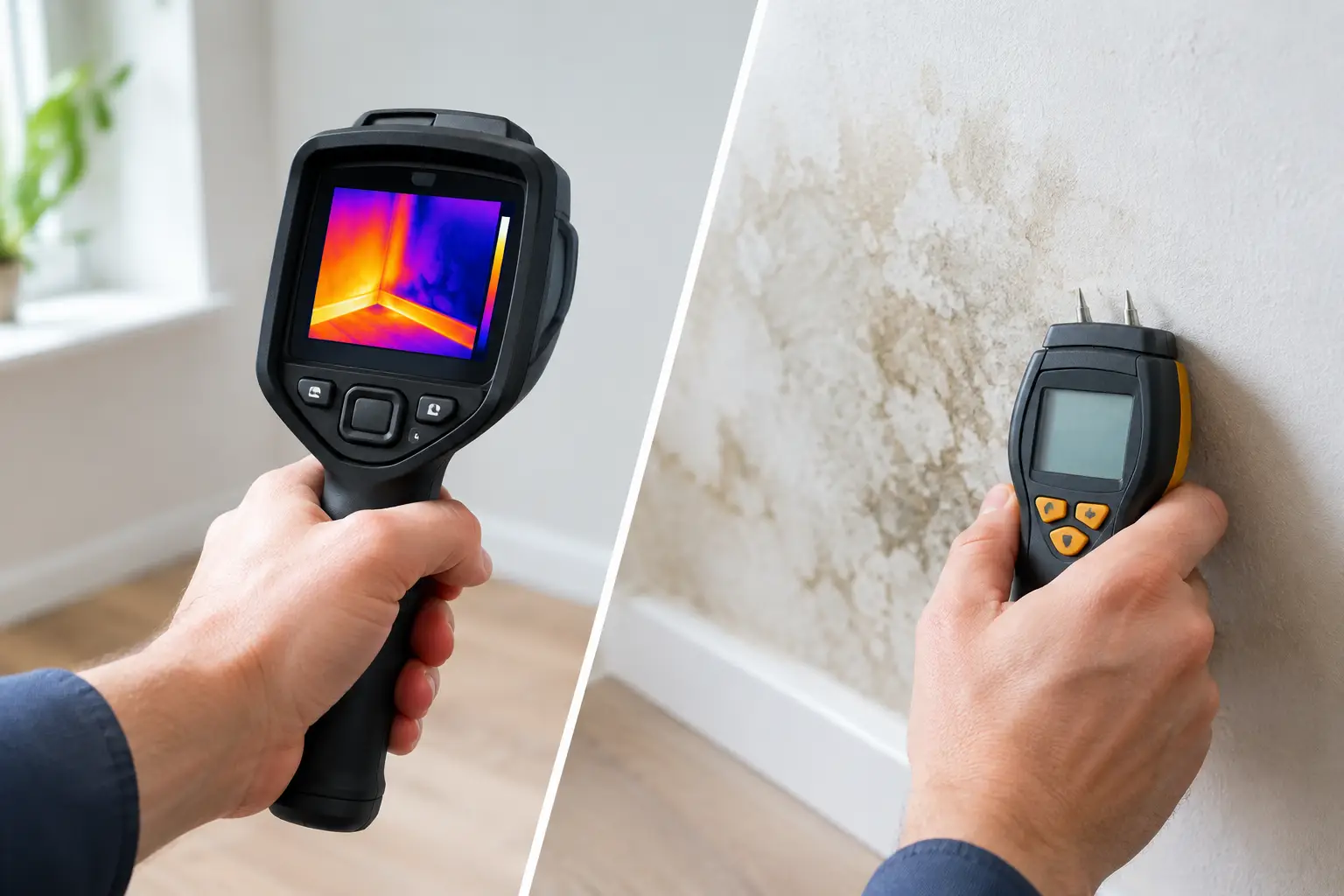
Rising damp describes moisture moving upward through a wall from the ground. It is commonly overdiagnosed because electrical moisture meters can respond to salts and other conductive materials as well as water. Readings alone do not prove rising damp.
A proper assessment examines the damp-proof course where present, external ground levels, bridging by render or debris, floor construction, sub-floor ventilation and salt patterns. Older properties may not have a modern damp-proof course, while later alterations can bridge an existing one. The repair may be as straightforward as lowering a path or removing unsuitable external render, but it can require more extensive work if several defects are present.
Plumbing leaks and internal defects
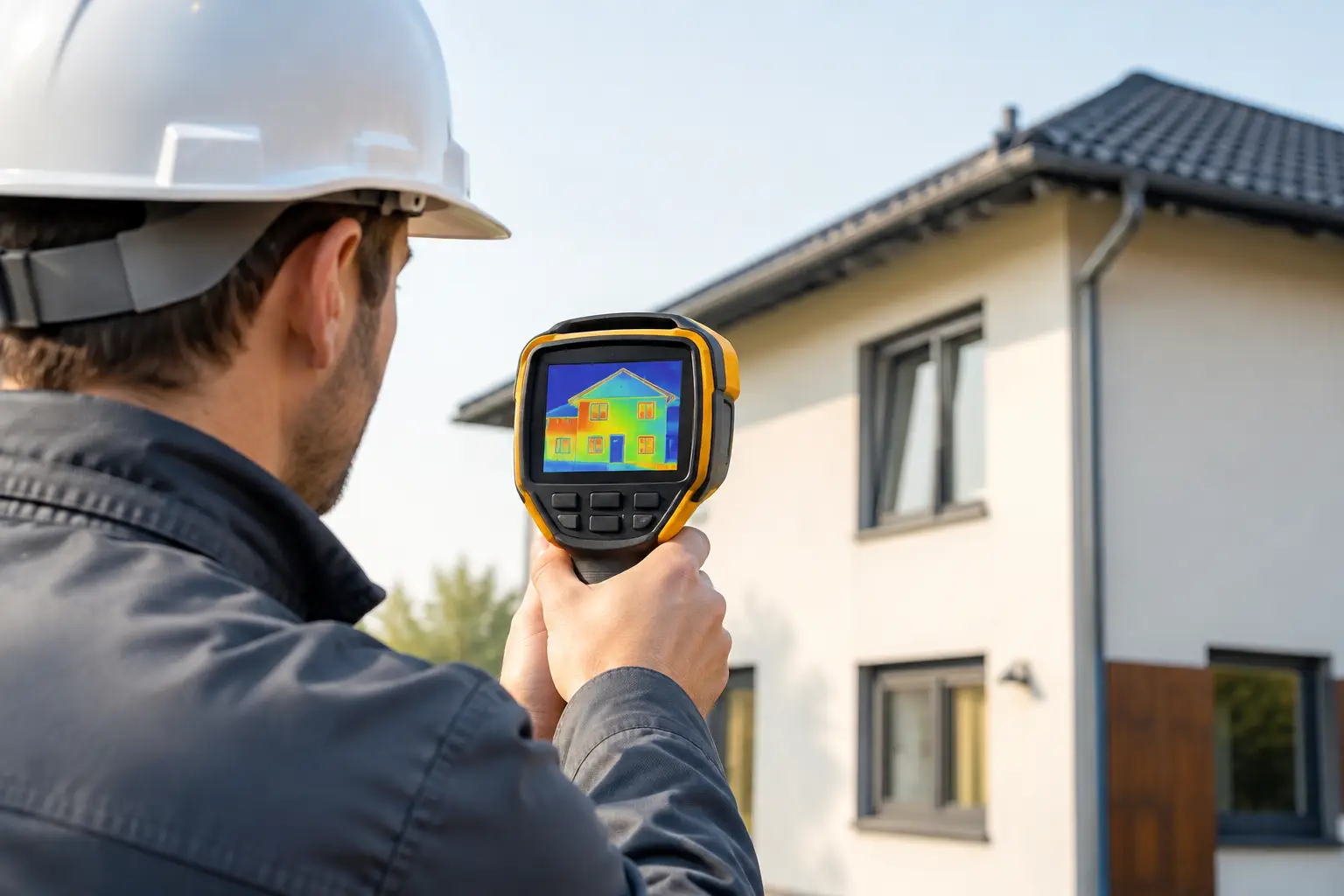
Leaks from pipework, radiators, showers, waste connections or appliances can create highly localised dampness. These defects may be hidden beneath floors, behind boxing or within wall voids. Thermal imaging, moisture mapping and, where necessary, further investigation can help narrow down the source without unnecessary opening-up.
How a professional damp survey is carried out
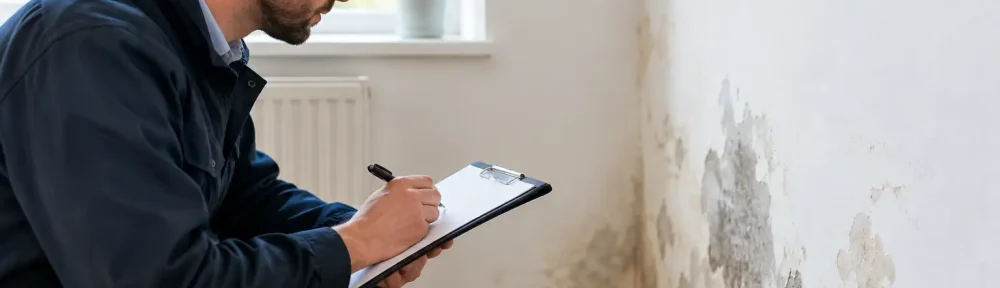
A competent inspection begins with questions. The surveyor will ask when the problem was first noticed, whether it changes with rainfall or seasons, what repairs have already been attempted, and how the room is heated and ventilated. This background can be as revealing as a meter reading.
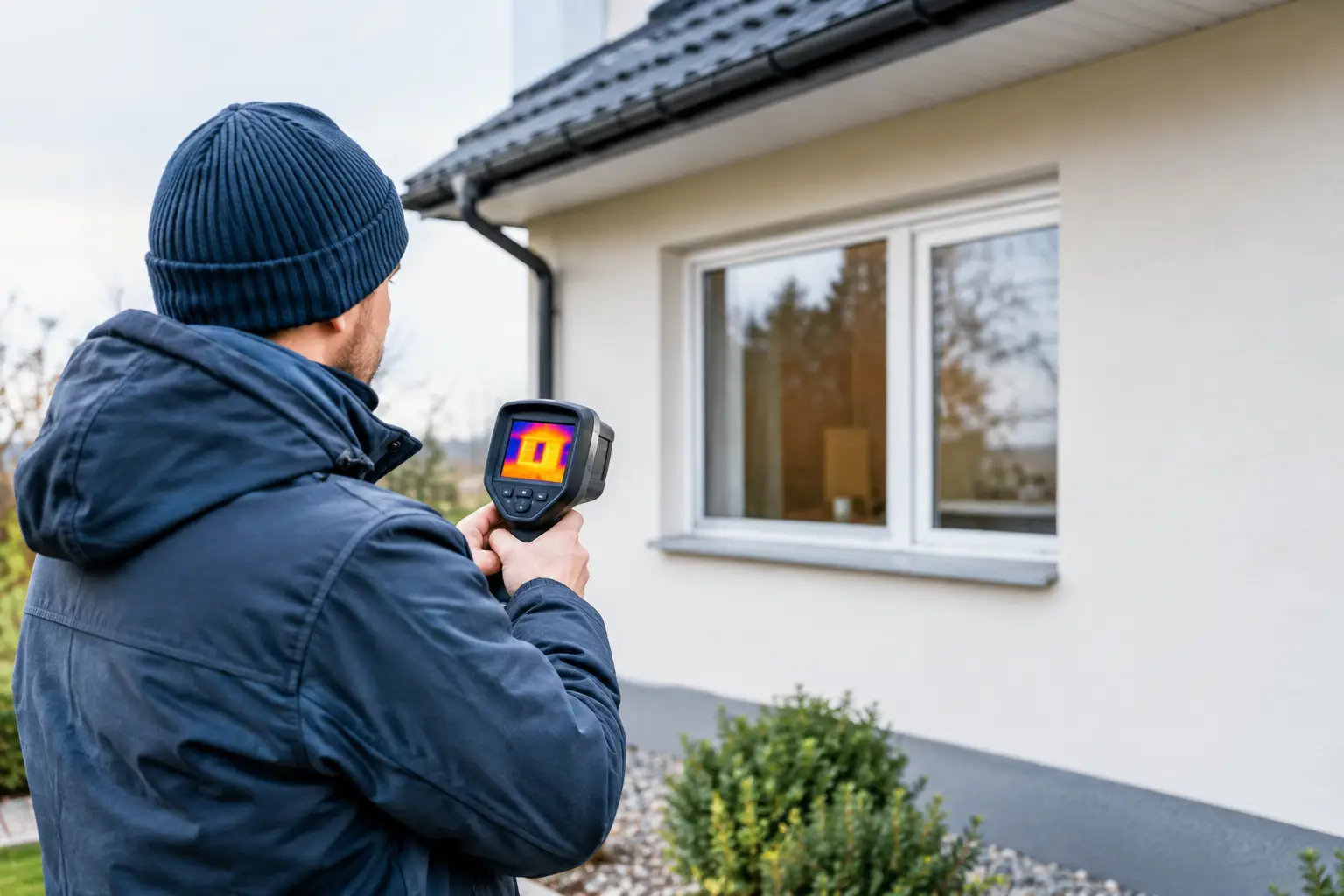
The visual inspection then reviews internal finishes, walls, ceilings, floors, joinery, ventilation points and evidence of mould or salt contamination. Externally, the survey should assess roofs where accessible, gutters, downpipes, walls, pointing, openings, ground levels and drainage. In suspended timber floors, ventilation to the sub-floor void is particularly important.
Testing may include electrical moisture measurements, surface temperature checks, hygrometer readings and thermal imaging. Each tool has limits. A thermal image identifies temperature differences, not dampness itself, while a moisture meter provides indicative data that must be interpreted alongside the building fabric and visible evidence. Good diagnosis comes from combining findings rather than relying on a single device.
In some circumstances, intrusive investigation is justified. This may involve lifting a small floor area, opening a localised section of finish, inspecting a roof void or checking concealed pipework. It should be proportionate, agreed in advance where possible, and directed by the evidence already gathered.
What your damp survey report should tell you
The report should be clear enough for a homeowner to act on and detailed enough to support conversations with builders, sellers, managing agents or insurers. It should identify the affected locations, explain the most likely cause or causes, record relevant evidence and state the limitations of the inspection.
Recommendations should be prioritised. Urgent items may include active roof leaks, defective rainwater goods, wet rot risk, significant mould affecting occupied rooms, or unsafe electrical conditions near water ingress. Other works, such as redecorating after drying, can wait until the source has been resolved.
It is also helpful when recommendations separate cause from consequence. Repairing a gutter, improving bathroom extraction or correcting ground levels deals with the cause. Replastering, redecorating and replacing damaged skirting deal with the consequences. Doing these in the wrong order often leads to repeat damage.
Avoiding common damp repair mistakes
The most expensive mistakes tend to happen when a property owner accepts a diagnosis based on a quick visual assessment or a single meter reading. Damp treatment products have their place, but they should follow evidence, not replace it.
Be cautious of broad recommendations that prescribe extensive injection, tanking or replastering without explaining why simpler defects have been ruled out. Equally, do not dismiss mould as a cleaning issue if it is recurring. Recurrent mould needs an assessment of moisture generation, ventilation, insulation, heating and possible building defects.
If you are buying a property, ask for repair quotations only after the scope is clear. Two contractors can price very different solutions for the same visible patch. A detailed damp survey helps ensure that quotations are comparable and that negotiations are based on likely remedial works rather than assumptions.
Choosing the right surveyor
Choose a surveyor or building diagnostics specialist with practical knowledge of building construction and moisture behaviour, rather than someone whose inspection is limited to selling a particular treatment. Ask what the inspection includes, whether external defects and roof details will be considered, and what testing methods may be used.
For complex properties, an independent report from qualified building engineers and surveyors can provide a stronger basis for repair planning or dispute resolution. HICH Ltd provides specialist property inspections with practical defect analysis, helping owners and buyers understand both the likely cause of a problem and the work needed to address it.
A damp issue does not always need a major intervention, but it does need a defensible diagnosis. Arrange an inspection before committing to repairs, keep the report with your property records, and address the source first. That gives the building the best chance to dry properly and protects your budget from repeat work.