
Survey Evidence for Repair Disputes That Holds Up
A cracked ceiling, persistent roof leak or failed render can quickly become expensive. The real difficulty starts when the parties disagree over who is responsible, what caused the problem and how much the work should cost. Clear survey evidence for repair disputes turns assumptions into documented findings, giving owners, contractors, landlords, insurers and developers a sounder basis for negotiation.
A useful report does more than state that a defect exists. It records its position, extent and likely cause; explains the consequences of leaving it unresolved; and sets out proportionate repair recommendations. Where responsibility is contested, that level of detail can be the difference between a productive settlement and a dispute that continues to drain time and money.
What Makes Survey Evidence for Repair Disputes Useful?
Not every property inspection is suitable for a dispute. A brief condition check may identify visible defects, but repair disputes often require a more focused investigation. The surveyor needs to consider the building as a system, rather than treating each crack, stain or failed finish in isolation.
For example, water staining beneath a flat roof may be caused by defective roof coverings, blocked outlets, failed flashing, condensation or an earlier leak that has already been repaired. The visible mark is evidence of moisture, not proof of its source. A competent inspection considers construction, drainage, ventilation, maintenance history and the pattern of damage before reaching a reasoned opinion.
Strong evidence is factual, clear and proportionate. It should distinguish between what was observed, what can reasonably be inferred and what would need further opening-up work or specialist testing to confirm. This matters because overconfident conclusions can undermine an otherwise credible case.
A dispute report should normally include dated photographs, defect locations, descriptions of materials and construction, measurements where relevant, and an explanation of the likely mechanism of failure. It should also identify limitations. If a concealed timber beam, cavity wall tie or underground drain cannot be inspected, the report should say so plainly and recommend the next sensible step.
Establishing Cause, Scope and Responsibility
Most repair disputes are not really about the visible damage. They are about causation and liability.
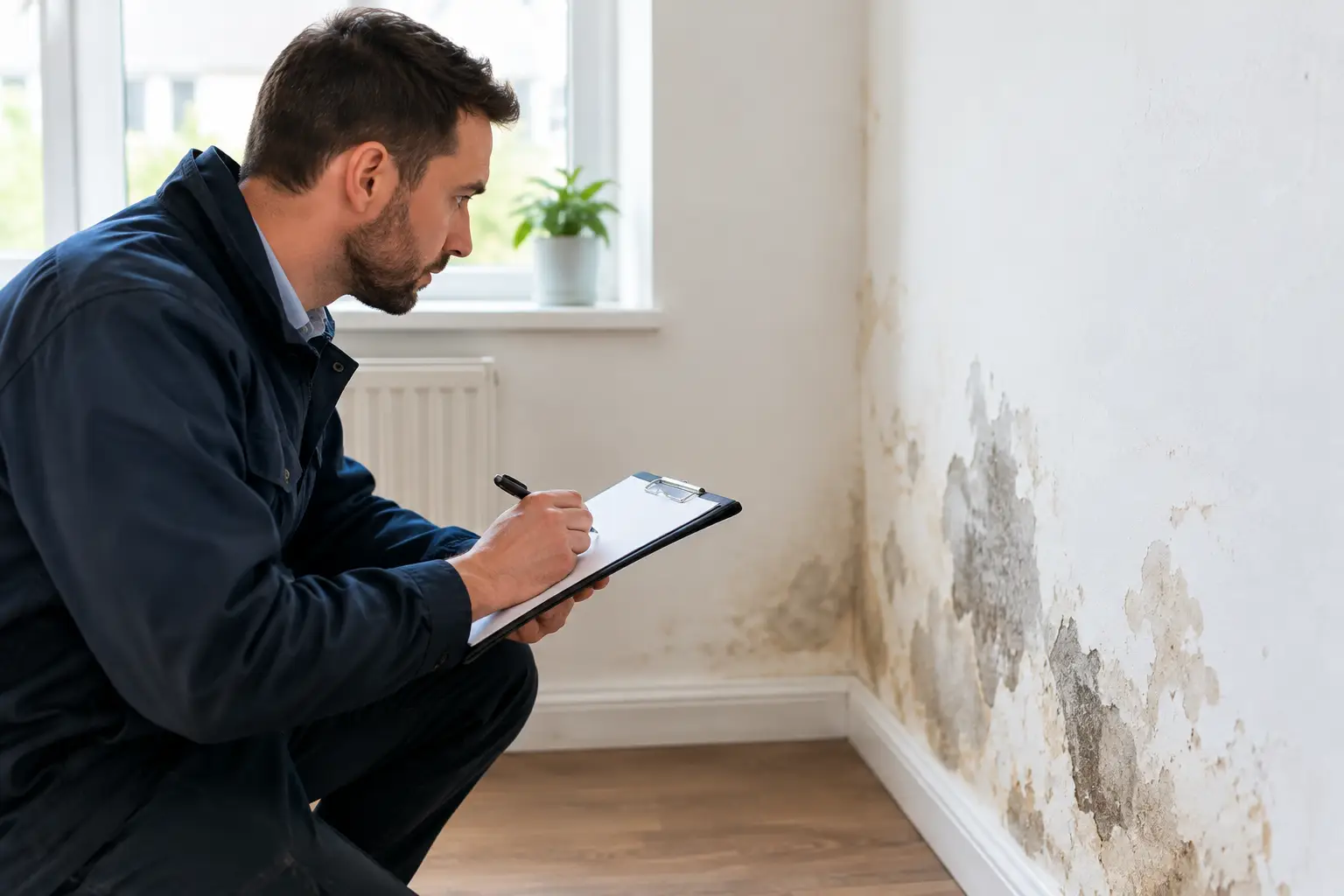
A homeowner may believe that a builder’s work caused cracking. The contractor may say the cracks were pre-existing, caused by settlement or related to movement elsewhere in the property. A landlord may regard mould as a tenant lifestyle issue, while the tenant may point to inadequate insulation, defective extract ventilation or water penetration. Each position needs testing against the physical evidence.
Cause must be more than a guess
A surveyor will look for indicators that help separate coincidence from cause. With cracking, this may include crack width, direction, location, whether cracks pass through finishes or masonry, signs of previous repair, distortion around openings and any evidence of foundation movement. With dampness, the investigation may consider moisture readings, rainwater goods, roof junctions, ground levels, bridging, plumbing routes and ventilation provision.
Timing also matters. A defect appearing shortly after work is completed can be relevant, but it does not automatically prove the work caused it. Conversely, a problem discovered months later may still arise from poor workmanship if the failure mechanism is consistent with the work undertaken. Good survey evidence explains this distinction rather than relying on chronology alone.
Scope should be defined before prices are compared
Repair quotations often differ sharply because contractors have priced different work, not because one price is necessarily unreasonable. One roofer may allow for local patch repairs; another may recommend stripping and renewing a whole section. One builder may fill and redecorate cracks; another may include structural investigation, stitching and making good.
The survey report should define the required outcome and the extent of repair as far as the inspection allows. It can identify whether localised repair is likely to be appropriate, whether wider renewal is justified, and whether further investigations are needed before a final scope can be issued. This gives all parties a common reference point when obtaining quotations.
Responsibility depends on the facts and the agreement
A surveyor can provide an opinion on defects, causation, workmanship and necessary remedial works. Liability itself may depend on a building contract, lease, warranty terms, insurance policy, statutory obligations or correspondence between the parties. The report should support that wider assessment, not attempt to replace legal advice.
This is particularly relevant in leasehold properties. A leaking roof may be the freeholder’s responsibility, while internal consequential damage may lead to separate questions about service charges, access, insurance and delays in reporting the issue. An inspection that clearly separates common parts, demised areas and the route of water ingress can help prevent the dispute becoming needlessly confused.
The Right Type of Inspection for the Problem
The most effective inspection is targeted to the defect and the purpose of the report. A broad building survey may be appropriate where there are several concerns across an older or altered property. A dedicated roof survey can be more suitable where the dispute concerns water ingress, workmanship, failed coverings or drainage details.
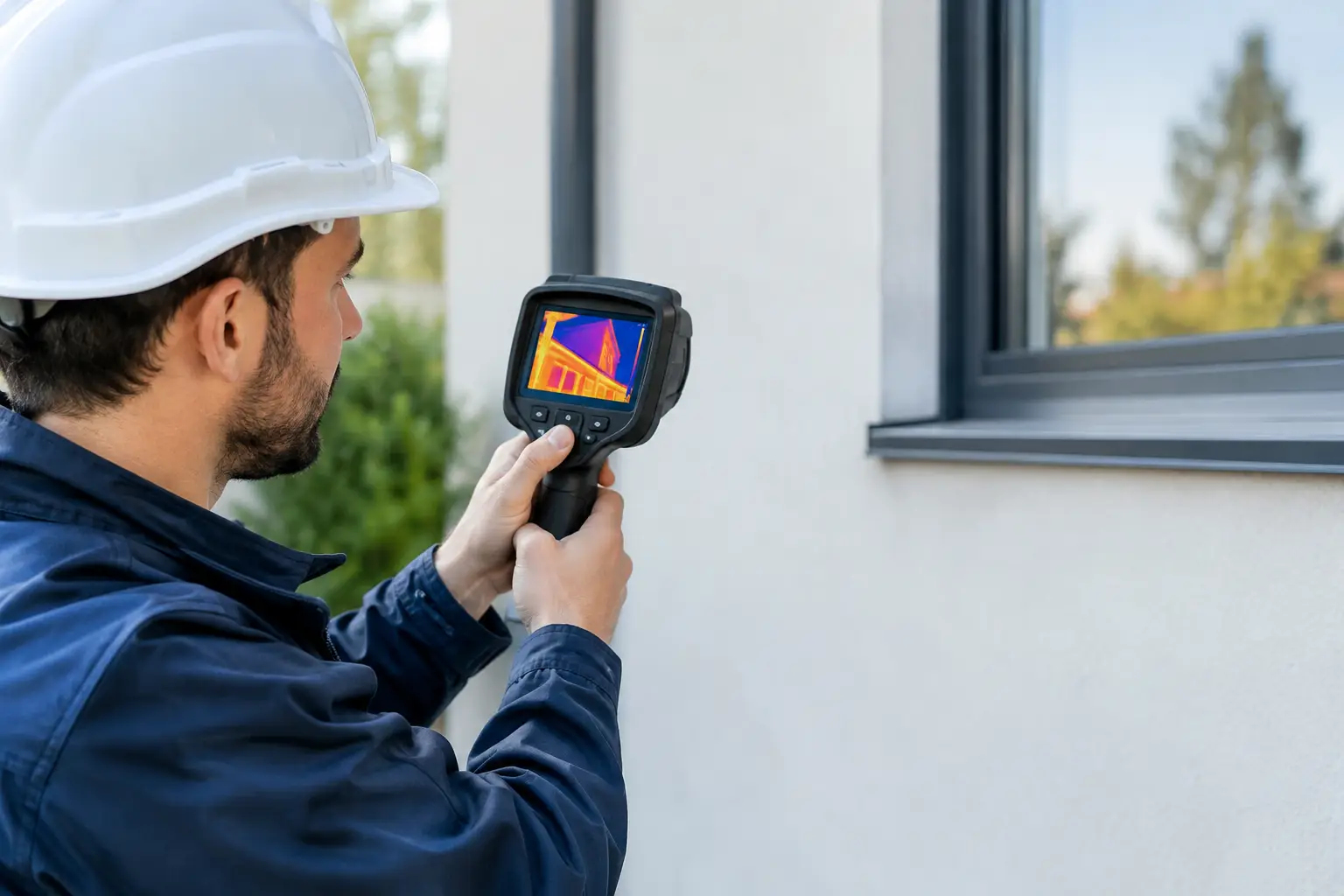
Thermographic surveying may assist where heat loss, cold bridging, missing insulation or concealed moisture is suspected. It is most useful when undertaken in suitable weather conditions and interpreted alongside the building’s construction and other inspection findings. A thermal image alone is not proof of a defect. It is an indicator that requires competent analysis.
Where cracking raises concern about structural movement, a structural building survey can assess the pattern and likely severity of visible issues. However, some cases need monitoring over time, trial holes, drainage testing or input from a structural engineer. The right recommendation is not always the quickest or cheapest one, but early targeted investigation can prevent the cost of unsuitable repairs.
For new-build or recently refurbished homes, snagging evidence can be valuable where there are incomplete items, poor finishes or workmanship defects. Detailed records made before occupation, or as soon as defects emerge, are generally more persuasive than a complaint raised after several rounds of alteration by different trades.
Preserving Evidence Before Repairs Begin
Urgent repairs are sometimes unavoidable. A dangerous loose roof tile, active leak or electrical risk should be made safe without delay. Even then, evidence can often be preserved through clear photographs, dated videos, notes of weather conditions, copies of contractor attendance records and samples of failed materials where practical.
Before non-urgent work begins, it is sensible to record the defect properly. Photograph wider context as well as close-ups. A close image of damp plaster may show the damage, but a wider photograph can show its relationship to a chimney breast, window reveal or roof junction. Keep invoices, quotations, emails, guarantees, completion certificates and any previous reports together.
Avoid allowing a contractor to remove all evidence before it has been inspected where a dispute is likely. Once roof layers, wall finishes or defective pipework have been stripped out, it may be much harder to establish the original cause. If temporary protection is required, record the condition first and retain relevant materials where safe and feasible.
There is a practical balance to strike. Evidence should be preserved, but property owners should not allow preventable damage to worsen while waiting for a dispute to progress. Reasonable mitigation, supported by records, usually protects both the building and the strength of the claim.
Common Weaknesses That Reduce the Value of a Claim
A report is less persuasive when it only repeats what one party has said. The surveyor’s role is to inspect independently, test the explanation against the building and set out a reasoned professional view. Language should be measured: “consistent with”, “likely” and “unable to confirm without further investigation” can be more credible than certainty that the evidence cannot support.
Another weakness is failing to separate defects caused by workmanship from age-related deterioration, poor maintenance or later damage. A ten-year-old roof with worn flashings may have a genuine defect, but it does not follow that a contractor who completed unrelated internal work is responsible. Equally, age does not excuse workmanship that has failed prematurely.
Repair-cost evidence can also cause difficulty. A single estimate may be enough to begin a conversation, but contested or substantial work often benefits from a clear specification and comparable quotations. The cheapest figure is not automatically the proper measure of loss if it omits access equipment, protection works, professional fees, matching finishes or necessary associated repairs.
Using the Report to Move the Matter Forward
The best survey evidence is written for action. It should help the parties understand what needs to happen next, whether that is a local repair, further testing, monitoring, a detailed specification or a programme of wider remedial work.
In many cases, an independent report helps resolve matters before formal proceedings are needed. It gives the contractor a clear opportunity to respond to identified workmanship concerns and gives the owner a basis for requesting an appropriate scope of work. For landlords, developers and managing agents, it can help prioritise repairs and explain decisions to occupiers or stakeholders.
Where the parties remain apart, a technically detailed report can support mediation by narrowing the issues in dispute. HICH LTD provides specialist inspections designed to identify defects clearly, explain repair priorities and support practical decisions where property condition is contested.
A repair dispute rarely improves through stronger opinions alone. Arrange an inspection while the evidence is still available, keep the scope focused on the actual defect, and use the findings to seek a fair, timely solution before a manageable repair becomes a larger property problem.