
Can Imaging Find Leaks? A Surveyor Explains
A damp patch beneath a bedroom window, a ceiling stain that returns after every spell of rain, or an unexpectedly high water bill can leave owners facing the same question: can imaging find leaks without taking up floors, ceilings or wall finishes? In the right conditions, it can be an exceptionally useful part of the investigation. It is not, however, a camera that sees water through a building.
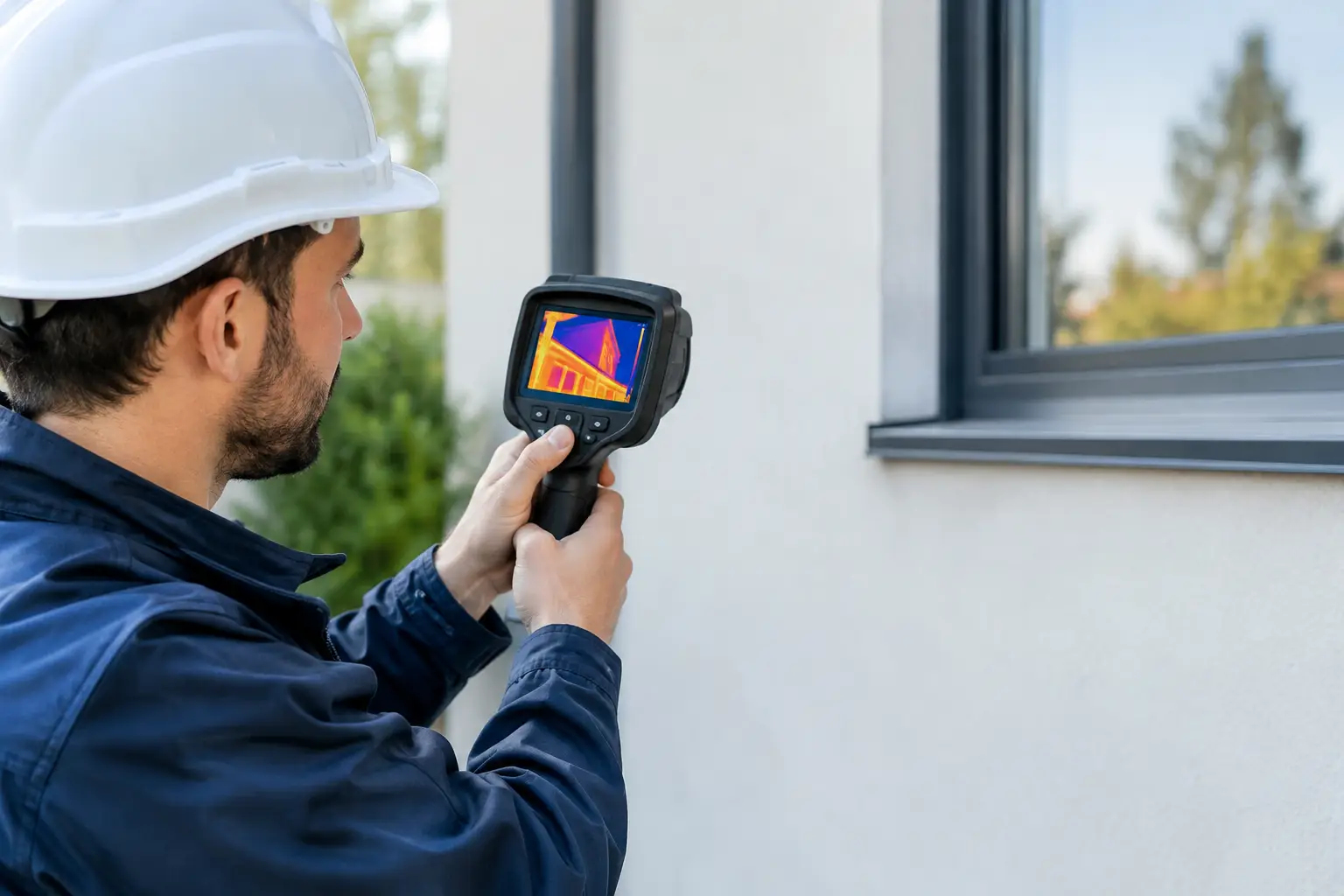
Thermal imaging helps a qualified surveyor identify unusual temperature patterns across a surface. Those patterns can indicate moisture, air leakage, missing insulation, failed seals or cold bridging. The value lies in using the images alongside a close inspection, moisture testing and knowledge of how buildings are constructed. That is what turns a colourful image into practical evidence for repair decisions.
Can imaging find leaks accurately?
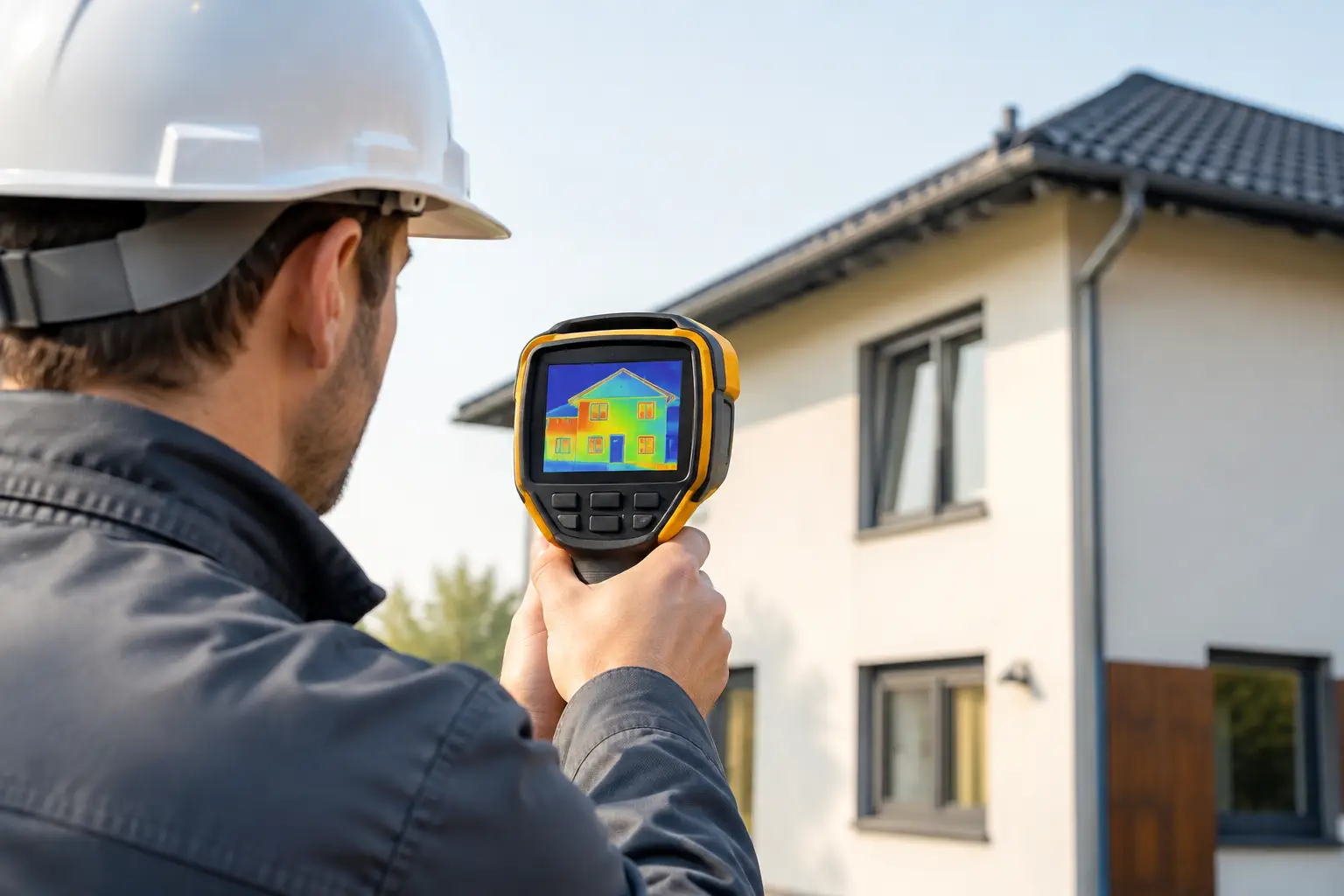
Thermal imaging, also called thermography, detects infrared radiation and displays surface temperature differences as an image. Areas that are cooler or warmer than surrounding materials can appear distinct. When water is evaporating from a wall, ceiling or floor, it often cools the surface. A possible leak may therefore show as a cooler area on the thermal image.
This can be particularly effective where a leak is active or has recently affected the fabric of the building. A water escape from plumbing beneath a suspended timber floor, a roof leak wetting insulation, or rainwater penetrating around a chimney can all create a pattern worth investigating.
Accuracy depends on the cause of the temperature difference being properly assessed. A cool patch is not automatic proof of a leak. It may be caused by a poorly insulated lintel, a gap in loft insulation, air movement around a socket, or a cold external wall. Equally, a concealed leak might not register clearly if the surface has dried, the pipework is well insulated, or weather conditions are unsuitable.
For that reason, imaging should be viewed as a non-invasive diagnostic tool rather than a stand-alone verdict. It narrows down where further checks are needed and can reduce unnecessary opening-up work.
What thermal imaging can reveal in a property
A thermographic survey is often useful when the source of dampness is unclear. It can help distinguish between widespread heat loss and a more localised area of concern, particularly when combined with moisture readings and visual evidence.
In residential properties, surveyors commonly use imaging to investigate suspected roof leaks, water ingress around windows and doors, failed flat-roof details, leaking heating pipework and moisture below bathroom or kitchen floors. It can also support investigations into condensation risk, cold bridging and inadequate insulation.
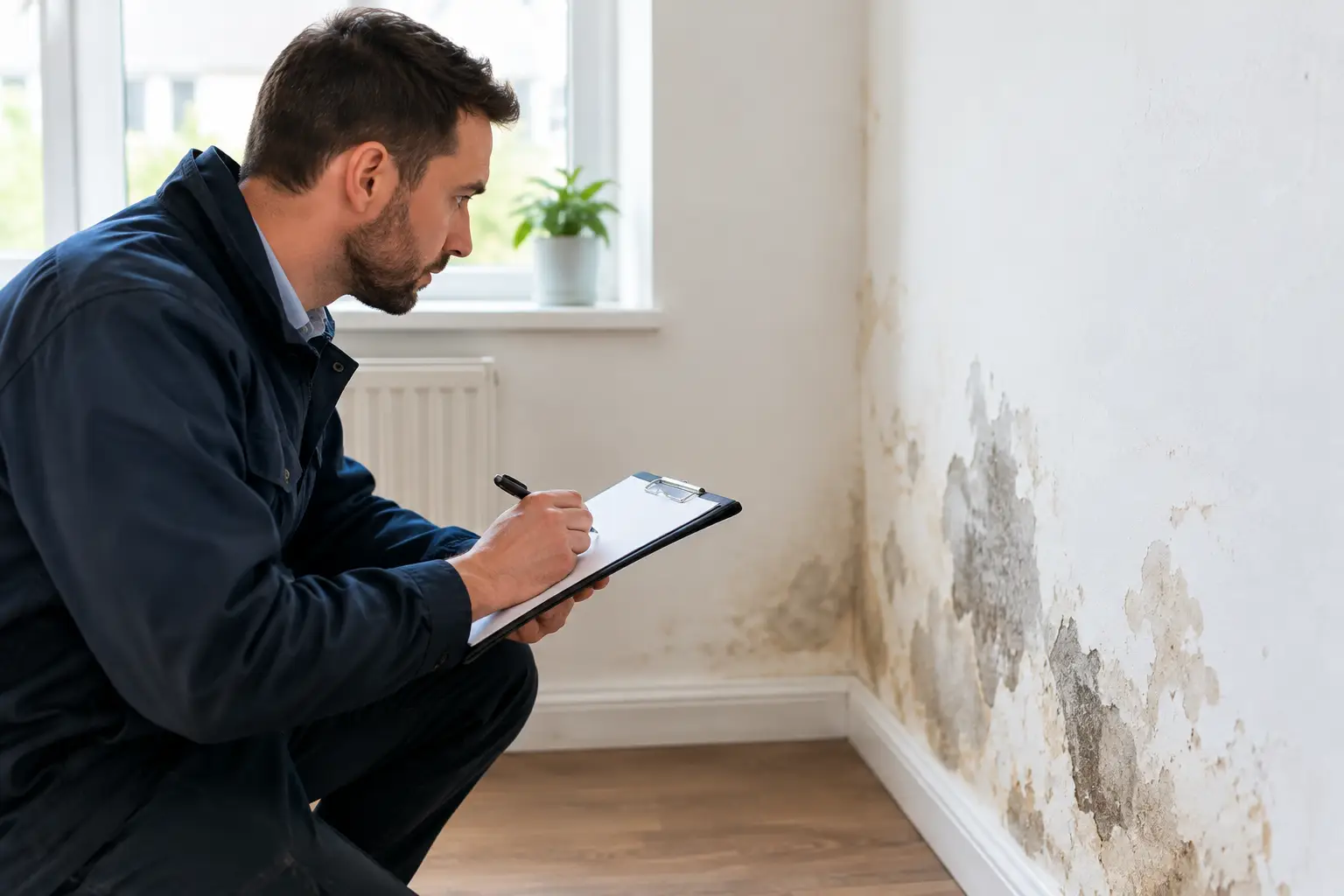
For example, a homeowner may see staining on the ceiling below a bathroom but be unsure whether it is a leaking shower tray, defective sealant, a waste pipe issue or an old stain from a historic leak. Thermal imaging may show a cooler, damp pattern after the shower has been used. A moisture meter can then test the material, while a detailed inspection of the bathroom fittings and accessible pipework helps identify the likely source.
The same principle applies to roofing. An internal thermal image may identify an area of abnormal cooling around a rooflight or chimney breast, but the final diagnosis depends on external inspection of flashings, tiles, gutters, valleys and roof coverings. Imaging points the investigation in the right direction. It does not remove the need to inspect the detail that keeps rain out.
Conditions matter more than most people expect
Thermal cameras work best when there is a meaningful temperature difference between the inside and outside of the building. During colder weather, a heated property often provides favourable conditions because heat loss and moisture-related cooling can be easier to identify.
Recent rainfall can be useful when investigating rainwater penetration, but heavy rain during the inspection may make safe roof access impossible and can complicate interpretation. Similarly, strong sunshine can heat external surfaces unevenly, creating false patterns. Surveyors may need to inspect at a particular time of day, or revisit if conditions are not suitable.
The building itself also affects the results. Solid walls, cavity walls, timber-frame construction, plasterboard linings and insulated plasterboard each respond differently to temperature changes. A professional surveyor considers the age, form and construction of the property before drawing conclusions.
Occupied homes can present practical limitations too. Furniture against external walls, thick curtains, fitted kitchen units and stored possessions can conceal the surfaces that need checking. Access to lofts, roof voids, service cupboards and underfloor areas may be just as important as the thermal scan itself.
Why a thermal image alone can be misleading
A thermal camera shows temperature, not moisture content. This is the central limitation to understand before commissioning any imaging inspection.
A cold area around a window reveal may result from water ingress, but it could also reflect an uninsulated section of wall or air leaking through poorly sealed frames. A warm line in a floor can identify heating pipework, yet it does not prove that a pipe is leaking. A ceiling stain may be dry and historic, while the active water entry point is several metres away from the visible mark.
Moisture can also travel through building materials. Water entering through a defect in a roof or external wall may run along timbers, insulation, cables or masonry before becoming visible. The location of the stain is therefore not always the location of the defect.
A dependable inspection uses several sources of evidence. Visual checks identify cracked mortar, failed pointing, defective flashings, blocked gutters, perished sealant and other physical faults. Moisture measurements help establish whether materials are affected now. Thermal images can reveal the extent and pattern of temperature variation. Where appropriate, targeted opening-up, pressure testing, tracer methods or specialist leak detection may be recommended.
When imaging is most worthwhile
Imaging is most valuable when it answers a defined property question. It is less useful as a general search of every room without a clear concern, particularly in mild weather or where access is limited.
It is often a sensible option when a buyer has identified staining or damp during a viewing and wants clearer evidence before exchange. Landlords may use it to investigate repeated mould complaints where the cause could be condensation, penetrating damp or a plumbing issue. Homeowners planning major repairs can use it to help focus work on the affected area rather than replace finishes speculatively.
For developers and contractors, a thermal survey can also assist with snagging and quality checks. It may reveal insulation discontinuities, air leakage around openings or areas requiring closer review before handover. These findings should still be assessed against the design, construction detail and applicable standards rather than treated as proof of a single defect.
Choosing the right investigation for the problem
The best approach depends on what is leaking and where. A recurring roof leak may require a close roof survey, including safe inspection of coverings, junctions and drainage. A suspected mains water leak may call for a plumber or specialist leak detection company using pressure testing and acoustic equipment. Damp around external openings may need a building-fabric assessment rather than a plumbing investigation.
If the issue is moisture, a thermographic survey can be an efficient starting point because it is non-destructive and can identify areas that warrant more detailed attention. It can also create useful visual evidence for repair discussions, insurance queries, purchase negotiations or construction disputes. The report should explain what the findings mean, the confidence level of the diagnosis, any limitations, and the next sensible steps.
HICH LTD’s qualified surveyors use practical construction knowledge alongside diagnostic inspection methods to identify defects clearly and help clients prioritise repairs. A targeted survey is usually more valuable than a broad, generic inspection because it is designed around the symptoms, construction and accessible evidence at the property.
If you are dealing with a suspected leak, avoid assuming that the first visible stain tells the whole story. Keep a record of when it appears, whether it follows rainfall or appliance use, and any changes in heating or water consumption. That information, combined with a properly timed inspection, can turn an uncertain problem into a focused repair plan before unnecessary damage or cost builds up.