
Asbestos Regulations for UK Property Owners
A proposed bathroom renovation can expose a risk that has been hidden for decades. Textured coatings, floor tiles, pipe insulation, cement roof sheets and boxing around services may all contain asbestos in older properties. UK asbestos regulations set out how this material must be identified, managed and, where necessary, removed without putting occupants or workers at risk.
For buyers, owners, landlords and developers, the practical question is rarely whether asbestos exists in theory. It is whether planned work could disturb it, who is responsible for dealing with it, and what evidence is needed before contractors start. A survey gives that decision a proper factual basis rather than relying on age, appearance or assumption.
What asbestos regulations cover in the UK
The main legal framework is the Control of Asbestos Regulations 2012. These regulations apply across Great Britain and are enforced by the Health and Safety Executive (HSE) and, in some cases, local authorities. They place duties on those responsible for the repair and maintenance of non-domestic premises, including the common parts of domestic buildings such as communal corridors, stairwells, plant rooms and shared service areas.
The central requirement is known as the duty to manage asbestos. The dutyholder must take reasonable steps to find out whether asbestos-containing materials are present, assess their condition and the likelihood of disturbance, keep a record, and make that information available to anyone who may work on the building.
This does not mean every asbestos-containing material must be removed immediately. Undisturbed asbestos in sound condition is often safer when carefully managed in place. Removal can itself create fibre release if it is poorly planned or carried out by an unsuitable contractor. The correct approach depends on the material, condition, location and planned use of the property.
Who is responsible for asbestos management?
Responsibility is determined by control of the premises, not simply ownership. In commercial property, this may be the landlord, managing agent, tenant, facilities manager or another party with repairing obligations under a lease. Where responsibility is shared or unclear, parties should establish and document who is the dutyholder before maintenance work is arranged.
For a block of flats, the common areas fall within the duty to manage, even though individual private dwellings are domestic premises. A freeholder, resident management company or appointed managing agent will commonly hold that responsibility.
A homeowner carrying out work in their own house is not generally subject to the same formal duty to manage within the private dwelling. However, this does not make asbestos a minor issue. Contractors working in domestic premises remain protected by health and safety law. If there is a reasonable possibility that materials may contain asbestos, work should stop until the risk has been assessed. A homeowner who instructs refurbishment without checking for asbestos can expose tradespeople, neighbours and family members to avoidable danger and significant delay.
Landlords should take particular care. While a let flat itself is domestic premises, shared areas and landlord-controlled plant spaces may require formal asbestos management. Landlords also have wider obligations to provide safe accommodation and should not permit repair work that could disturb suspected asbestos without appropriate investigation.
Why the age and type of property matter
Asbestos was widely used in UK construction until it was fully banned in 1999. It may therefore be present in properties built or refurbished before 2000. That includes homes, offices, schools, shops, industrial units and converted buildings.
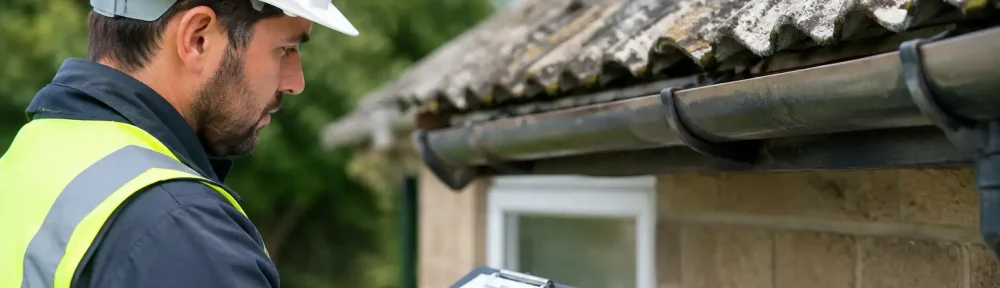
Common locations include asbestos insulating board in fire doors or partitions, textured wall and ceiling coatings, vinyl floor tiles, cement flues and roof sheets, soffits, pipe lagging, sprayed coatings and old fuse-board back panels. Some products present a higher risk than others. Loose-fill insulation, sprayed coatings and damaged pipe insulation can release fibres more readily than intact asbestos cement sheeting.
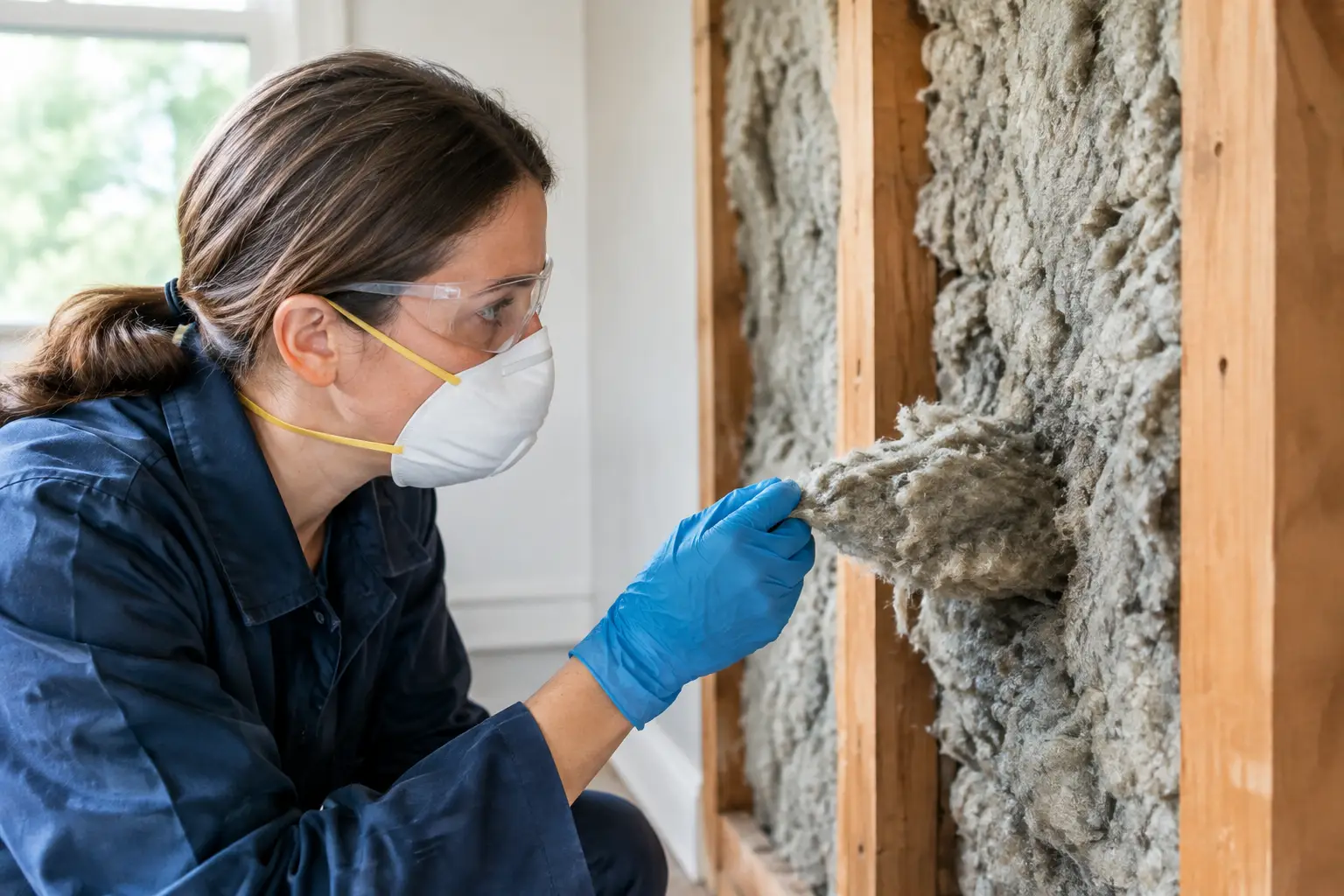
Visual inspection cannot confirm whether a material contains asbestos. Many non-asbestos materials look similar. Sampling and laboratory analysis are required where confirmation is needed, and sampling must be undertaken safely by a competent professional.
Management surveys and refurbishment surveys
The right survey depends on what you intend to do with the building. This distinction is fundamental because a survey designed for routine occupation is not automatically sufficient for alteration works.
A management survey is intended to locate, as far as reasonably practicable, asbestos-containing materials that could be disturbed during normal occupation, cleaning, minor maintenance or installation work. It records locations, assesses material condition and supports an asbestos register and management plan. It is appropriate for premises that remain in use and need ongoing control.
A refurbishment and demolition survey is more intrusive. It is required before refurbishment, major repair, structural alteration or demolition in the areas affected by the works. The survey may involve lifting floors, opening walls, accessing ceiling voids and inspecting behind fixed finishes. Occupants usually need to vacate the survey area while this work is undertaken.
For example, replacing a kitchen may require checks to wall linings, floor finishes, service boxing and ceiling materials. Converting a loft can involve boards, insulation, roof underlay, soffits and pipework. A contractor should not rely on a general management survey if the planned works will disturb concealed fabric that was outside its scope.
The asbestos register and management plan
For dutyholders, a survey report should feed into a live asbestos register rather than sit unread in a file. The register identifies known or presumed asbestos-containing materials, their location, type, condition and any recommended actions. It must be kept current when materials are removed, encapsulated, damaged or newly identified.
The management plan sets out how risks will be controlled. It should identify who holds responsibility, how contractors receive asbestos information, when condition inspections will take place, and what happens if a material is accidentally disturbed. Clear labelling may be appropriate in some locations, but it is not a substitute for an accurate register and effective communication.
Before any maintenance job, the person commissioning the work should check the register against the exact work area. A vague instruction such as “repair the leak in the ceiling” is not enough. The contractor needs to know whether asbestos-containing textured coating, board, insulation or cement products could be affected by access and repair methods.
When asbestos work needs a licensed contractor
Some asbestos work must only be carried out by an HSE-licensed contractor. This generally includes higher-risk work involving friable materials such as asbestos insulation, lagging and sprayed coatings, as well as significant work on asbestos insulating board. The details matter: the material type, its condition, the extent of work and the potential for fibre release all influence the legal category.
Other work may be non-licensed, but it is not unregulated. Workers still need suitable training, risk assessment, controls, protective equipment, waste arrangements and decontamination procedures. Certain non-licensed tasks are notifiable to the enforcing authority and require medical surveillance and health records for workers.
Property owners should not try to classify the work from internet images or a contractor’s verbal reassurance. Ask for the survey findings, proposed method of work, evidence of competence and, where relevant, licence details. For licensed work, notification periods and clearance procedures can affect the programme, so early investigation protects both safety and project costs.
Waste, accidental damage and emergency action
Asbestos waste is hazardous waste and cannot be placed in ordinary household or commercial bins. It must be securely packaged, labelled, transported and disposed of through authorised arrangements. Local authority household waste sites have different acceptance rules, and some will only accept small quantities by appointment. A contractor should confirm disposal arrangements before work begins.
If suspected asbestos is damaged during drilling, a leak repair or strip-out, stop work immediately. Keep people away from the affected area, avoid sweeping or vacuuming with a domestic machine, and prevent further disturbance. The next step is to obtain competent advice on sampling, cleaning and whether air testing or specialist remediation is required. Acting quickly and calmly is far safer than attempting an untrained clean-up.
Asbestos regulations during a property purchase
An asbestos survey is not always included within a standard home survey, and a building inspection cannot confirm asbestos without sampling. However, a surveyor can identify materials and building ages that warrant further investigation. This is particularly relevant where a buyer plans to remove ceilings, replace floors, alter a heating system, reconfigure rooms or undertake a full refurbishment shortly after completion.
The cost of asbestos management can range from modest monitoring and minor encapsulation to substantial licensed removal and reinstatement. Knowing the likely position before exchange can support realistic budgeting, negotiations and a safer programme of works. It also prevents the common scenario in which a contractor starts demolition, finds a suspect material and brings the entire project to a halt.
HICH LTD can help property owners and buyers obtain a clear asbestos survey tailored to the building and the intended works, with practical reporting that identifies findings, risk and recommended next actions.
Asbestos is manageable when it is identified early, recorded properly and left to competent people. Before opening up an older property, treat the survey as part of the project planning, not an afterthought once work has already begun.