
How to Spot Asbestos Insulation in Your Home
A loft hatch, old boiler cupboard or boxed-in pipe can conceal materials that look unremarkable but require careful handling. Knowing how to spot asbestos insulation can help you avoid disturbing a potential hazard before buying, renovating or carrying out routine maintenance. It cannot, however, confirm whether asbestos is present. Only laboratory analysis of a properly taken sample can do that.
For UK property owners, the practical rule is simple: if a material in a building constructed or refurbished before 2000 looks suspicious, leave it alone and arrange professional advice before work starts. Asbestos was fully banned in the UK in 1999, but it remains common in older housing stock and can also be found in materials fitted shortly after the ban.
Why asbestos insulation needs particular care
Asbestos becomes a health risk when fibres are released into the air and breathed in. Insulation products are often among the higher-risk asbestos-containing materials because some are soft, friable or easily damaged. A knock to deteriorating pipe lagging, drilling through an insulation board, or pulling apart loose-fill material may release fibres without creating a dramatic cloud of dust.
The risk depends on the material’s condition, location and likelihood of disturbance. Intact material in an inaccessible void may require management rather than immediate removal. Material that is frayed, exposed near a service route, or likely to be affected by planned refurbishment needs a more urgent assessment.
This distinction matters for buyers and homeowners. An ageing insulation material is not automatically an emergency, but treating it as ordinary waste or attempting a DIY repair can turn a manageable issue into an expensive and potentially unsafe one.
Where asbestos insulation is commonly found
Asbestos was valued for heat resistance and fire protection. It was used around heating systems, structural elements and in some electrical or fire-stopping applications. During an inspection, surveyors pay particular attention to concealed areas and older service installations.
Pipe and boiler lagging
Pipe lagging is one of the most recognisable forms of asbestos insulation, particularly around old central-heating pipes, boilers and calorifiers. It can appear as a rough, fibrous or plaster-like wrapping, sometimes finished with cloth, paint or a protective coating. Colour is not a reliable guide. It may be white, grey, off-white, brownish or painted over several times.
Older boiler cupboards, cellars, understairs areas and communal service cupboards are common locations. Do not peel back coverings or scrape a small section to investigate. Even a seemingly minor inspection can damage fragile lagging.
Loose-fill loft insulation
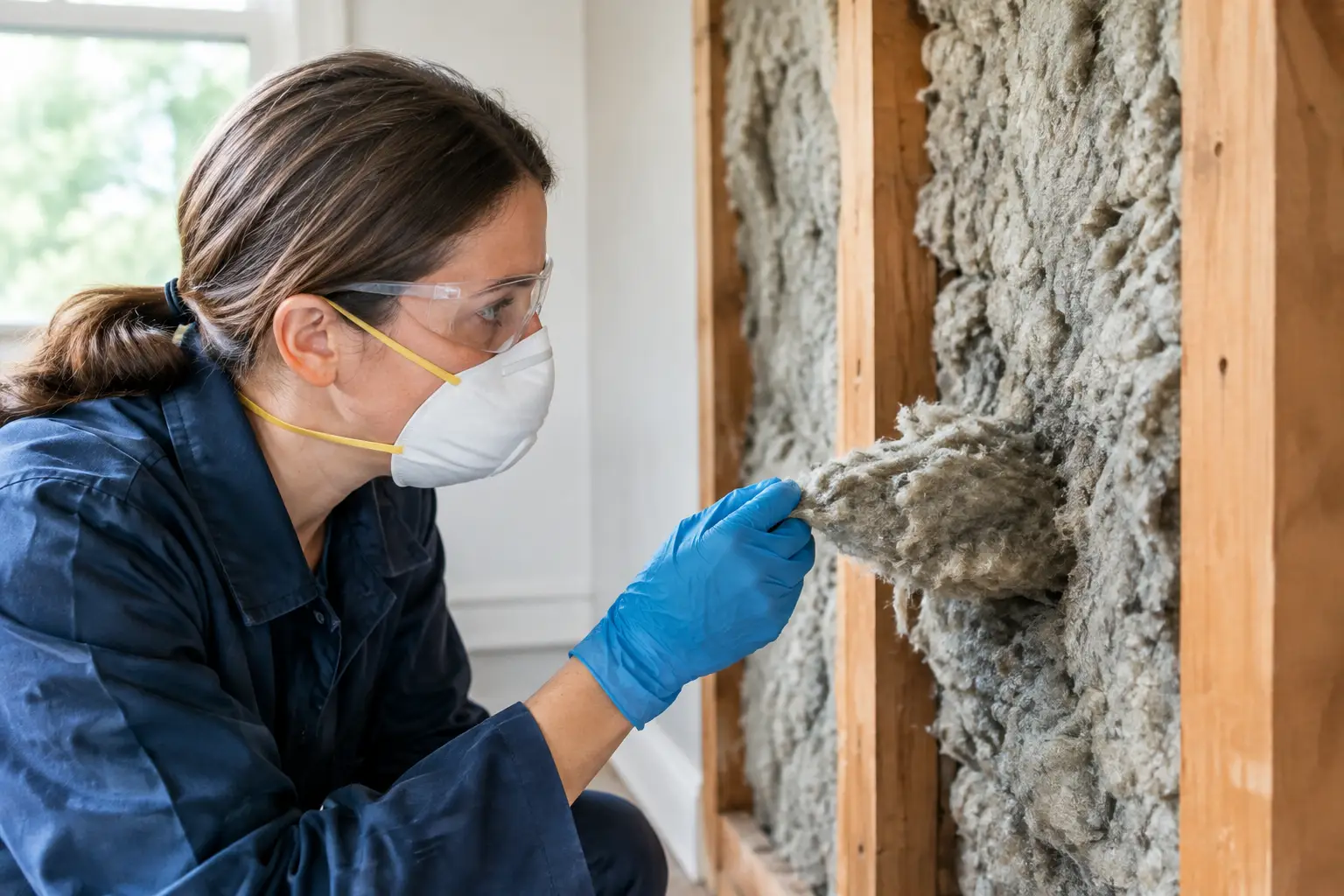
Loose-fill asbestos insulation is generally considered a high-risk material because it can be very friable. It may resemble loose, lightweight, fluffy material in a loft void or under a suspended floor. It has historically been associated with vermiculite-type insulation, although not all loose-fill or vermiculite insulation contains asbestos.
A loft full of loose material should never be disturbed simply to see what is beneath it. Avoid moving stored belongings through it, sweeping it, vacuuming it with a domestic cleaner or walking across it. Restrict access and seek a survey without delay.
Asbestos insulating board
Asbestos insulating board, often called AIB, is a rigid board used for fire resistance and insulation. It may be found in ceiling tiles, partition walls, soffits, boxing around pipes, fire doors, airing cupboards and panels behind heaters or electrical equipment. It is often pale grey, white or cream, but its appearance can closely resemble non-asbestos plasterboard or fibre board.
AIB should not be confused with asbestos cement. Cement products are usually harder and denser, while insulating board is often softer and more easily damaged. That said, visual judgement is not enough to make a safe decision.
Insulation around ducts, heaters and structural steel
Some commercial, converted or larger residential buildings contain sprayed insulation or fire protection around steelwork, ductwork, plant rooms and service risers. These materials can have a rough, textured surface and may have been painted over. They are more likely to be encountered during refurbishment, conversion or intrusive surveys than in day-to-day occupation.
Visual clues are useful, but they are not proof
Age and location can indicate whether asbestos is plausible. A material installed before 2000, used around heat sources or fire barriers, and located in a service area deserves caution. Damage, cracking, exposed edges, powdery surfaces and loose debris raise the priority further.
However, many non-asbestos products look similar. Mineral wool, fibreglass, cellulose insulation, plasterboard, modern fire boards and old textile wraps can all be mistaken for asbestos-containing materials. Equally, asbestos may be hidden behind newer finishes, paint, boxing or replacement heating systems.
This is why online image comparisons are limited. They may help a homeowner recognise that a material warrants professional attention, but they cannot provide a reliable diagnosis. Never rely on colour, texture, age or a photograph alone when deciding whether it is safe to drill, remove or dispose of a material.
What to do if you suspect asbestos insulation
Stop any work that could disturb the material. This includes drilling, sanding, cutting, lifting boards, removing pipe boxing, stripping out a boiler cupboard or clearing a loft. Keep other people away from the immediate area, particularly children and tradespeople who may not know the risk.
Do not sweep debris, use a household vacuum cleaner, bag up loose material or try to take a sample yourself. Opening windows may be appropriate if dust has already been created, but avoid creating draughts that could spread debris through the building. If there has been significant disturbance, leave the area and obtain specialist advice promptly.
For a property purchase, record the location and visible condition, then raise it with your surveyor or conveyancer before exchange. A suspected asbestos issue does not necessarily mean walking away from a property. It may affect the scope and cost of planned works, the timescale for renovation and the price you are prepared to pay. A clear survey result gives you evidence for those decisions rather than guesswork.
The right survey depends on your plans
A management survey is commonly used to identify and manage asbestos-containing materials that may be disturbed during normal occupation or routine maintenance. It helps owners and landlords understand what is present, where it is, its condition and whether it should be monitored, repaired, enclosed or removed.
If you are planning alterations, a kitchen extension, rewiring, bathroom renovation, boiler replacement or strip-out work, a refurbishment and demolition survey may be required for the affected areas. This is more intrusive because it is designed to identify materials that could be disturbed by construction work. The property, or the relevant area, will usually need to be vacant while that inspection takes place.
At HICH LTD, an asbestos survey is intended to give property clients a practical picture of the materials and risks identified, supporting safer maintenance, renovation planning and purchase decisions. The key is arranging the survey early enough that findings can inform budgets, programmes and contractor instructions.
What a professional asbestos inspection can tell you
A competent surveyor does more than look for obvious lagging. They assess the building’s age, construction and accessible service routes, inspect likely asbestos locations and record the condition of suspect materials. Where sampling is appropriate, it should be undertaken safely and analysed by a suitable laboratory.
The resulting report should identify locations clearly, describe material condition, explain the risk of disturbance and set out proportionate next actions. For some materials, that may mean labelling and periodic monitoring. For damaged or high-risk insulation, it may mean encapsulation, repair or removal by an appropriately qualified contractor.
There are limits. No survey can identify materials hidden behind finishes or in inaccessible voids unless the agreed inspection scope allows opening-up. Be clear about your plans when booking. A buyer wanting reassurance before exchange has different needs from a developer preparing to remove walls and replace services.
Do not let uncertainty delay a safe decision
The most reliable way to spot asbestos insulation is to recognise when a material needs professional identification, rather than trying to prove it yourself. If an older pipe wrap, loft material or insulation board is damaged, exposed or likely to be disturbed, pause the work and arrange an appropriate survey. That small decision can protect occupants, prevent costly contamination and give you a sound basis for the next step.