

What a Post Purchase Defect Report Should Show
A newly bought home can look sound on completion day, then reveal cracked render, roof leaks, damp patches or poorly finished alterations once you start living in it. A post purchase defect report provides an independent, structured assessment of those concerns, helping you understand what has gone wrong, how urgent it is and what practical action may be required.
For homeowners, landlords and property investors, the value is not simply in producing a list of faults. A properly prepared report should distinguish between cosmetic issues, maintenance needs and defects that could affect the building’s weather resistance, structural performance, safety or future repair costs. It gives you evidence to plan repairs, approach contractors with clearer information and consider whether a warranty, insurance or legal matter needs further advice.
When a post purchase defect report is the right service
A post purchase defect report is most useful when concerns arise after completion and you need a qualified building professional to investigate the property’s condition. This may be within days of receiving the keys or months later, when seasonal weather or normal occupation makes a problem more apparent.
Typical triggers include water ingress around chimneys or rooflights, persistent condensation and mould, cracking to walls, uneven floors, defective drainage, missing insulation, poorly installed windows, or signs that a recent refurbishment has not been completed to an acceptable standard. Buyers of new-build homes may also require an independent opinion on defects identified after moving in, particularly where they need to communicate clearly with a developer or warranty provider.
The inspection can also be valuable where a pre-purchase survey identified risks but the extent of the issue was not clear before the property was occupied. A survey carried out before exchange is necessarily limited by access, furnishings, weather conditions and the non-invasive nature of most inspections. Once you own the building, a more focused investigation can assess the concern in greater detail.
It is not a substitute for every specialist assessment. If there is an immediate electrical, gas, fire or structural safety risk, the relevant competent emergency professional should be contacted without delay. Likewise, suspected asbestos may require a dedicated asbestos survey and sampling strategy. The right scope depends on the defect, the property type and the evidence required.
What the inspection should assess
A useful defect report starts with the building rather than assumptions. The surveyor should inspect the visible symptoms, consider likely causes and review how the defect relates to the construction, age and condition of the property. For example, a damp stain on a bedroom ceiling may result from a roof covering failure, defective flashing, condensation in the roof void or a leaking pipe. The stain is evidence, not the diagnosis.
The inspection should consider accessible internal and external elements relevant to the problem. This can include roof coverings, chimneys, rainwater goods, external walls, windows, foundations where visible, internal finishes, roof spaces, floors, plumbing evidence and ventilation arrangements. The scope should be agreed in advance so you know whether the survey is a targeted inspection or a wider review of the property.
Where appropriate, diagnostic equipment can strengthen the findings. Moisture meters, thermal imaging, borescopes and level surveys can help identify patterns that are not obvious during a visual inspection. These tools are valuable when used by an experienced surveyor who understands their limitations. A moisture reading alone does not prove rising damp, and a thermal image can indicate heat loss or potential moisture but cannot independently confirm the cause.
A clear description of each defect
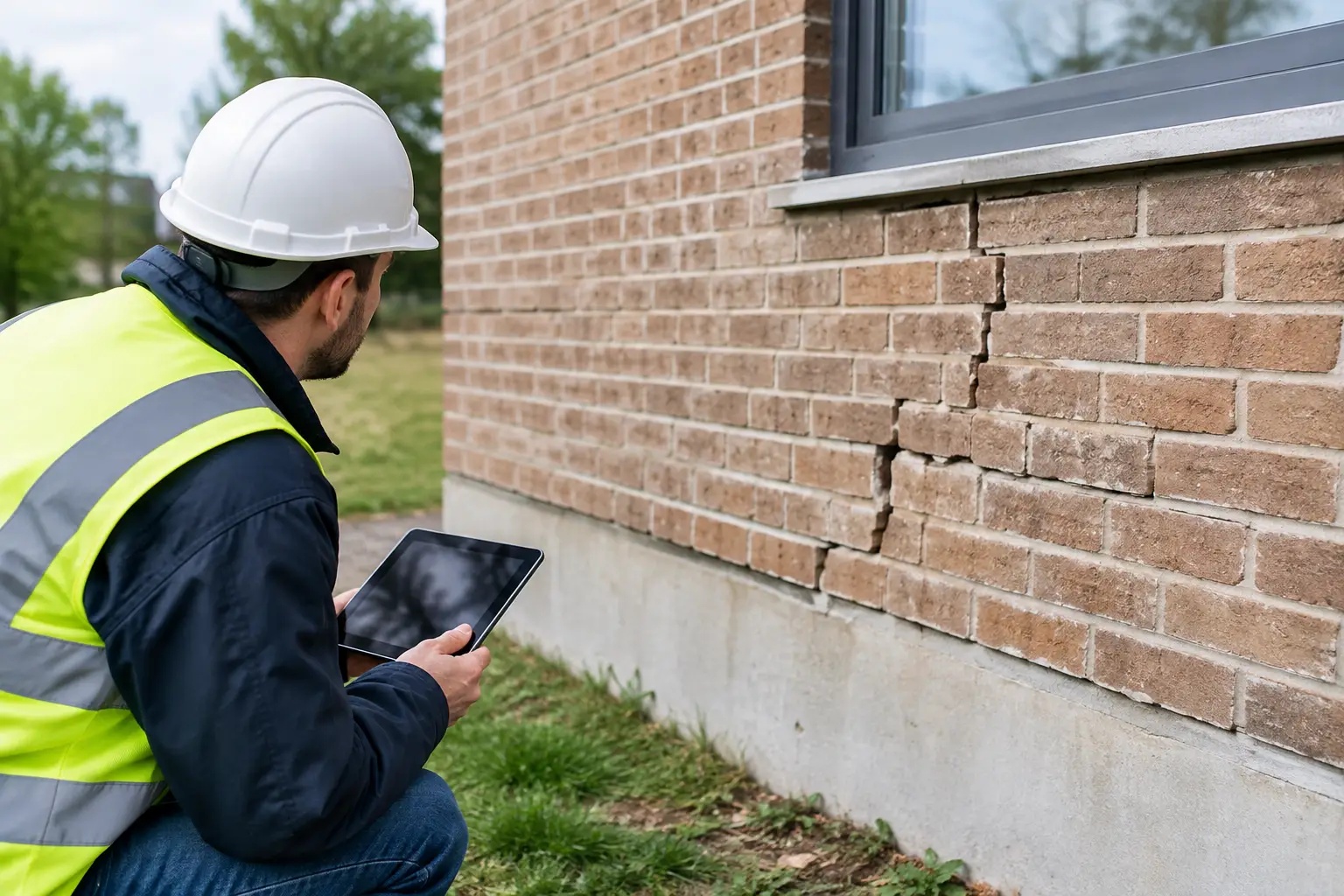
The report should identify the location and nature of the issue in plain language, supported by photographs where possible. It should state whether the defect appears isolated or widespread, whether it is active or historic, and which building elements are affected.
A sound report avoids vague statements such as “monitor the issue” without explaining what to monitor, for how long and what change would justify further action. If cracking is present, for instance, the report should describe its position, direction, width and surrounding condition, while making clear whether monitoring, local repair or specialist structural investigation is recommended.
Likely cause, consequences and priority
Homeowners need more than a catalogue of observations. The report should explain the probable cause of a defect and the likely consequences of leaving it unresolved. A slipped roof tile may be a straightforward maintenance item, but continued water penetration can damage timbers, insulation and plaster finishes. Defective drainage may initially appear minor but can contribute to dampness, erosion or localised movement if ignored.
Priority ratings are particularly helpful. Urgent items may involve active water ingress, unsafe masonry, serious roof defects or conditions that could worsen rapidly. Other matters may be suitable for planned maintenance, allowing you to budget and organise works in a sensible order. This distinction prevents unnecessary expenditure while ensuring genuinely significant defects are not overlooked.
Repair recommendations and cost awareness
A defect report should set out proportionate next steps. These may range from clearing gutters and renewing sealant to engaging a roofing contractor, drainage specialist, structural engineer or damp and timber professional. Recommendations should focus on correcting the underlying cause rather than repeatedly treating visible symptoms.
Indicative repair-cost awareness can assist with budgeting, but precise quotations should normally be obtained from suitably qualified contractors after they have inspected the work. Cost depends on access, property height, materials, extent of hidden damage, regional labour availability and whether associated repairs are required. A report can help you compare quotations on a more informed basis and challenge proposals that do not address the diagnosed defect.
Evidence matters after completion
When a fault is discovered shortly after purchase, it is tempting to assume that the seller, developer or surveyor is automatically responsible. The position is rarely that simple. Liability can depend on the property transaction, contractual wording, disclosures, warranties, previous reports, the age of the building and whether the issue was visible or reasonably discoverable at the time.
An independent report can provide a useful factual record of condition at the time of inspection. It may support discussions with a developer, builder, insurer, managing agent or another party, but it should not overstate what can be proven. A visual building inspection may identify likely causes and the apparent age or progression of damage, yet it cannot always establish precisely when a hidden defect began or who caused it.
If a dispute is likely, arrange the inspection early and retain supporting evidence. Keep dated photographs, completion documents, sales particulars, warranty information, contractor invoices, correspondence and copies of any pre-purchase survey. Avoid carrying out extensive remedial works before the condition has been properly recorded, unless immediate works are needed to make the property safe or prevent further damage.
For formal legal proceedings, an expert report may need a specific scope and must meet requirements set by solicitors, insurers or the court. A standard defect report can be a strong starting point, but it is not automatically a litigation-compliant expert witness report. Being clear about the intended use at the outset helps ensure the right service is commissioned.
Choosing the right surveyor and scope
The usefulness of the report depends heavily on the person inspecting the property. Look for a qualified building surveyor or building engineer with practical construction knowledge and experience of the defect concerned. Older solid-wall houses, converted flats, timber-frame homes and recently built properties can all present different failure patterns.
Before booking, explain what you have seen, when it first appeared and whether the issue changes after rain, cold weather or use of a particular room. Provide any previous survey report and photographs, but allow the surveyor to reach an independent view. Agree whether you need a single-issue investigation, a whole-property review, thermal imaging, a roof inspection or another specialist service.
HICH LTD provides focused building diagnostic inspections designed to identify visible defects, explain repair priorities and give property owners practical evidence for their next decision. Fixed-fee pricing and a clearly defined scope are particularly useful where you need to act quickly without uncertainty over inspection costs.
Getting value from your report
Once the report arrives, read the priority recommendations first and act on any safety or active water-ingress issues promptly. Then obtain quotations that reflect the recommended scope of repair, rather than accepting a contractor’s proposed solution without comparison. If findings are unclear, ask the surveyor to explain the practical meaning of the defect and whether further opening-up works or specialist testing would change the diagnosis.
A well-timed inspection cannot remove the frustration of finding faults after completion, but it can replace uncertainty with a defensible plan. Record the problem, protect the property from further deterioration and commission advice that addresses the cause, not merely the visible damage.