
How to Identify Asbestos Materials Safely
If you are trying to work out how to identify asbestos materials in a house or commercial building, the first thing to know is this: you cannot confirm asbestos by sight alone. Many products that contain asbestos look almost identical to non-asbestos alternatives, and disturbing them without the right precautions can create a far bigger problem than leaving them alone.
That is where a calm, methodical approach matters. Whether you are buying a property, planning refurbishment works, investigating old ceiling finishes, or checking a garage roof, the aim is not to guess. It is to recognise likely asbestos-containing materials, understand the level of risk, and know when professional sampling or a formal asbestos survey is needed.
How to identify asbestos materials in UK properties
In the UK, asbestos was widely used in residential, commercial and industrial buildings for much of the 20th century because it was cheap, durable and highly resistant to heat. It appeared in everything from insulation boards and pipe lagging to textured coatings, floor tiles and cement roofing sheets. Although the use of asbestos was heavily restricted and eventually banned, many buildings still contain it today.
As a rule of thumb, any property built before 2000 should be treated with caution. That does not mean asbestos is definitely present, but it does mean it is possible. The older the property, and the less evidence there is of modern replacement materials, the more carefully you should assess suspect items.
The challenge is that identification depends on more than appearance. Surveyors consider the age of the building, the location of the material, its condition, its manufacturing style, and whether that product type commonly contained asbestos when installed. Laboratory analysis is then used to confirm the presence or absence of asbestos fibres.
Common asbestos materials and where they are found
Some materials are far more likely than others to contain asbestos. In domestic properties, one of the most familiar examples is asbestos cement. This was used in garage roofs, shed roofs, rainwater goods, flue pipes, soffits and wall panels. It is usually hard, greyish and cement-like in appearance, sometimes with a dimpled or corrugated finish.
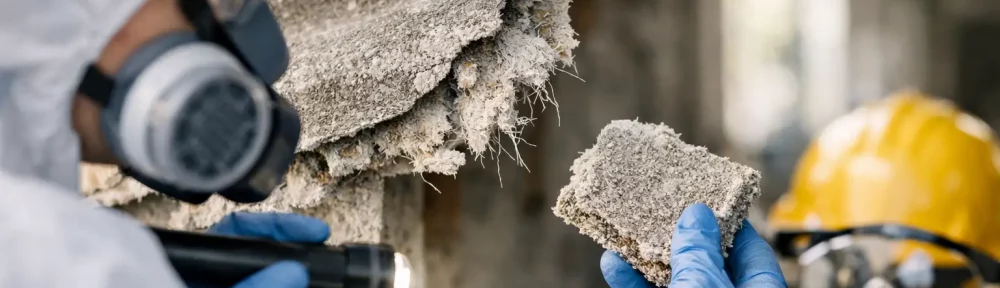
Another common material is AIB, or asbestos insulating board. This was used for fireproofing, partition walls, ceiling tiles, service risers, boiler cupboards, and panels behind heaters or fuse boards. It can look similar to ordinary board products, which is why visual checks are not enough. AIB is generally more hazardous than asbestos cement because it can release fibres more easily if cut, drilled or damaged.
Textured coatings are another area that causes confusion. Decorative finishes applied to ceilings and walls, including older artex-type products, may contain asbestos. So can vinyl floor tiles and the bitumen adhesive beneath them. These materials are often left in place safely, but they become a concern during stripping, sanding or refurbishment.
Higher-risk asbestos materials include pipe lagging, loose-fill insulation and sprayed coatings. These are more likely to release fibres and require a much greater level of control. They are less common in ordinary houses than cement sheets or textured coatings, but they do still appear in older buildings, outbuildings, communal areas and commercial premises.
Visual clues that may suggest asbestos
If you are wondering how to identify asbestos materials before arranging a survey, the safest answer is to look for indicators, not proof. Age is a major indicator. If the material was installed before the asbestos ban, it falls into the category of suspect material.
The product type is another clue. Corrugated cement roof sheets on older garages, rigid boards lining service cupboards, old floor tiles in 9-inch formats, and pipe insulation in older heating systems all justify closer attention. Manufacturer markings can occasionally help, although many products have none visible or have been painted over.
Condition also matters. Cracked, drilled, broken or fraying materials deserve greater concern than intact, sealed products. That does not always mean the damaged material is high risk, but deterioration increases the chance of fibre release. If dust or debris is visible around a suspect material, avoid disturbing the area until it has been assessed properly.
Colour and texture are less reliable than many people assume. Asbestos insulation board, fibre cement and non-asbestos substitutes can overlap in appearance. One board may look pale grey and dense, while another appears off-white and fibrous, but those visual differences do not provide certainty.
What you should not do
A lot of asbestos exposure happens during casual renovation work. Homeowners remove old ceiling finishes, drill through boards, pull up floor tiles or break apart garage panels without realising what they are handling. That is why suspicion should lead to caution, not DIY investigation.
Do not sand, scrape, cut, snap or drill any suspect material. Do not use a vacuum cleaner on asbestos dust, and do not sweep debris with a dry brush. Both actions can spread fibres into the air. Even taking your own sample is not a sensible first step unless you have the right knowledge, equipment and controls in place.
If the material is damaged, keep people away from the area where possible and avoid further disturbance. In many cases, asbestos is safest when left undisturbed until a qualified professional can inspect it.
When a material is low risk and when it is not
Not all asbestos-containing materials present the same level of risk. This is an important distinction because it affects how urgently the issue needs to be dealt with and what type of remediation may be required.
Asbestos cement is generally considered lower risk because the fibres are tightly bound into the cement matrix. An intact garage roof made of asbestos cement may not require immediate removal if it is in stable condition and unlikely to be disturbed. It still needs to be managed properly, but the risk profile is different from friable insulation products.
AIB, lagging and loose-fill insulation are much more concerning. These materials can release fibres more readily, particularly if damaged or worked on. If you are planning refurbishment, even relatively minor works can create a serious hazard if hidden asbestos is present in partitions, ceilings, ducts or service boxing.
This is why asbestos decisions are rarely one-size-fits-all. The right response depends on the material type, its condition, the location, and whether anyone is likely to disturb it during maintenance, sale preparation or building works.
The role of asbestos sampling and surveys
The only dependable way to confirm asbestos is through testing. A professional surveyor will inspect the property, identify suspect materials, assess their condition and risk, and where appropriate arrange representative sampling for laboratory analysis.
For a homeowner or buyer, this can remove uncertainty quickly. Instead of relying on guesswork, you get a clear record of what is present, where it is located, and whether it needs management, encapsulation or removal. That is particularly useful before purchase, before refurbishment, or when negotiating repair costs.
There are different types of asbestos survey depending on the purpose. A management survey is generally used to locate asbestos-containing materials that could be disturbed during normal occupation or routine maintenance. A refurbishment or demolition survey is more intrusive and is needed before major works. Choosing the wrong survey can leave critical risks undiscovered, so the survey scope should match the planned use of the building.
For clients who need fast, practical answers, that clarity is often more valuable than the test result itself. It supports budgeting, contractor planning and risk reduction in a way that an informal visual opinion simply cannot.
Who should be most cautious
Property buyers should be alert where older garages, artex ceilings, dated service cupboards, old floor finishes or outbuildings are involved. Landlords need to take a structured view of asbestos risk, especially in common parts and maintenance areas. Developers and refurbishing owners should be particularly careful because invasive works are one of the most common triggers for fibre release.
Construction professionals, trades and managing agents also need to avoid assumptions. A material that appears harmless may require formal assessment before works begin. Delays caused by unexpected asbestos are expensive, but uncontrolled disturbance is far worse.
If you are unsure, a professional asbestos survey is usually the most cost-effective route because it replaces uncertainty with evidence. For many clients, that means fewer surprises, better repair planning and stronger support when making purchase or project decisions.
The safest way to approach suspect materials is to respect the uncertainty. If a building element looks old enough, unusual enough, or poorly documented enough to raise the question, pause before touching it. Good property decisions are built on proper inspection, not guesswork, and that is especially true with asbestos.