
Example Building Defect Report Explained
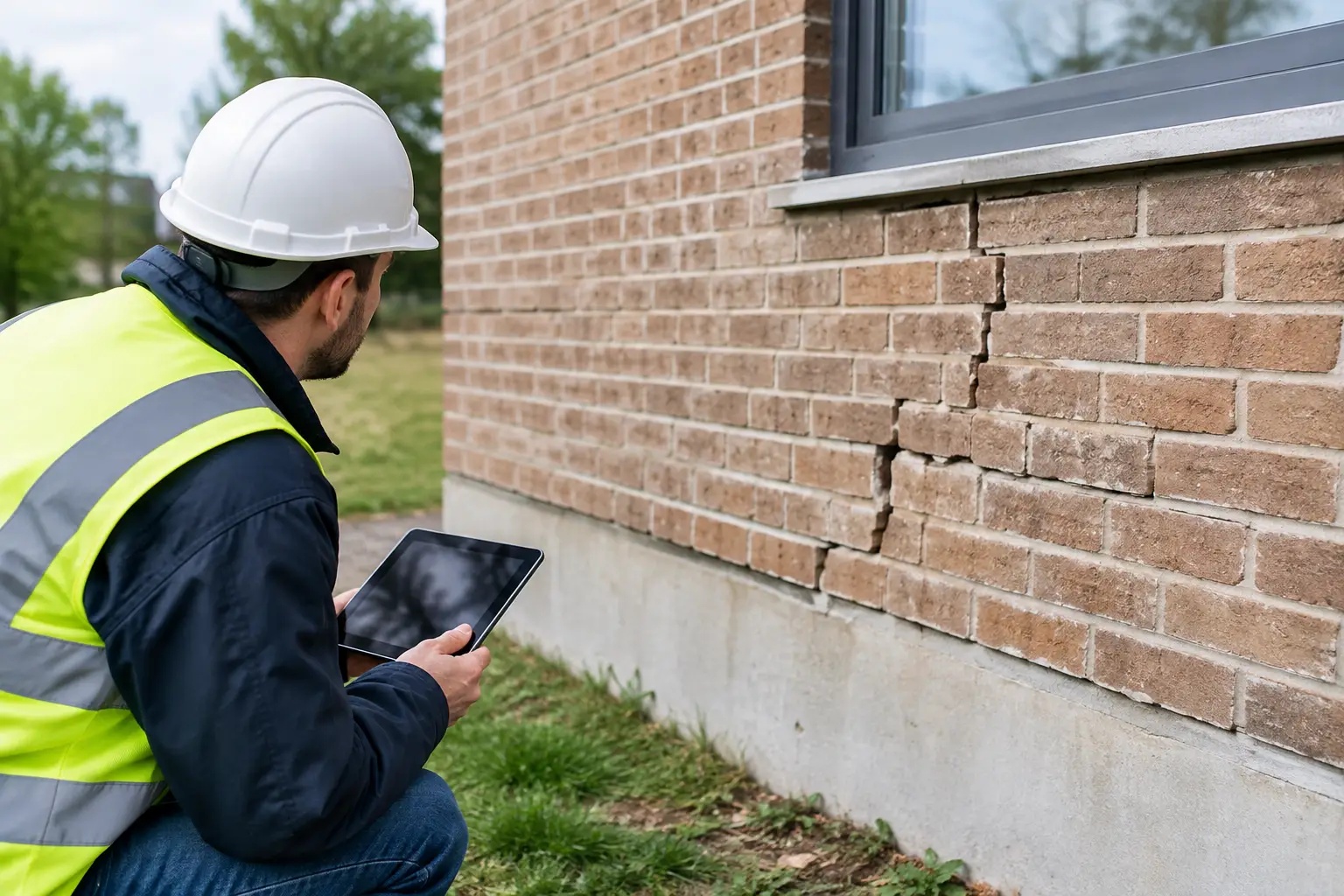
A crack over a window, a damp patch in the loft, slipped tiles on the rear slope – on their own, each issue can seem manageable. The problem is that defects rarely sit in isolation. An example building defect report shows how a qualified surveyor turns those visible warning signs into a clear assessment of cause, severity, likely repair needs and next steps.
For buyers, that can shape whether to proceed, renegotiate or ask further questions before exchange. For homeowners and landlords, it can mean the difference between a controlled repair programme and a much larger bill later. The value of the report is not simply that it lists faults. It explains what they mean in practical terms.
What an example building defect report should actually show
A useful report does more than describe damage. It should set out the property details, the areas inspected, the limitations of the inspection and the defects identified, then interpret the findings in plain English. That balance matters because most clients are not looking for technical language for its own sake. They need reliable information they can act on.
In most cases, the report should identify the location of each defect, record its apparent nature and note any visible symptoms. It should also explain the likely cause where this can be reasonably established during a non-intrusive inspection. For example, cracking may relate to thermal movement, historic settlement, lintel failure or moisture-related deterioration. Those are very different issues, and the report needs to distinguish between them.
The best reports also make clear where certainty is limited. A surveyor may strongly suspect hidden timber decay beneath a roof leak, but if finishes prevent full access, that should be stated. A dependable report is not one that pretends to know everything. It is one that gives an honest professional view, explains risk properly and recommends further investigation where needed.
Key sections in an example building defect report
The format varies between providers and depending on the type of inspection, but certain sections are consistently useful.
Property and inspection details
This section sets the context. It should confirm the address, date of inspection, property type, approximate age, construction form and the scope of the service. A defect report for a Victorian terrace will not look the same as one for a modern timber-frame house or a converted flat in a listed building. Construction type changes both the likely defects and the appropriate repair approach.
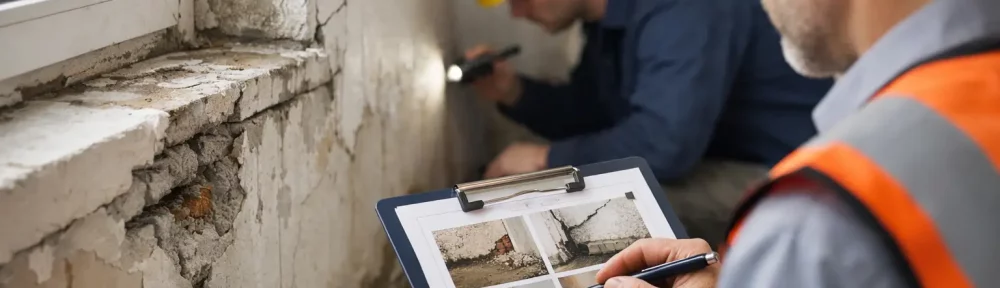
The inspection details should also record any access restrictions. If loft voids, sub-floor spaces or roof coverings were not fully accessible, that affects the depth of diagnosis and should be transparent from the outset.
Defect schedule
This is often the part clients look at first. It should describe each issue clearly, usually by building element – roof, walls, windows, structure, internal finishes, drainage and external areas. Good reports do not bury the main concerns in long paragraphs. They prioritise the significant defects and distinguish them from minor maintenance items.
A hairline shrinkage crack in plaster does not carry the same weight as stepped cracking associated with movement. Condensation mould around a cold bridge is different from rising damp, and confusion between the two can lead to wasted repair spend. The report should help the reader understand those differences quickly.
Cause, implications and urgency
This is where expertise shows. A report should explain not only what is wrong, but why it matters. If roof coverings are nearing the end of their serviceable life, the implication may be ongoing water ingress and damage to the underlying structure. If external ground levels are too high against a wall, the result may be dampness, material decay and poor ventilation at low level.
Urgency should also be stated in practical terms. Some defects require immediate attention because they affect safety, weather tightness or structural stability. Others can be monitored or addressed as part of planned maintenance. That distinction helps clients budget sensibly and avoid panic over issues that are not yet critical.
Recommendations and likely repair considerations
A strong report gives direction. That does not always mean a full specification of works, but it should point the client towards the next sensible step. That may involve localised repairs, specialist testing, monitoring, contractor quotations or more intrusive investigation.
Where appropriate, the report may also comment on the likely scale of repair liability. Precise costs are not always possible without opening up works or contractor pricing, but repair-cost awareness is still valuable. Clients want to know whether they are looking at a modest maintenance item or a substantial capital expense.
Why examples can be misleading without context
Many people search for an example building defect report because they want to know what to expect before instructing a survey. That makes sense, but examples have limits. A report is only as useful as the inspection behind it.
Two houses with similar damp staining may have completely different underlying problems. One may be suffering from a leaking gutter and saturated masonry. Another may have condensation caused by insulation gaps, restricted ventilation and high moisture generation indoors. A generic example can show report structure, but it cannot replace property-specific diagnosis.
This is also why very brief or low-cost reports can disappoint. If the inspection is superficial, the report may simply restate visible symptoms without explaining the mechanism behind them. That leaves the client with a document, but not necessarily with clarity.
What separates a professional defect report from a basic checklist
A checklist can be useful for flagging obvious concerns, but it is not the same as a diagnostic document. The difference lies in interpretation, prioritisation and accountability.
A professional report should be prepared by someone with appropriate surveying or building engineering knowledge and practical understanding of how buildings fail in real conditions. That matters because defects often overlap. A roof problem may trigger ceiling staining, timber decay, insulation damage and mould growth. Structural movement may affect drainage runs, openings and internal finishes. If each symptom is treated as a separate issue, the real cause can be missed.
Professional reporting should also be evidence-led. Photographs, measured observations, pattern recognition and construction knowledge all feed into the conclusion. The wording should be clear enough for a homeowner to understand, but formal enough to support negotiations, maintenance planning or dispute discussions where needed.
When a building defect report is worth commissioning
Not every concern needs a specialist defect report. If a buyer is already commissioning a full structural survey, many issues may be covered there. Equally, if a contractor is carrying out straightforward maintenance, a separate report may not always be necessary.
Where defect reports become especially valuable is when there is a specific concern that needs focused analysis. That might include cracking, persistent dampness, roof leaks, thermal anomalies, suspected structural movement, snagging issues in a new-build property or disagreement over the cause of damage. In those cases, targeted reporting can save time and reduce the risk of paying for the wrong repair.
For landlords and developers, the commercial benefit is often speed and clarity. A well-prepared report can help establish scope, support budgeting and reduce back-and-forth with contractors. For residential buyers, it can provide a firmer basis for price negotiation or for deciding whether the property still represents good value.
Reading an example building defect report the right way
If you are reviewing a sample report before booking, look beyond the layout. Ask whether the findings are specific, whether the defects are prioritised and whether the recommendations are useful. A polished document means little if it avoids clear conclusions.
It is also worth checking whether limitations are sensibly explained. Every inspection has boundaries, especially where access is restricted or finishes conceal the structure. That is normal. What matters is whether the report handles those limits professionally and still gives you a reasoned assessment based on what could be seen.
At HICH LTD, this is where practical surveying experience makes a difference. Clients are not simply looking for defects to be noted. They need them interpreted in a way that supports decisions on purchase, repair, negotiation and risk.
The report should help you decide what happens next
A good defect report is not written to impress another surveyor. It is written to help the client make a sound decision. Sometimes that decision is to carry out urgent repairs. Sometimes it is to seek specialist testing, obtain quotations or renegotiate a purchase. And sometimes the answer is reassuring – a defect may be unsightly, but not structurally significant.
That is why the best reports combine technical judgement with plain speaking. Buildings are rarely perfect, especially across older UK housing stock. The goal is not to produce alarm. It is to identify what matters, explain what can wait and give you a clear basis for action while the issue is still manageable.