
Is Asbestos Always Dangerous in Your Home?
A ceiling tile, textured coating or old garage roof can contain asbestos without giving any obvious warning. That is why the question, is asbestos always dangerous, needs a more useful answer than a simple yes or no. The material is hazardous, but the immediate risk depends on its condition, location and whether fibres can become airborne.
For property buyers, homeowners and landlords, the priority is not to guess. It is to identify suspected materials properly, understand whether they are damaged or likely to be disturbed, and make a proportionate plan for managing or removing them.
Is asbestos always dangerous?
Asbestos-containing materials are not automatically an immediate danger simply because they are present. When asbestos is in good condition, sealed, inaccessible and unlikely to be disturbed, it may often be safer to manage it in place than remove it straight away.
The health risk arises when microscopic asbestos fibres are released into the air and breathed in. This can happen when materials deteriorate naturally, are drilled, sanded, cut, broken, stripped or disturbed during repairs and refurbishment. The fibres cannot be seen or smelt, so a material may look harmless while still presenting a serious risk if handled incorrectly.
This distinction matters in older UK properties. An intact asbestos cement garage roof, for example, is generally lower risk than damaged asbestos insulation board around a boiler cupboard. Both require informed management, but their fibre-release potential is very different.
Asbestos-related diseases can take decades to develop. For that reason, there is no sensible benefit in taking chances with a suspected material. The correct response is measured action based on a competent inspection, rather than panic or DIY investigation.
What makes asbestos more hazardous?
The level of concern depends largely on the type of asbestos-containing material and its condition. Some products are firmly bound within cement, resin or bitumen. Others are softer, more friable and can release fibres more readily when damaged.
Higher-risk materials commonly include asbestos insulation board, pipe lagging, sprayed coatings, loose-fill insulation and certain textured finishes. Lower-fibre-release products can include asbestos cement sheets, floor tiles, roofing felt and some vinyl coverings. Lower risk does not mean risk-free: drilling through an asbestos cement sheet or breaking old floor tiles can still release fibres.
Location is equally important. A sealed panel hidden in a little-used loft may present limited day-to-day concern. The same material beside a regularly used stairwell, in a service cupboard or around heating pipework may be more likely to suffer accidental damage. Properties undergoing renovation deserve particular care because even minor work can turn a stable material into a contamination issue.
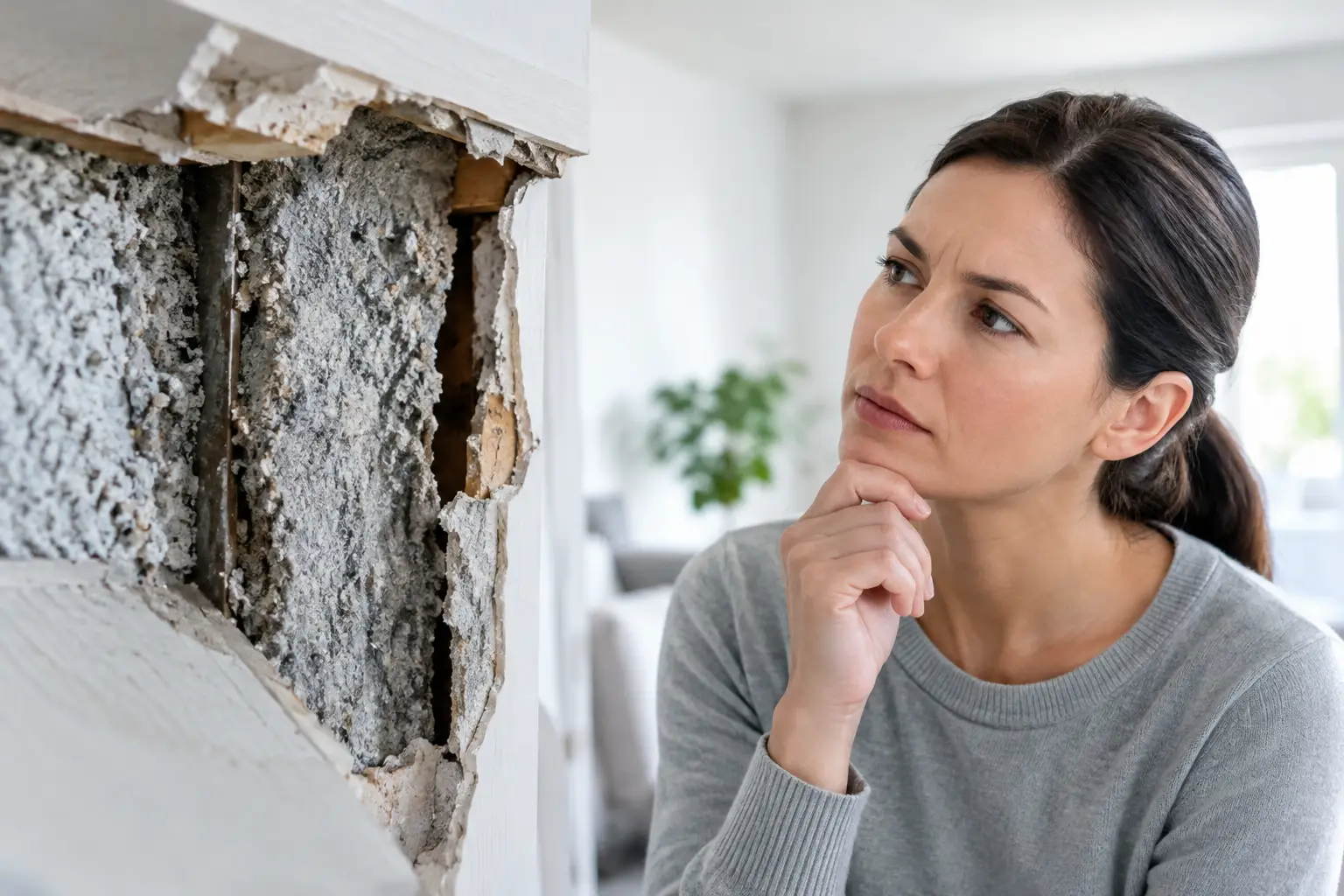
Condition changes the assessment. Cracks, exposed edges, water damage, fraying, debris beneath insulation, surface abrasion and previous unprofessional work can all increase the likelihood of fibre release. A surveyor will also consider accessibility, occupancy and the likelihood of future disturbance before advising on the next step.
Where asbestos may be found in UK properties
Asbestos was widely used in building products until it was finally banned in the UK in 1999. Any building constructed or refurbished before 2000 could contain it, including houses, flats, schools, offices, warehouses and commercial units.
It may be present in garage and outbuilding roofs, rainwater goods, soffits, boiler flues, partition walls, ceiling tiles, textured coatings, floor tiles, electrical backing boards, fire doors, pipe insulation and old fuse cupboards. This broad range is one reason visual assumptions are unreliable. Materials that appear similar can have completely different compositions.
A property’s age can help indicate potential exposure, but it cannot confirm or rule out asbestos. Later alterations may have introduced older reclaimed products, while earlier asbestos-containing materials may have been professionally removed. Only a suitable survey and, where required, laboratory analysis can provide a reliable identification.
When should asbestos be left alone?
Leaving asbestos in place can be the safest option where it is sound, protected and unlikely to be disturbed. Removal itself is a disturbance activity, so it should not be treated as the automatic solution for every item found.
A managed approach may involve recording the material in an asbestos register, clearly identifying its location, checking its condition periodically and ensuring that contractors are made aware before any work begins. For landlords and those responsible for non-domestic premises, formal duties may apply under the Control of Asbestos Regulations 2012. Domestic homeowners may not hold the same legal duty, but the practical need to protect occupants and tradespeople remains.
Management is only appropriate when the material can genuinely remain undisturbed. If you are planning to replace a kitchen, rewire a property, convert a loft, remove a ceiling or repair a leaking roof, the planned work needs to be assessed first. What was safe to leave alone may no longer be safe once work starts nearby.
Do not test or remove suspected asbestos yourself
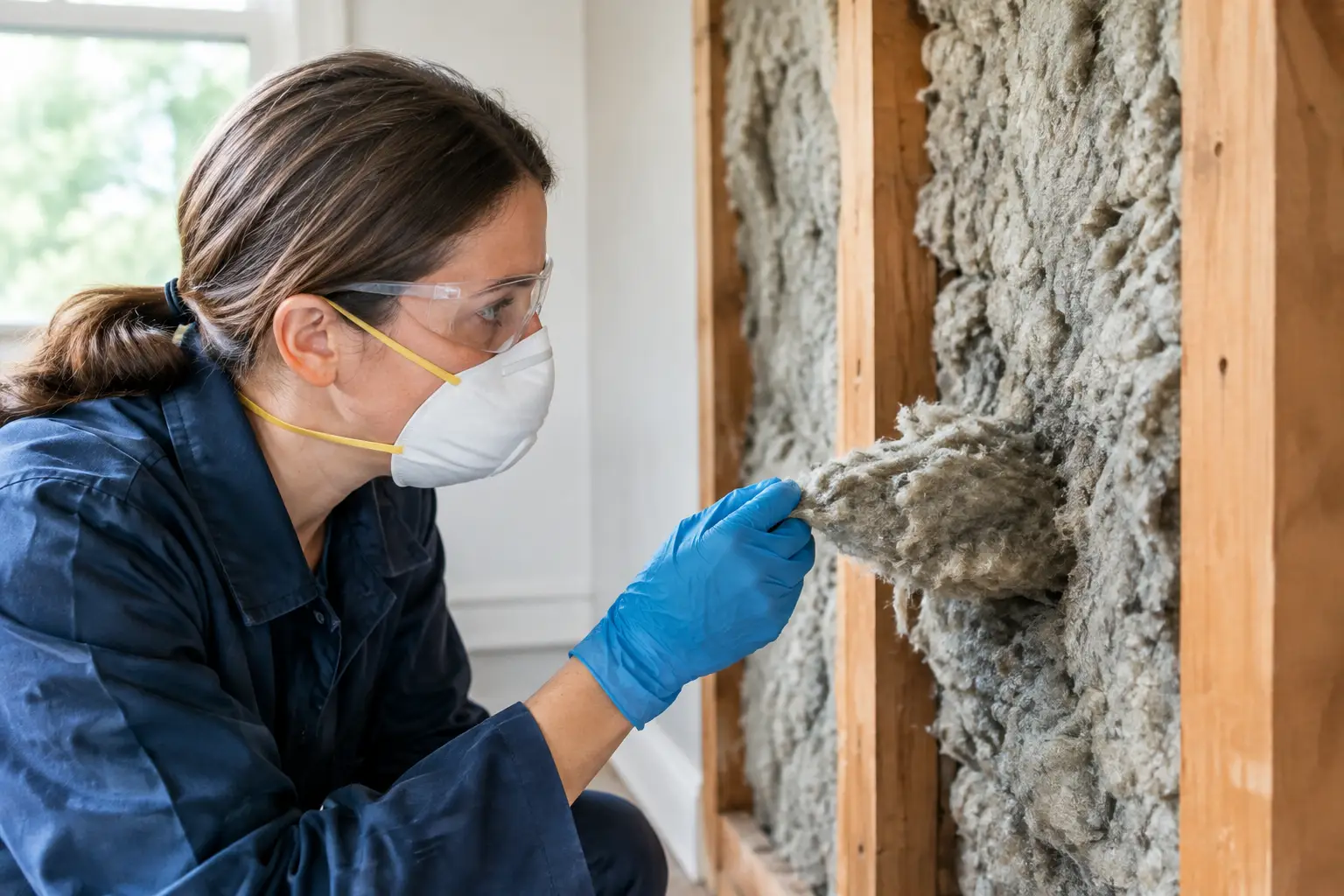
Sampling, breaking off a corner or drilling a small ‘test hole’ can create the very hazard you are trying to avoid. Do not sand, scrape, pressure-wash, sweep up debris or use a standard domestic vacuum cleaner on suspected asbestos materials.
If a material is damaged, restrict access to the area where practical and avoid moving debris. Do not attempt a temporary repair with tape, sealant or paint unless a competent professional has advised that approach. The right response will depend on the product, the extent of damage and whether fibres may have spread beyond the immediate area.
Not every asbestos-related task requires the same level of contractor. Some work can be completed by suitably trained non-licensed contractors under controlled conditions, while higher-risk work must be undertaken by a licensed asbestos contractor. A competent survey and clear scope of work help establish which route applies.
The right survey depends on your plans
An asbestos management survey is generally used to locate and assess asbestos-containing materials that could be disturbed during normal occupation, routine maintenance or foreseeable minor works. It provides a practical basis for a register and management plan.
If you are planning refurbishment, alteration or demolition, a more intrusive refurbishment and demolition survey is normally required in the affected areas. This survey is designed to identify materials that may be disturbed by the proposed works. It can involve inspection behind walls, ceilings, floors and service enclosures, so the relevant area is often vacated before the survey takes place.
For a buyer, an asbestos survey can provide valuable clarity before exchange or before committing to refurbishment costs. It can identify potential risks, support discussions about remedial work and prevent a contractor from uncovering costly issues after work has begun. For a landlord or developer, it provides a clearer basis for planning works, protecting contractors and managing property records.
A qualified surveyor should explain the survey type, limitations and the condition of any suspected materials. Where samples are taken, they should be analysed by an appropriate laboratory. The resulting report should do more than list locations: it should help you understand material risk, urgency, recommended controls and whether specialist removal is likely to be required.
Practical steps for buyers and owners
If you suspect asbestos, pause any work that could disturb the material. Take clear photographs from a safe distance if needed for initial advice, but do not touch, drill or collect a sample.
Next, consider the property’s age, the material’s location and your plans for the building. A stable garage roof may only need monitoring, while a damaged panel in a planned bathroom refurbishment needs prompt professional assessment. If you have already disturbed a suspected material, tell the surveyor or contractor exactly what happened. Accurate information helps them assess whether further action is needed.
For clients who need clear defect analysis before purchase, refurbishment or repair, HICH LTD can arrange an asbestos survey that is matched to the property and proposed works. A properly scoped inspection gives you a practical record of what has been found and what should happen next, without paying for unnecessary work.
Asbestos should never be ignored, but it does not always require immediate removal. The sensible course is to keep intact materials undisturbed, obtain specialist advice before works begin, and act quickly where damage or planned disturbance changes the risk.