
Asbestos Management Survey vs Refurbishment
If you are comparing an asbestos management survey vs refurbishment survey, you are usually close to making a property decision that carries real risk. That might mean buying a house with dated finishes, planning works to a rental property, or preparing a commercial unit for fit-out. In each case, choosing the wrong type of asbestos survey can lead to delays, extra cost, and exposure to materials that should have been properly identified before work starts.
For many owners and buyers, the confusion comes from the wording. Both surveys deal with asbestos. Both are carried out by competent professionals. But they are designed for different stages of a building’s life and different levels of intrusion. Getting that distinction right matters.
What is the difference between an asbestos management survey and refurbishment survey?
An asbestos management survey is the standard survey used to locate, as far as reasonably practicable, the presence and condition of asbestos-containing materials that could be disturbed during normal occupation, routine maintenance, or minor installation work. It is intended to help duty holders manage asbestos safely in an occupied building.
A refurbishment survey, more accurately called an asbestos refurbishment and demolition survey, is far more intrusive. It is required before any refurbishment, structural alteration, or demolition work that could disturb the fabric of the building. Its purpose is not ongoing management in day-to-day use. It is to find asbestos in the areas affected by the planned works, including hidden materials behind walls, under floors, above ceilings, and within service risers or boxed-in elements.
That difference in purpose drives everything else – the level of access needed, how disruptive the inspection is, whether the property can remain occupied, and how the findings are used.
When an asbestos management survey is the right choice
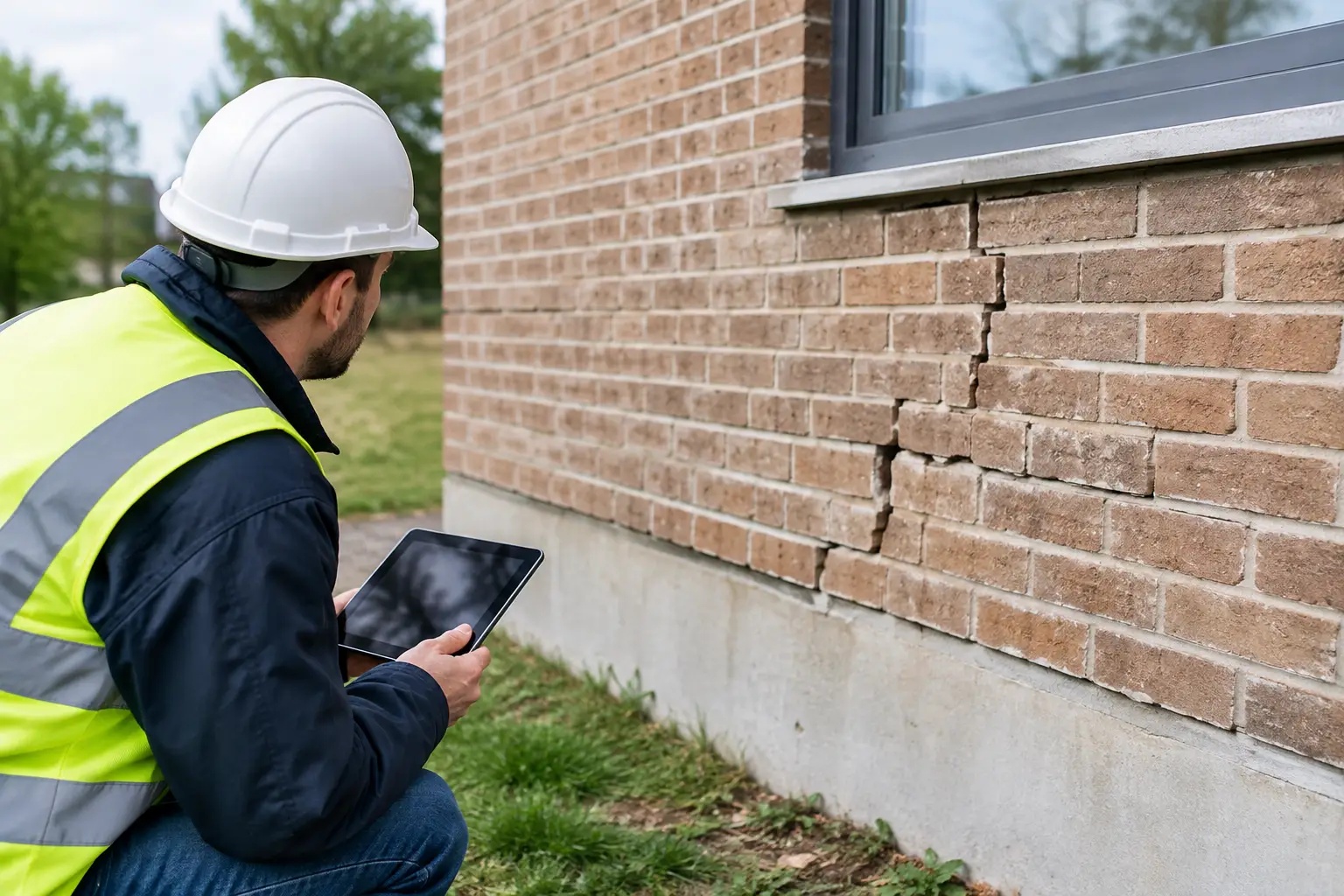
A management survey suits buildings that are being occupied and used in the normal way. Typical examples include rented flats, common parts of residential blocks, offices, schools, shops, and industrial premises where no major upgrade is about to begin.
The surveyor inspects accessible areas and assesses suspected asbestos-containing materials for location, extent, product type, surface treatment, condition, and risk of disturbance. Samples are usually taken where necessary, although in some cases materials may be presumed to contain asbestos until proven otherwise.
This type of survey supports an asbestos register and management plan. In practical terms, it helps the responsible person understand what is present, where it is, and whether it should be monitored, repaired, enclosed, labelled, or removed.
For a landlord or property manager, this is often the correct starting point when there is a legal duty to manage asbestos. For a buyer, it can also be useful where the aim is to understand risk in an occupied property without opening up the structure.
When a refurbishment survey is needed
A refurbishment survey is required before planned works that will disturb the building fabric. That includes kitchen and bathroom replacements, rewiring, heating upgrades, loft conversions, extension works, strip-outs, commercial fit-outs, and full renovation programmes.
This survey goes well beyond what is visible on the surface. If contractors are going to break through partitions, lift floors, remove ceilings, chase walls, or replace insulation, then hidden asbestos must be identified first. A management survey will not give enough information for that purpose.
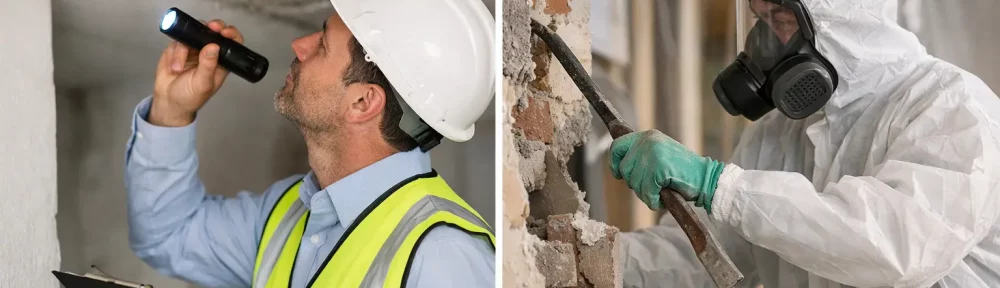
The inspection is destructive by design. Sections of the property may need to be opened up to reach concealed voids and materials. Because of that, the area being surveyed usually needs to be vacant. In some cases, services may need to be isolated and parts of the building made safe before inspection starts.
For developers and homeowners planning refurbishment, this is often the survey that prevents expensive surprises once works are underway. Finding asbestos after the contractor has started is one of the fastest ways to lose time and control of a project budget.
Asbestos management survey vs refurbishment – the main practical differences
The clearest way to understand asbestos management survey vs refurbishment is to look at the practical outcome.
A management survey is about safe occupation and routine maintenance. It is relatively non-intrusive, can often be carried out in an occupied building, and helps you manage known or presumed asbestos over time.
A refurbishment survey is about safe construction work. It is intrusive, focused on the exact areas affected by the planned project, and aims to identify asbestos before anyone starts cutting, drilling, demolishing, or stripping out.
There is also a risk difference. A management survey may identify asbestos in visible and accessible locations, but it is not designed to find every concealed material that could be uncovered during refurbishment. Relying on it for major works is a common and costly mistake.
Why the wrong survey causes problems
The issue is not simply paperwork. The wrong survey can expose occupants, trades, and project teams to avoidable hazards.
If refurbishment begins on the strength of a management survey alone, asbestos may be discovered only when walls are opened or finishes removed. At that point, work often stops immediately. Additional testing, emergency controls, specialist removal, rescheduling of trades, and potential enforcement issues can follow.
The commercial impact can be significant. Delays affect labour, programme, access, financing, and handover dates. For homeowners, it may mean a kitchen project stalled halfway through. For landlords, it can affect void periods and compliance. For developers, it can disrupt an entire sequence of works.
This is why clear survey scoping at the outset is so important. A cheaper or quicker survey is not better value if it does not match the planned use of the property.
Who has responsibility?
In non-domestic premises, the duty to manage asbestos usually sits with those responsible for maintenance or repair, whether that is the owner, managing agent, tenant, or another duty holder depending on the lease and control arrangements.
Domestic properties are different, but asbestos risk still matters. Homeowners are not generally subject to the same duty to manage in their own single dwelling. Even so, if refurbishment is planned, the presence of asbestos remains a health and safety issue that should be identified before works begin. The same applies to landlords in certain shared or communal areas, and to those instructing contractors to carry out renovation works.
If there is any doubt about legal duty, survey scope, or occupancy constraints, it is worth clarifying this before booking. Good advice at that stage usually saves money later.
What each report should help you do
A worthwhile asbestos report should do more than confirm whether materials contain asbestos. It should support a decision.
For a management survey, that means giving a clear record of materials, their condition, and their priority for monitoring or action. The report should help you manage risk in an occupied environment and keep maintenance activities controlled.
For a refurbishment survey, the report should define where asbestos is present in the work area so that removal, enclosure, or revised construction methods can be planned properly before the main contractor proceeds.
For clients making fast property decisions, that clarity is essential. Whether you are pricing works, negotiating a purchase, or preparing a programme, the survey has to be usable in the real world, not just technically correct.
Choosing the right survey for your property
The right choice depends on one question more than any other: what is going to happen to the building next?
If the property will remain in normal use and you need to identify and manage asbestos during occupation, a management survey is usually appropriate. If you are planning any works that will disturb the structure or finishes, a refurbishment survey is normally required for those specific areas.
There are situations where both may apply at different times. A mixed-use or multi-unit property might need a management survey for occupied areas and a refurbishment survey for the part being altered. Equally, a buyer may begin with a broader condition assessment and then commission a refurbishment survey once renovation plans are confirmed.
That is where an experienced surveying approach matters. The scope should reflect the building, the intended works, access limitations, and the level of risk – not just a generic booking category.
For clients who want straight answers, HICH LTD focuses on practical, fixed-fee surveying advice that helps buyers, owners, and developers move forward with confidence. The key is to match the inspection to the decision you are actually making.
If you are unsure which survey applies, treat that uncertainty as a reason to ask the question before works begin, not after the first ceiling comes down.