
New Build Snagging Guide for UK Buyers
You collect the keys, walk into a spotless new home, and assume everything behind the fresh paint and clean flooring must be right. That is exactly why a new build snagging guide matters. A new property can look finished while still hiding defects that range from cosmetic faults to poor workmanship, incomplete installations, and issues that may affect safety, performance, or future repair costs.
For buyers across the UK, snagging is not about being picky. It is about checking whether the home you are paying for has been built to a proper standard and handed over in the condition promised. Some snags are minor and easy to correct. Others point to wider concerns with finishing quality, supervision, or building elements that were rushed at the end of the project.
What a new build snagging guide should help you do
A useful new build snagging guide should do more than tell you to look for chipped paint or loose handles. It should help you understand what to inspect, when to inspect it, and which issues deserve more attention than others. The aim is to identify defects clearly, record them properly, and make sure the developer has the opportunity to put them right.
This matters because snagging is often time-sensitive. Once you have moved in, some issues become harder to separate from wear and tear. It can also be more difficult to secure prompt remedial works if defects were not documented clearly at the right stage. A professional inspection gives you a structured record, but even before that, it helps to know what you are looking for.
What counts as a snag in a new build?
A snag is any defect, unfinished item, or quality issue that falls short of the expected standard. In practice, that can mean cosmetic faults, poor fitting, missing items, damage caused during the build, or workmanship defects affecting how the property performs.
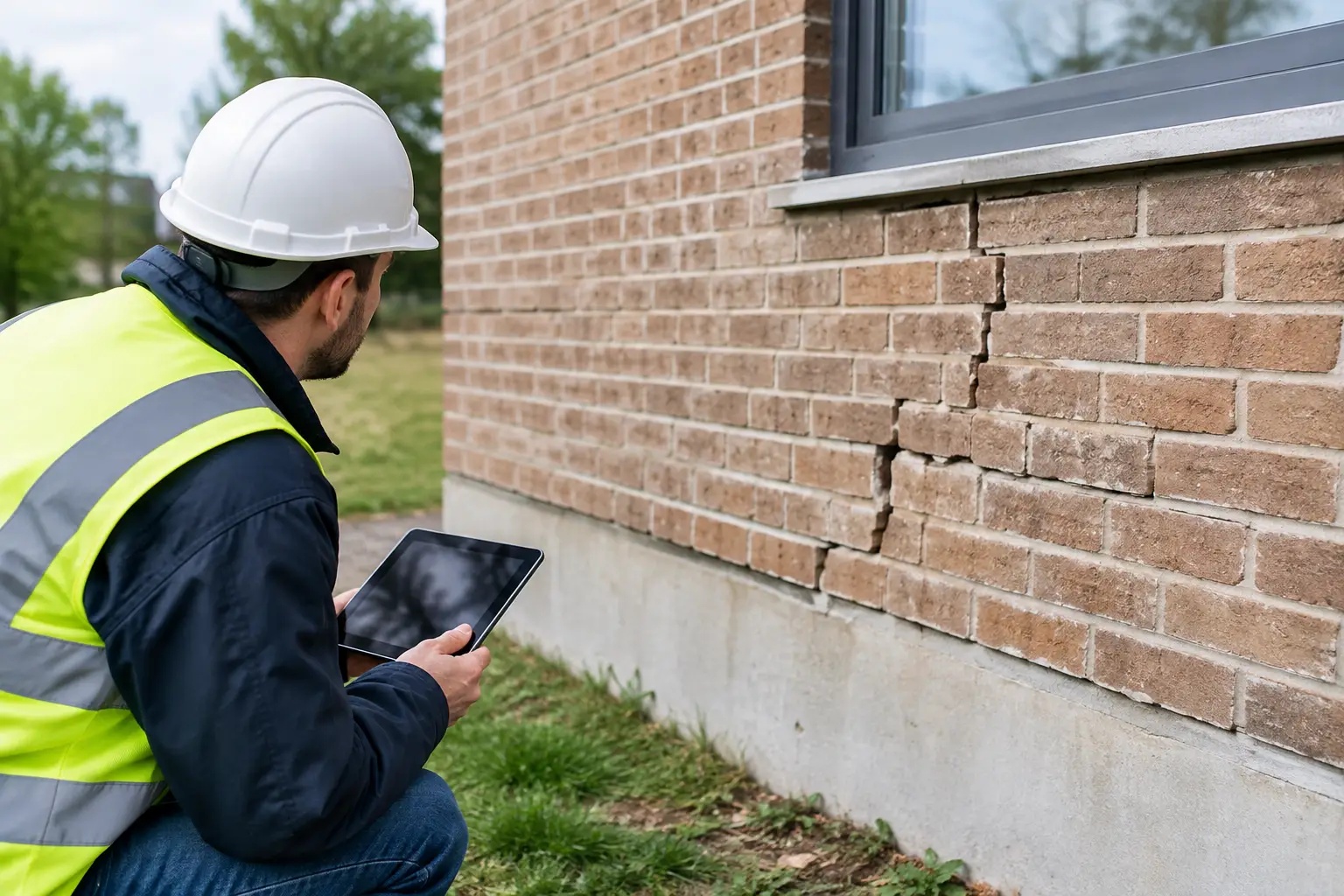
Some examples are obvious, such as scratched glazing, uneven tiling, marked worktops, sticking internal doors, gaps around skirting boards, or poorly finished sealant. Others are less visible at first glance, including inadequate loft insulation coverage, badly installed ventilation, roof defects, poor drainage falls, thermal bridging, damp-related risks, or cracked masonry caused by movement or poor detailing.
The key point is that not all snags are equal. A small paint blemish is inconvenient but usually straightforward to resolve. Defective flashing, water ingress around openings, or uneven floors may indicate a more substantial issue and should not be treated as simple cosmetic matters.
When to arrange a snagging inspection
The best time is usually as early as possible, ideally before legal completion if access can be arranged, or as soon as you take possession. In reality, access before completion depends on the developer. Some will allow a pre-completion inspection, while others will not. If they do, it gives you a stronger opportunity to raise defects before moving in.
If pre-completion access is not available, the next best option is a professional snagging survey shortly after handover. This allows defects to be recorded while the condition is still fresh and before your furniture, decorating, or day-to-day living complicates the picture.
There is also a practical point here. Many buyers wait until they have lived in the property for a few months, which can help reveal issues such as shrinkage cracking, heating imbalances, poor drainage performance, or condensation-related concerns. That can be useful, but waiting too long is not always the best strategy. Early identification and clear reporting usually put you in a stronger position.
Room-by-room checks that matter most
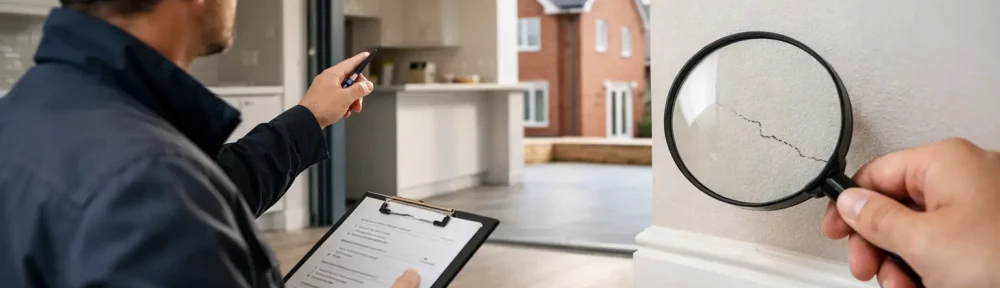
When inspecting a new build, start with the overall finish, then work methodically through each area. Walls and ceilings should be checked for cracking, dents, poor plaster finishes, uneven surfaces, staining, and paint defects. Floors should be level enough for their purpose, free from obvious damage, and finished consistently.
In kitchens and bathrooms, workmanship often tells you a lot about quality control. Units should be aligned, worktops securely fixed, tiles evenly spaced, sanitaryware properly sealed, and taps, wastes, and appliances operating correctly. A new bathroom may look clean and presentable while still having poorly sealed joints or fittings that are not secure.
Doors and windows should open, close, latch, and lock properly. Frames should be fitted neatly, glazing should be free from damage, and trickle vents and restrictors should work as intended. You should also look for draughts, gaps, or signs that items have been forced into place.
Heating, electrics, ventilation, and plumbing deserve particular attention because defects here affect daily use. Radiators should heat evenly, extractor fans should function properly, sockets and switches should be secure, and water pressure should be consistent. If ventilation is poor, moisture problems can follow quickly, especially in well-sealed modern homes.
Externally, check brickwork, render, roofing details, gutters, paving, fencing, drainage covers, and garden levels. External snagging is often overlooked by buyers focused on the interior, yet drainage falls, incomplete pointing, damaged roof coverings, and poor groundworks can become expensive problems if missed.
Why some defects need a surveyor, not just a checklist
Buyer checklists are useful, but they have limits. A trained building surveyor or snagging inspector is not simply looking for visible marks. They are assessing workmanship, installation quality, compliance indicators, defect patterns, and whether one issue may point to another hidden behind the finish.
For example, a hairline crack above a window might be harmless settlement, or it might reflect poor movement detailing. A damp patch might be a minor leak from unfinished sealing, or it could suggest a larger defect in roofing, cavity barriers, or drainage. Without experience, it is easy to under-report serious issues or overstate minor ones.
That is where a detailed, fixed-fee snagging survey provides value. It gives buyers a clear written record, defect descriptions in plain English, and a more informed basis for discussions with the developer. For clients who want practical reporting backed by building knowledge, that level of clarity is usually worth far more than a simple tick-box list.
How to raise snags with the developer
The most effective approach is factual and organised. Report defects in writing, identify locations clearly, include photographs where helpful, and avoid vague statements such as “poor finish in bedroom”. It is better to state that there is visible cracking to the plasterboard joint above the window reveal on the rear elevation bedroom, for example.
Developers are more likely to respond efficiently when defects are recorded properly. It also reduces the chance of disputes later about what was reported and when. If a defect remains unresolved, a professional snagging report can support further escalation through warranty processes or formal complaint routes.
It is worth keeping expectations realistic. Developers usually distinguish between minor remedial works and more substantial defects requiring follow-up inspections, specialist contractors, or staged repairs. Some issues can be rectified quickly. Others may take longer if further investigation is needed. The important thing is to have the problem documented accurately from the outset.
Common misunderstandings buyers have about snagging
One of the biggest is the belief that a brand-new home should be defect-free simply because it has passed through the build process. In practice, fast-paced construction programmes, multiple trades, and pressure at completion stage can all lead to defects slipping through.
Another misunderstanding is that snagging only covers cosmetic issues. While many snags are superficial, a proper inspection often identifies concerns with insulation continuity, roof finishes, external drainage, ventilation, and structural cracking patterns. That is why snagging should never be reduced to a paint and mastic exercise.
Buyers also sometimes assume that raising too many issues will make them look unreasonable. A clear, evidence-led report does the opposite. It shows that the property is being assessed professionally and that defects are being identified on merit, not preference.
Choosing the right snagging support
If you are instructing a surveyor, look for practical construction knowledge, clear reporting, and experience with defect identification in residential property. Speed also matters. A snagging report is most useful when it is delivered promptly enough to support immediate action.
For many buyers, transparent pricing is another important factor. Charging by bedroom count rather than property value can make the service easier to understand and budget for, particularly on developments where homes may vary widely in price but not in inspection complexity. Providers such as HICH Ltd focus on that kind of practical, accessible approach, combining qualified inspection with straightforward reporting for buyers who need answers quickly.
A final word on protecting your investment
A new home should feel reassuring, not uncertain. The right snagging process helps you move in with a clearer picture of what is finished properly, what needs attention, and what should be challenged before small defects turn into bigger costs. If anything feels rushed, uneven, incomplete, or simply not right, trust the evidence and get it checked properly.