

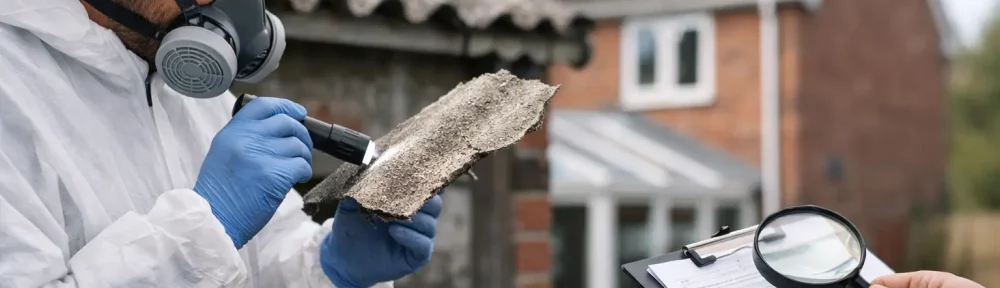
A loft conversion can turn an overlooked material into a costly delay. So can replacing ceilings, rewiring a kitchen or buying a 1970s flat with textured coatings. This asbestos survey guide explains when a survey is needed, what level of inspection is suitable and how a clear report helps you plan work without making unsafe assumptions.
Asbestos was widely used in UK buildings for its heat resistance, strength and insulation properties. While its use was banned in 1999, it can still be present in properties built or refurbished before that date. It is not automatically dangerous when in good condition and left undisturbed. The risk arises when asbestos-containing materials are damaged, drilled, sanded, cut or removed, releasing fibres into the air.
For buyers, owners, landlords and developers, the right survey provides practical evidence. It identifies suspected materials, assesses their condition and records what should happen next. That information can influence a purchase decision, define a safe scope of works and prevent an unexpected issue from becoming a health and budget risk.
When do you need an asbestos survey?
An asbestos survey is not a universal legal requirement before every property purchase. However, it is strongly advisable where a building was constructed or altered before 2000 and you are planning work that could disturb hidden materials. Age alone does not confirm asbestos, but it is a sensible trigger for further investigation.
A survey is particularly relevant before refurbishment, demolition, major repairs, extensions, electrical rewiring, boiler replacement, roof work or intrusive investigations into leaks and defects. Materials may be concealed behind wall linings, under floor finishes, within service ducts or around pipework. A standard building survey may flag the possibility of asbestos, but it does not replace a specialist asbestos inspection and sampling strategy.
For non-domestic premises and the common parts of multi-occupied residential buildings, the duty to manage asbestos can apply. The responsible dutyholder must take reasonable steps to identify asbestos-containing materials, keep records and manage the risk. The exact responsibilities depend on control of the premises, lease arrangements and the nature of the building. A competent survey helps establish the information needed for that process.
Choosing the right asbestos survey
The survey type should reflect what will happen to the property next. Ordering a more intrusive inspection than necessary can create avoidable disruption. Ordering a limited survey before extensive works can leave contractors without the information they need.
Management survey
A management survey is designed for a property that remains in normal use. It aims to locate, as far as reasonably practicable, asbestos-containing materials that could be disturbed through everyday occupation, routine maintenance or minor works.
The inspection is usually non-intrusive, although samples may be taken where safe and appropriate. The report records the location, extent, material type, condition and accessibility of identified or presumed asbestos. It also provides a priority assessment, helping the dutyholder decide whether materials should be monitored, labelled, protected, repaired or removed.
This is often the appropriate starting point for commercial buildings, communal areas and properties where no major alteration is planned. It may also assist a buyer or landlord seeking a clearer view of potential asbestos risk, provided the limits of the inspection are understood.
Refurbishment survey
A refurbishment survey is needed before planned building work that could disturb the fabric of a pre-2000 property. It is more intrusive and focused on the areas affected by the proposed works, such as a bathroom, kitchen, roof space, riser, extension area or plant room.
Surveyors may need to lift floor coverings, inspect behind panels, enter voids and take representative samples. The relevant area may need to be vacant while the survey is completed. This is not unnecessary caution: asbestos can sit behind finishes that appear modern, particularly where earlier construction layers remain in place.
A refurbishment survey should be commissioned early enough to inform design, tendering and programme decisions. If asbestos is found after contractors are on site, work can stop while further testing, notification, removal and clearance arrangements are made. That can be considerably more expensive than allowing for the risk before work begins.
Demolition survey
A demolition survey is the most extensive form of asbestos inspection. It is required before a building, or a defined part of it, is demolished. The objective is to identify asbestos-containing materials throughout the structure so they can be removed or managed safely before demolition proceeds.
The building or relevant area is normally vacant, and destructive inspection may be necessary. This survey is not interchangeable with a management survey. A report prepared for routine occupation cannot be relied upon to clear a building for demolition.
What happens during an asbestos survey?
A competent survey starts with a review of the property, its age, construction and planned use. The surveyor then inspects accessible areas methodically, recording suspect materials and noting any inaccessible locations or inspection limitations.
Common examples include textured decorative coatings, insulation board, cement sheets and gutters, vinyl floor tiles, pipe lagging, sprayed coatings, loose-fill insulation, ceiling panels and old boiler or flue components. Appearance alone cannot confirm asbestos. Materials that look similar can have very different compositions, which is why laboratory analysis of samples is often required.
Where sampling is appropriate, small controlled samples are taken using suitable precautions and sent for analysis. The surveyor should explain the scope before work starts, particularly if access panels need to be opened or finishes disturbed. Occupiers should not try to collect their own samples or break off a piece of a suspected material.
A thorough inspection also records areas that could not be accessed, such as sealed voids, locked rooms, concealed service routes or unsafe roof spaces. These exclusions matter. They show where further investigation may be needed before future works begin.
How to read an asbestos survey report
The value of a report lies in its clarity. You should be able to see what was found, where it is, how certain the identification is and what action is recommended. A useful report includes location plans or photographs, material descriptions, sample results, assessments of condition and clear management recommendations.
Do not focus only on whether asbestos was found. The material type, surface treatment, condition and likelihood of disturbance all affect the risk. A well-sealed asbestos cement garage roof may require periodic monitoring rather than immediate removal. Damaged pipe insulation in a busy service cupboard may need urgent professional attention because it is friable and more likely to release fibres if disturbed.
Terms such as “presumed asbestos-containing material” should be taken seriously. A presumption may be used where sampling is not practical or where the material is likely to contain asbestos based on its age and appearance. Before intrusive work, contractors should treat presumed materials accordingly unless suitable analysis proves otherwise.
Cost is also context-specific. Removal is not always the first or most proportionate answer. Encapsulation, repair, labelling and a documented management plan can be appropriate where a material is sound and unlikely to be disturbed. Conversely, planned refurbishment may make removal the safer and more economical option, even where the material is currently in reasonable condition.
Avoiding expensive mistakes before works start
The most common mistake is relying on an old report without checking whether its scope matches the planned work. A management survey from several years ago may not cover a wall being removed, a roof void being converted or pipework hidden beneath a floor.
Another mistake is treating a survey as a contractor instruction. The survey identifies asbestos risks. It does not automatically provide a removal specification, confirm construction details or replace a contractor’s own risk assessment and method statement. If removal is recommended, use an appropriately competent contractor and ensure the work is planned to the correct regulatory standard.
It is also wise to share relevant findings with everyone who may disturb the area: designers, builders, electricians, plumbers, roofers and maintenance teams. Delayed communication is a frequent cause of accidental disturbance. Keep the report available with the property records and update it when materials are removed, repaired or newly identified.
Getting a survey that supports a property decision
Before booking, explain the property age, type, occupancy and intended works. Be specific about rooms, external areas and services affected. A surveyor can then recommend a proportionate scope instead of providing a generic inspection that leaves important questions unanswered.
For a purchase, combine asbestos findings with the wider condition of the property. Suspected asbestos in a garage roof, ceiling finish or heating system may affect repair budgets, project timing and negotiations, but it should be assessed alongside structural, roofing and service defects. HICH LTD provides practical property inspection reporting to help clients understand those decisions in context.
The best time to address asbestos is before a drill bit, saw or demolition tool reaches the material. A properly scoped survey gives you evidence to protect occupants, brief contractors accurately and proceed with planned works on a realistic budget and timetable.