

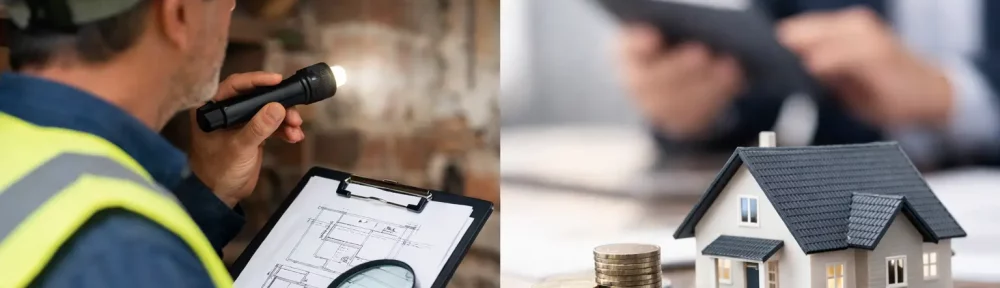
A lender may be happy to offer a mortgage on a property that needs a new roof, has movement-related cracking or contains costly hidden defects. That is the key distinction in a building survey vs valuation: one assesses lending risk and market value, while the other investigates the property’s physical condition for you.
For buyers, confusing the two can be expensive. A valuation may take only a short time, may be based partly on local sales data and is primarily prepared for the mortgage lender. A building survey is a more detailed inspection that helps you understand what you are buying, what repairs may be needed and where you may need to renegotiate.
What is a property valuation?
A property valuation estimates what a home is worth on the open market at the time of inspection. When a mortgage is involved, the lender normally arranges the valuation to confirm that the property provides adequate security for the loan.
The valuer considers factors such as location, size, layout, accommodation, general condition and recent sale prices for comparable homes nearby. They may also identify obvious issues that affect value or mortgageability, such as severe damp, major structural movement or a property type that is difficult to lend against.
However, the valuation is not a detailed condition report. Its purpose is not to identify every defect, estimate all repair costs or advise a buyer on whether to proceed. The lender can accept the valuation while the property still has defects that create significant future expense for the purchaser.
Some mortgage valuations are carried out remotely or with a brief visit. This can be appropriate for lending decisions, but it reinforces why a valuation should not be treated as a substitute for an independent inspection.
Who does the valuation protect?
Although the buyer often pays a valuation fee through mortgage costs, the report is produced for the lender. The lender needs confidence that, if it had to repossess and sell the property, the expected value would support the borrowing.
That does not mean the figure is unhelpful to a buyer. If a valuation comes in below the agreed purchase price, it can affect the mortgage offer and create an opportunity to review the price. But it does not provide the detailed evidence required to budget for repairs or challenge a seller about building defects.
What is a building survey?
A building survey is an in-depth assessment of a property’s visible condition. It is designed to identify defects, explain their likely cause, assess their seriousness and outline the next steps needed before or after purchase.
The level of inspection should reflect the property. A recently built flat in good order may need a different approach from a Victorian terrace, a converted barn, a property with a history of alterations or a house showing signs of water ingress. Older, unusual and heavily altered homes commonly justify a more comprehensive survey because their construction can conceal more complex risks.
A properly scoped building survey can investigate matters including structural cracking, dampness, timber decay, roof coverings, chimney stacks, rainwater goods, insulation, ventilation, external walls, internal finishes and visible service-related concerns. It should distinguish between routine maintenance, defects requiring repair and issues that need further specialist investigation.
A surveyor cannot open up walls, lift fitted floors or test every concealed element without agreement and intrusive investigation. That limitation matters. A good report is clear about what was visible, what could not be inspected and where further checks are sensible.
What should a useful survey report tell you?
The most valuable reports do more than list faults. They put defects into context. A hairline crack caused by historic settlement is not the same as cracking linked to active movement. Moss on a roof is different from failing roof coverings allowing water into the structure.
For each significant issue, the report should explain the probable cause, the potential consequences of leaving it unresolved and the appropriate action. Buyers also benefit from practical repair-cost awareness, even where precise quotations need to be obtained from contractors after inspection.
This turns the survey into a decision-making tool. You can use it to plan works, revise your budget, obtain specialist quotes, ask the seller informed questions or reconsider a purchase that no longer represents good value.
Building survey vs valuation: the differences that matter
The simplest way to separate the two is to consider the question each report answers. A valuation asks whether the property is worth enough to support the lender’s loan. A building survey asks what condition the property is in and what it may cost to put right.
A valuation focuses on market evidence and lending risk. A survey focuses on building fabric, defects, maintenance and repair priorities. The valuation is usually commissioned by or for the lender; the survey is commissioned by the buyer or owner and should address their concerns.
There is also a difference in depth. A valuation may flag an obvious defect, but it will not normally examine the roof void, assess the causes of damp, consider the condition of external joinery in detail or provide an ordered repair plan. A structural building survey is intended to go further, particularly where there are visible warning signs or a property’s age and design create uncertainty.
Neither report automatically replaces the other. Even if you are a cash buyer with no lender valuation, you may still want a survey. Conversely, a lender valuation does not remove the need for a survey simply because the mortgage has been approved.
When should you arrange both?
For most mortgaged purchases, arranging both is the sensible route. The lender’s valuation satisfies the mortgage requirement, while the survey gives you independent information about the home’s condition before contracts are exchanged.
A survey becomes particularly valuable where the property is older, has been extended, is non-standard construction, has a flat roof, has signs of damp or cracking, or has been vacant for a period. It is also advisable when you are stretching your budget. A property that appears affordable can become far less so if it needs urgent roof work, drainage repairs or treatment for water-related damage.
First-time buyers sometimes assume a newer property is risk-free. New-build homes can still have defects, incomplete work and finishing issues. In those circumstances, a snagging survey may be more appropriate than a full building survey, depending on the build stage and the concerns identified.
For cash buyers, the decision depends on risk tolerance, knowledge and the likely cost of being wrong. Skipping a valuation may be reasonable if you have strong market knowledge, but skipping a condition inspection on an unfamiliar property can leave you exposed to defects that are not obvious during a viewing.
Can a low valuation reveal building problems?
Sometimes, but not reliably. A valuer may reduce the figure because a property needs renovation, has visible damp or is affected by a serious defect. The lender may also make its offer conditional on further reports or repairs.
Yet a down valuation does not diagnose the problem. It may tell you the agreed price is not supported by the market, but it will not necessarily explain whether the issue is cosmetic, structural, temporary or likely to worsen. A survey is the report that provides the evidence needed to understand the physical risk.
The reverse is also true. A valuation at the agreed price is not a clean bill of health. It means the valuer believes the property’s value supports the lending decision, not that every part of the building is in satisfactory condition.
Choosing the right inspection before you commit
Start with the property rather than the mortgage product. Consider its age, construction, visible condition, history of alterations and your intended plans. If you are concerned about cracks, roof leaks, damp or possible movement, raise those points before the inspection is booked so the survey can be properly focused.
Ask what the inspection covers, whether the surveyor has practical building diagnostics experience and how clearly the report will set out repair priorities. Fast turnaround is useful, but the quality of the inspection and the clarity of its findings matter more than a quick document with limited practical value.
HICH LTD provides structural building surveys and specialist inspections across the UK, with reports designed to identify defects, explain urgency and support informed repair or purchase decisions.
Before you become committed to a property, treat the valuation as the lender’s safeguard and the survey as your opportunity to see beyond the décor. A clear condition report can give you the confidence to proceed, the evidence to renegotiate or the warning you need to walk away.