

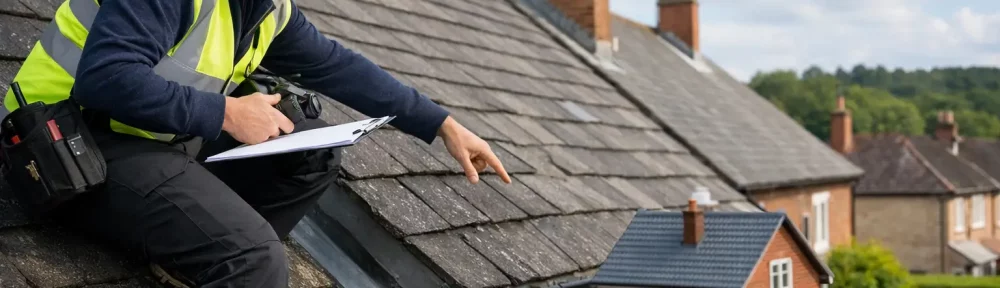
A roof can appear sound from the pavement while concealing failed underlay, cracked flashings, decaying timbers or long-term water ingress. This roof inspection guide explains how to assess the visible warning signs, understand what a professional survey should cover and decide when further investigation is justified.
For buyers, a roof defect can change the true cost of a property before contracts are exchanged. For homeowners and landlords, early diagnosis can prevent a minor repair becoming damage to ceilings, insulation, electrical fittings and structural timbers. The aim is not simply to establish whether the roof leaks today, but whether its materials, detailing and drainage are likely to perform reliably in the years ahead.
What a Roof Inspection Should Establish
A useful roof inspection goes beyond a quick look at tiles from ground level. It considers the roof as a complete system: its covering, supporting structure, junctions, rainwater goods, ventilation and internal evidence of failure.
The inspector should identify active defects, signs of historic repairs, areas approaching the end of their serviceable life and conditions that may cause future problems. This distinction matters. A few slipped slates may be a straightforward local repair, whereas widespread nail fatigue or deteriorated felt beneath an ageing covering could point towards more substantial works.
A clear report should explain the defect in plain terms, show where it is located, describe the likely cause and indicate the urgency of repair. Where possible, it should also help the client understand the likely scale of expenditure, even if a roofing contractor is needed to provide a formal quotation.
Start With a Safe External Assessment
Do not climb onto a roof unless you have the appropriate training, access equipment and safety controls. Fragile roof coverings, unstable ladders and hidden weak points create a serious risk of injury. Many visible issues can be identified safely from ground level, through upper-floor windows or with appropriate inspection equipment.
Look first at the overall line of the roof. It should generally appear straight and even. A visible dip, sag or bow can indicate deflection in rafters or purlins, inadequate support, historic alteration, water damage or excessive loading. Some older properties show minor irregularity due to age and construction methods, but pronounced movement requires professional assessment.
Then examine the covering. On pitched roofs, look for slipped, cracked, missing or uneven tiles and slates. Pay particular attention to lower roof edges, valleys and areas around chimneys, rooflights, soil pipes and dormers. These details handle concentrated water flow and are common points of failure.
Flat roofs need a different approach. Ponding water, blisters, splits, open laps, failed edge trims and damaged surface finishes can all shorten the roof’s life. A flat roof may remain watertight despite local weathering, but standing water after a reasonable drying period can indicate poor falls, blocked outlets or structural deflection.
Check Chimneys, Flashings and Rainwater Goods
Roof coverings often receive the most attention, yet the junctions between materials are frequently where leaks begin. Lead flashings around chimneys, abutments and roof penetrations should be secure, correctly dressed and free from obvious splitting or lifting. Cement fillets are sometimes used as a short-term repair, but they can crack as the building moves and should not automatically be treated as a durable alternative to properly formed flashings.
Chimney stacks deserve close scrutiny. Loose mortar, cracked render, open joints, deteriorated flaunching and damaged pots may allow water into the stack and create a falling-material risk. On an unused chimney, defective capping or inadequate ventilation can also contribute to moisture problems internally.
Gutters, downpipes and valleys should carry water away without overflowing. Vegetation, moss, debris and poorly aligned gutters can cause water to back up beneath the roof edge or saturate external walls. During heavy rain, a small blockage can produce a leak that is not evident on a dry inspection day.
Inspect the Roof Space for the Evidence Outside Cannot Show
Where safe access is available, the roof void is one of the most informative areas of an inspection. It can reveal water staining, fungal decay, insect damage, inadequate insulation, poor ventilation and structural movement that may not be visible externally.
Use a torch and inspect the underside of the roof covering, rafters, purlins, trussed rafters and ceiling joists. Fresh water staining often appears darker than older marks, but colour alone does not prove whether a leak is active. The pattern, location and condition of adjacent timber provide better clues. Dampness below a valley or chimney junction may relate to defective flashings, while moisture spread across a broad area can result from condensation.
Condensation is particularly common where loft insulation has been upgraded without maintaining ventilation paths. Warm, moist air from the house enters the roof space and condenses on cold surfaces. Black mould, droplets on roofing felt, rusty nail heads and damp timbers are warning signs. The remedy may involve improving ventilation and air sealing rather than replacing the roof covering.
Insulation should be checked for even coverage and compressed areas. Insulation does not cause roof leaks, but unsuitable installation can block eaves ventilation, conceal defects or make the loft difficult to inspect. In older homes, electrical cables, water tanks and stored belongings may further restrict access, so an inspection report should state any limitations clearly.
Common Roof Defects and What They May Mean
Not every defect carries the same urgency. A professional opinion is valuable because it separates cosmetic weathering from conditions that threaten the building fabric.
The following issues commonly justify closer investigation:
- Missing, fractured or slipping tiles and slates, especially where underlay is exposed or the defects are widespread.
- Cracked, lifted or poorly detailed leadwork around chimneys, valleys, dormers and roof penetrations.
- Sagging roof lines, split or decayed timbers, altered trusses or signs that structural members have been cut without adequate support.
- Damp staining, mould growth or active drips within the roof void, upper-floor rooms or around chimney breasts.
- Blocked gutters, defective valleys and overflowing downpipes that direct water against roof edges and walls.
- Ageing flat roof membranes with ponding, cracking, open joints, blistering or failed perimeter details.
Moss growth alone is not necessarily a reason to replace a roof. It is often more noticeable on shaded elevations and can retain moisture, but aggressive cleaning may damage older tiles or slates. The appropriate response depends on the covering type, its condition and whether moss is obstructing drainage or lifting materials.
When a Professional Roof Survey Is Worthwhile
A specialist roof survey is sensible when you are buying an older property, have noticed recurring leaks, are planning a loft conversion or major refurbishment, or need evidence for a dispute, insurance matter or contractor warranty issue. It is also useful where a general building survey has identified roof concerns but access restrictions prevented detailed assessment.
For property buyers, the right time is before legal commitment. A roof nearing the end of its life does not always make a purchase unsuitable, but it should be reflected in the price, repair budget and your willingness to take on the work. Re-roofing costs vary considerably according to access, covering type, scaffold requirements, chimney works, insulation upgrades and the condition of the supporting structure.
For landlords and managing agents, inspections support planned maintenance rather than reactive repairs. Scheduling works before winter or before a known weak point fails can reduce tenant disruption and avoid secondary damage to occupied rooms.
HICH LTD provides roof surveys and building diagnostics designed to identify defects, explain their practical implications and support informed repair or purchase decisions. A detailed inspection can be particularly valuable where the visible issue is minor but the underlying cause is uncertain.
Questions to Ask When You Receive the Report
A report is most useful when it gives you a basis for action. Ask whether the defect is active, whether it affects safety or structural performance, and whether temporary protection is needed before permanent repairs can be arranged. You should also establish whether the inspector has been able to view all relevant areas or whether concealed sections and restricted access limit the findings.
If substantial work is recommended, obtain a written scope from a competent roofing contractor rather than relying on a broad estimate. The scope should identify the materials to be retained or replaced, treatment of flashings and valleys, insulation and ventilation provisions, scaffold needs, waste removal and any allowance for hidden defects. This makes quotations easier to compare and reduces the risk of unexpected omissions.
A sound roof is rarely noticed, which is exactly how it should be. Acting on early evidence of failure gives you more control over timing, cost and specification, while protecting the rest of the property from avoidable water damage.