

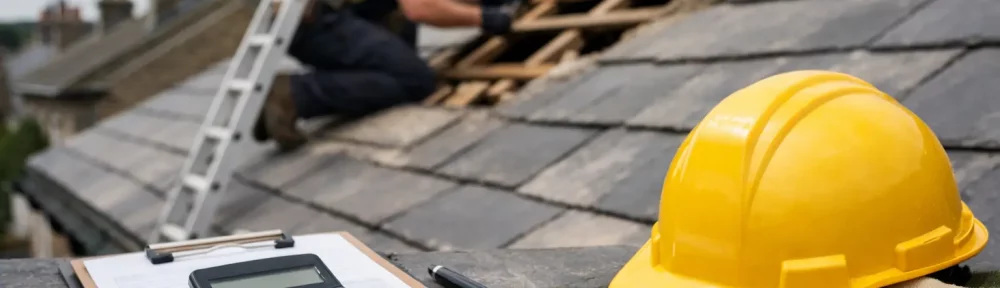
A slipped tile may cost little to refix. The moisture stain beneath it may point to a failed valley, degraded underlay or long-term timber decay. That difference is precisely why a roof repair cost survey is valuable: it moves the discussion beyond what can be seen from ground level and towards the likely scope, urgency and financial impact of the work.
For buyers, homeowners and landlords, roofing defects can quickly affect negotiations, maintenance budgets and insurance conversations. A professional inspection provides an evidence-based view of the roof’s condition, helping you distinguish between routine upkeep and repairs that require prompt specialist attention.
What a roof repair cost survey should tell you
A useful survey is not simply a list of visible faults. It should explain what has failed, why it has failed, the risk of leaving it unresolved and the likely repair approach. This gives you a realistic basis for obtaining contractor quotations and deciding how urgently to act.
The inspection should consider the main roof coverings, flashings, valleys, ridge and hip tiles, gutters, chimney junctions, rooflights and drainage arrangements. Where access and construction permit, the surveyor should also assess signs of deterioration to the roof structure, such as sagging, deflection, historic water ingress or compromised timbers.
A repair-cost assessment normally provides budget guidance rather than a fixed contractor price. Labour availability, scaffolding requirements, roof height, material matching and the extent of concealed damage can all alter the final figure. The value lies in identifying the probable scale of expenditure before you commit to a purchase or delay necessary maintenance.
Why roof repair prices vary so widely
Two homes with apparently similar roofs can have very different repair requirements. The visible defect is only one part of the calculation. Access, construction type and the condition of components beneath the surface often have a greater influence on cost than the number of tiles needing replacement.
Scaffolding is a common example. Replacing a handful of broken slates may be relatively straightforward on a low, accessible roof. The same repair on a tall terraced property, above a conservatory or beside a busy pavement can require specialist access equipment, permits and additional safety measures. Those preliminary costs can exceed the cost of the replacement materials.
The roof covering also matters. Concrete tiles are widely available and generally more economical to replace than certain natural slates, handmade clay tiles or discontinued interlocking products. Matching materials is especially important where a property is in a conservation area, has a traditional roofscape or requires a sympathetic repair to preserve its appearance.
Water damage creates another variable. A leaking flashing can sometimes be repaired locally. If water has been entering for months or years, however, the underlying battens, membrane, insulation, ceiling finishes and timber structure may need attention as well. A careful survey helps establish whether a local repair is sensible or whether a wider renewal is likely to offer better value.
Typical roof repair cost ranges in the UK
Cost ranges should always be treated cautiously, but they can help put findings into context. Minor tile or slate replacement, repointing a small area of ridge bedding, or repairing a short section of guttering may sit in the hundreds of pounds where safe access is already available.
Repairs to lead flashings, valleys, chimney abutments or larger areas of slipped and damaged coverings can move into the low thousands, particularly when scaffolding is required. Renewing a flat-roof covering, rebuilding a defective chimney stack, replacing failed roof timbers or stripping and recovering a substantial pitched roof may involve several thousand pounds or considerably more.
A professional report should avoid presenting these figures as guarantees. Instead, it should state the assumptions behind the budget allowance. For example, an estimate may assume localised repairs only, no significant timber decay and normal access. If the roof is heavily weathered or the defect cannot be fully assessed without opening up the construction, that uncertainty should be clearly recorded.
The defects that deserve closer investigation
Not every defect demands immediate full replacement, but certain signs justify a more detailed assessment. Missing or cracked coverings can permit water entry, especially around roof junctions. Loose ridge or hip tiles may become a safety issue during high winds. Blocked gutters and defective downpipes can cause persistent saturation at eaves and external walls.
Internally, damp patches, peeling finishes, mould growth, daylight visible in the loft and a musty odour may all indicate water penetration. These signs do not always originate directly above the affected room. Water can track along timbers, roof membranes or masonry before becoming visible, making diagnosis from inside alone unreliable.
Structural symptoms require particular care. A visibly uneven roof line, spreading at eaves, cracked ceiling finishes or timbers showing decay may indicate more than a covering defect. The appropriate repair could involve structural work as well as roofing, and the cost implications may be materially different from a straightforward retile.
Using the survey when buying a property
For a buyer, timing matters. A roof concern identified before exchange can be investigated, priced and reflected in the purchase decision. Waiting until after completion may leave you with limited options and an urgent repair bill.
The most effective approach is to use the report to ask focused questions. Which defects are urgent? Is water ingress active or historic? Are repairs likely to be localised, or is the roof approaching the end of its serviceable life? What further investigation is needed before a contractor can provide a firm quotation?
A clear repair-cost allowance can also support sensible negotiation. It is not a reason to seek a reduction for every minor maintenance item. All roofs require periodic upkeep. However, where the survey identifies significant defects, short remaining life or a credible risk of substantial expenditure, the findings provide objective evidence for discussing price, retention or remedial work with the seller.
How homeowners can turn findings into a repair plan
Once the condition of the roof is understood, prioritisation becomes easier. Safety defects and active water ingress should generally be addressed first. Next come faults that are likely to worsen quickly, such as failing flashings, blocked drainage and loose coverings. Cosmetic issues or non-urgent renewal can be planned around budgets, weather conditions and other property works.
Obtain written quotations that describe the repair method, materials, access provision, waste removal and any VAT position. Ask contractors to identify exclusions and to explain what happens if concealed defects are found after work starts. A low initial price can be misleading if scaffolding, leadwork, timber repairs or making good internal finishes have been omitted.
It is also worth comparing repair against renewal on older roofs. Repeated patch repairs can be appropriate where the main roof remains sound. Where several components are failing at once, a planned renewal may prove more economical over time and reduce the disruption of recurrent call-outs.
When a specialist roof inspection is worth arranging
A closer inspection is particularly worthwhile before buying an older property, following storm damage, when leaks recur, or when you are planning a loft conversion, solar installation or major refurbishment. These projects can expose defects that were previously hidden and may require the roof to be brought up to a suitable standard first.
At HICH LTD, qualified building engineers and surveyors assess defects in practical terms, with attention to their likely repair implications. A detailed roof survey can help you understand whether you are facing a manageable maintenance task, a significant capital expense or a defect that needs urgent action.
Can a surveyor give an exact roof repair price?
A surveyor can provide informed budget guidance based on observed defects and expected repair scope. A contractor’s site-specific quotation is needed for a fixed price, particularly where scaffolding, material matching or opening-up work is required.
Does a roof inspection always require scaffolding?
No. Many defects can be assessed from safe ground-level inspection, loft inspection, photographic equipment or other appropriate methods. Scaffolding may be needed where close examination of concealed or high-level details is essential.
Should I repair a roof in winter?
Some repairs can be completed throughout the year when conditions are safe and dry enough for the materials used. Emergency weatherproofing may be necessary at any time. Larger works are often easier to programme during more favourable weather, but delaying active leaks can increase the eventual cost.
The best time to understand a roof problem is before water, wind and delay turn a contained defect into a wider repair project. A clear survey gives you the evidence to act with confidence and spend your property budget where it will make the greatest difference.