

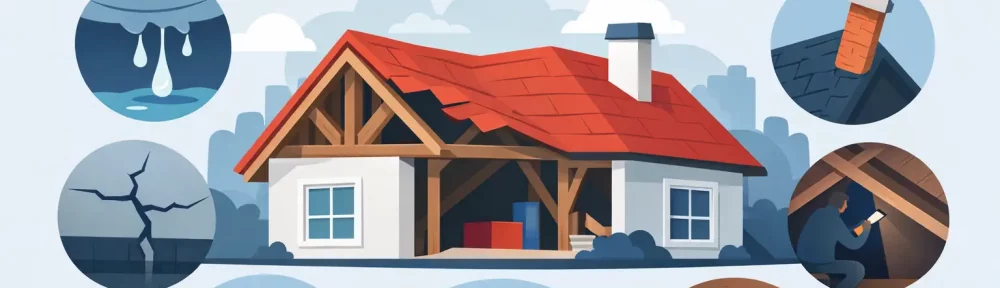
A roof rarely fails without warning. Long before there is a serious collapse risk or widespread water ingress, there are usually visible signs of roof structural problems that point to movement, overloading, timber decay or poor past alterations. The challenge for most owners is knowing which defects are cosmetic, and which suggest the roof structure itself is under strain.
That distinction matters. A slipped tile or localised leak may be relatively straightforward to repair. A sagging ridge line, outward wall spread or distorted rafters can indicate a deeper structural issue that affects repair scope, cost and safety. If you are buying a property, managing a rental, or trying to plan maintenance sensibly, early identification can prevent a much larger bill later.
Why roof structural issues are often missed
Many structural roof defects develop slowly. In the loft, timbers may have been altered years ago for storage, insulation works, solar installations or previous repairs. From ground level, the covering can look broadly serviceable while the supporting structure is gradually moving.
Another common problem is that symptoms appear in different places. The roof may be the source, but the warning signs show up as cracking to top-floor ceilings, bulging masonry, sticking doors on the upper level or dips along the roof slope. Without a proper inspection, it is easy to treat each symptom in isolation.
Age is also a factor, especially in older UK housing stock. Traditional cut roofs can perform well for many decades, but they are vulnerable to decay, undersized repairs and long-term spread if ties, purlins or bearings have weakened. Modern trussed roofs have different failure patterns, often linked to unauthorised alterations or overloading.
The main signs of roof structural problems
1. A sagging ridge or uneven roof line
One of the clearest external signs of roof structural problems is a roof line that no longer appears straight. If the ridge dips in the middle, or one roof plane looks wavy or bowed, the structure may be deflecting under load.
This does not always mean imminent failure. Some older roofs show historic settlement that has remained stable for years. Even so, visible distortion deserves attention because it can indicate weakened rafters, undersized members, failing purlins or movement at supporting walls.
2. Roof slopes that dip between supports
If sections of the roof appear to sink between the ridge and eaves, the rafters or supporting members may be overstressed. This can happen after long-term water penetration, timber rot, insect attack or inappropriate structural alterations.
A dip may be subtle from outside and more obvious from within the loft when you sight along the timbers. The key point is whether the deflection looks local and recent, or long-established and static. A surveyor will normally assess the extent of movement, likely cause and whether further opening up is needed.
3. Cracks at the top of internal walls
Not every ceiling crack is structural, but cracking where ceilings meet walls, especially on the top floor, can reflect roof spread or movement. When roof timbers push outward on supporting walls, stress can show up internally before the full extent is recognised externally.
Look closely at diagonal cracks above doors, separation at cornice level, or recurring cracks that reopen after redecoration. These patterns do not automatically prove a roof structural defect, but they are a reason to inspect the loft and roof shape more carefully.
4. External walls bowing or spreading
In traditional roofs, missing or ineffective ties can allow the roof to push the walls outward over time. This is a more serious warning sign because the issue is no longer limited to the roof covering or one timber element. It suggests a load-path problem affecting the building structure.
From outside, you may notice the upper masonry leaning, bulging or appearing out of plumb. Internally, there may be gaps where ceilings meet walls or distortion around upper windows. This type of defect needs prompt professional assessment, particularly before purchase or major refurbishment.
Loft warning signs that should not be ignored
5. Cracked, split or notched timbers
In the loft, damaged rafters, collar ties, purlins or joists can be direct evidence of structural distress. Some splits are superficial and follow the natural grain of aged timber. Others reduce the member’s strength significantly, especially where they occur near bearings or fixing points.
Poor alterations are a frequent concern. Timber may have been cut to create storage access, removed during loft conversion works, or excessively notched for pipework and cables. These changes can compromise the way loads are transferred through the roof.
6. Signs of timber decay
Wet rot, fungal decay and persistent moisture staining should never be dismissed as only a roofing issue. If structural timbers remain damp over time, their strength can reduce substantially. A roof may then deform under normal loading, particularly during periods of heavy rain or snow.
Softened timber, crumbling surfaces, dark staining and a musty smell all warrant closer inspection. The repair is not just about replacing decayed wood. The underlying moisture source must be identified, whether that is defective coverings, poor ventilation, failed flashings or condensation.
7. Daylight where it should not be
Small points of daylight around eaves or some ventilation details can be normal. Wider gaps around junctions, distorted edges or visible separation between structural elements are different. They may suggest movement, failure at fixings or local collapse of support.
Where daylight is accompanied by water staining, draughts and warped timbers, the concern increases. This combination often means the roof has been moving for some time rather than suffering a one-off defect.
8. Overloaded loft spaces
A roof structure designed only to support its own loads and a ceiling below should not be treated as a convenient storage deck. Heavy boarding, stored materials, water tanks, plant equipment or poorly designed solar-related alterations can all add stress.
This is especially relevant in trussed roofs, where individual members work together in a specific way. Cutting or loading one part without design input can affect the entire roof’s performance. If the loft has been adapted, it is worth checking whether the work was properly designed and whether the structure remains suitable.
When the cause is not the roof alone
9. Movement linked to supporting walls
Sometimes the roof is not the starting point. Differential movement in supporting masonry, failed lintels, subsidence-related cracking or decay at wall plates can all produce roof distortion. In these cases, the roof is responding to movement elsewhere in the building.
That is why diagnosis matters more than guesswork. Replacing tiles or reinforcing one timber section will not solve the problem if the real issue is defective support at wall level.
10. Previous repairs that do not look engineered
Patch repairs can hide a structural issue rather than resolve it. Mismatched timbers, improvised props, excessive metal strapping, packed bearings and ad hoc bracing often suggest that someone recognised movement but did not address the root cause properly.
Some historic repairs are perfectly serviceable. Others are warning signs in themselves. If the workmanship looks inconsistent or the roof still shows distortion after repair, a more detailed structural assessment is sensible.
When to monitor and when to act quickly
It depends on the severity, pattern and likely rate of movement. Minor historic undulation in an older roof may simply need recording and periodic review. Active cracking, fresh distortion, widespread timber decay or visible wall spread should be treated more urgently.
Buyers should be particularly cautious where roof defects could affect valuation, mortgageability or repair negotiations. Landlords and homeowners should also act quickly if there is any concern about occupant safety, significant water ingress or timber failure. Waiting usually narrows your options and increases cost.
What a proper roof inspection should establish
A useful inspection does more than confirm that the roof has a problem. It should identify the form of construction, likely defect mechanism, extent of movement, whether the issue appears historic or ongoing, and what level of repair is likely.
That is especially important where several trades may otherwise offer conflicting views. A detailed roof or structural survey helps separate cosmetic defects from genuine structural concerns and gives you a clearer basis for budgeting, negotiation or further design work. For many clients, that clarity is worth far more than the cost of guessing wrong.
If you are seeing more than one of these signs of roof structural problems, the sensible next step is not to wait for visible failure. Get the roof assessed while the issue is still manageable, and while you still have room to make a measured decision rather than an expensive emergency one.