

What Does a Building Survey Include?
If you are about to commit to a property purchase, the question is rarely whether something is wrong with the building. It is usually how much is wrong, how serious it is, and what it will cost to put right. That is exactly why people ask, what does a building survey include – because the detail in that inspection can make the difference between buying with confidence and inheriting a very expensive problem.
A building survey is the most detailed standard pre-purchase inspection available for residential property. It is designed to assess the condition of the building, identify visible defects, highlight areas of risk, and give practical advice on repairs, maintenance, and further investigation where needed. For buyers, homeowners and landlords, it is less about paperwork and more about getting clear, usable evidence before making a financial decision.
What does a building survey include in practice?
In practical terms, a building survey includes a detailed visual inspection of the main accessible parts of a property, inside and out. The surveyor assesses the construction, condition and performance of the building and records defects that are apparent at the time of inspection. That includes issues ranging from minor maintenance concerns to serious structural movement, roof failure, dampness, timber decay and poor alterations.
The scope is broad because buildings fail in different ways. A newer property may show poor workmanship, snagging defects or hidden moisture patterns. An older property may present long-term movement, ageing roofs, inadequate ventilation or outdated materials. The purpose of the survey is to connect those signs into a clear picture of condition and risk.
A proper report should do more than state that defects exist. It should explain what has been observed, why it matters, how urgent it is, and where repair costs or specialist investigations may need to be considered.
External elements are examined first
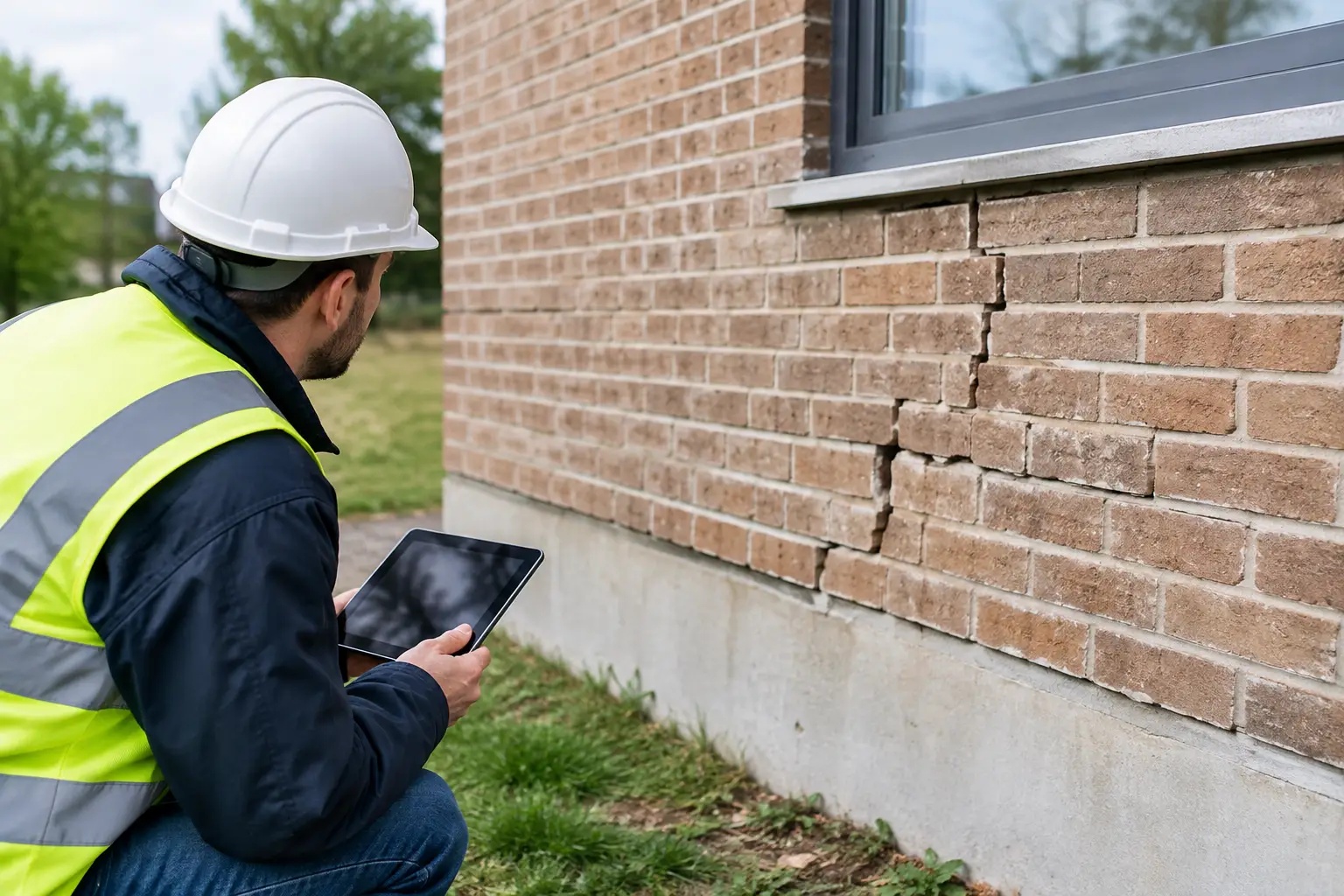
The outside of the building often tells an experienced surveyor a great deal before they even step indoors. Walls are checked for cracking, bulging, failed pointing, spalled brickwork, cavity wall concerns and signs of movement. Render, cladding and external finishes are reviewed for failure, detachment and water penetration risk.
The roof is a major part of the inspection because roof defects are common and can become expensive quickly. A building survey typically includes an assessment of the roof covering, flashings, chimneys, parapets, valleys, guttering and rainwater goods, as far as they are accessible and visible. If there are slipped tiles, ageing felt, defective leadwork or evidence of long-term water ingress, these should be identified.
Windows and doors are also assessed, not just for cosmetic wear but for decay, failed seals, distortion, draughting and signs of movement around openings. External joinery, lintels and sills can reveal poor maintenance or more significant structural problems.
Drainage is not usually tested in the way a dedicated CCTV survey would be, but the visible drainage arrangement is reviewed for clues such as poor falls, blocked gullies, leakage or staining around connections.
Internal inspection covers more than surface condition
Inside the property, the surveyor is looking beyond decoration. Cracks to walls and ceilings, uneven floors, distorted openings, damp staining, mould growth and signs of previous repair all help build a picture of how the building is performing.
Walls, partitions, ceilings and floors are inspected for visible defects and any suggestion of structural movement or moisture-related damage. Joinery elements such as skirting boards, door frames and staircases can also indicate settlement, distortion, timber decay or poor-quality alterations.
Where accessible, roof spaces are particularly important. A loft inspection may reveal active leaks, failed insulation, inadequate ventilation, timber defects, fire separation issues or roof structure alterations that are not obvious from below. In many properties, this is where some of the most useful evidence is found.
Basements and sub-floor areas are equally relevant where access is available. Persistent dampness, poor ventilation, timber deterioration and signs of water ingress are often concentrated in lower-level spaces.
Damp, movement and structural concerns are key parts of the survey
One reason buyers choose a building survey rather than a lighter inspection is the level of attention given to major defects. Damp is a good example. A survey should consider the likely source of dampness rather than simply noting staining. Penetrating damp, condensation and rising damp have different causes, and the right recommendation depends on understanding the building as a whole.
Structural movement is another area where experience matters. Not every crack means subsidence, and not every movement issue is historic and harmless. The surveyor considers the pattern, width, direction and location of cracking, along with distortion, sticking openings and external evidence, to judge whether movement appears longstanding, progressive or in need of further assessment.
This is where a survey becomes genuinely valuable. A report that only lists symptoms leaves the client with more questions than answers. A good survey interprets those symptoms and explains the likely seriousness.
Services are reviewed, but with limits
People often expect a building survey to provide full testing of electrics, plumbing and heating. In most cases, that is not what the inspection is for. A building survey includes a visual review of accessible services, but it does not replace specialist testing by qualified engineers.
That means the surveyor may comment on the apparent age or condition of the electrical installation, visible pipework, boiler setup, radiators, drainage fittings and ventilation arrangements. They may flag concerns such as dated consumer units, poor wiring alterations, leaks, corrosion or inadequate extraction in kitchens and bathrooms.
However, unless specifically arranged, the surveyor will not normally dismantle systems, pressure test them or certify compliance. Where risk is identified, the report should recommend targeted follow-up inspections before exchange or before major works proceed.
Alterations, workmanship and compliance issues are often flagged
Many residential defects are not caused by age alone. They come from poor building work, rushed refurbishments or alterations carried out without proper design or oversight. A building survey commonly includes comment on extensions, removed walls, loft conversions, replacement roofs, changed windows and other modifications where visible signs raise concern.
The surveyor may identify workmanship issues such as uneven roof lines, inadequate support, poor detailing around openings, insufficient ventilation, bridging of damp-proof courses or substandard finishes that suggest deeper defects behind the surface.
A survey is not a legal compliance certificate, but it can highlight where documentation should be checked or where works appear inconsistent with expected construction standards.
What the report should actually give you
The inspection itself matters, but the report is what supports decision-making. A useful building survey report should describe the property, explain its construction type, record visible defects, assess relative urgency and recommend practical next steps. It should also make clear where further investigation is advisable.
For buyers, that information can be used to renegotiate price, budget for repairs, prioritise works after completion or, in some cases, reconsider the purchase entirely. For owners and landlords, it can help with maintenance planning, contractor instructions, insurance discussions and long-term asset management.
The strongest reports are clear enough for a non-technical client to act on, while detailed enough to stand up to scrutiny from agents, contractors and other professionals.
What a building survey does not include
It is just as important to understand the boundaries. A building survey is generally non-intrusive, which means surveyors do not open up hidden parts of the structure, lift floor finishes at will or break into walls. If areas are concealed, heavily furnished or inaccessible, those limitations should be recorded.
It also does not usually include specialist testing for asbestos, thermal performance, drainage mapping, laboratory sampling or structural calculations unless those services are commissioned separately. If a property shows warning signs in these areas, a good survey will say so and point you towards the right next step.
This matters because some buyers assume a survey covers everything. It does not. What it should do is identify enough evidence to reveal where the true risks lie.
Why the quality of the surveyor matters
Two surveys on the same property can produce very different outcomes depending on the experience of the person carrying out the inspection. A surveyor with practical construction knowledge is often better placed to distinguish between a cosmetic issue and a developing defect, and to understand likely repair implications.
That practical judgement is especially important with older housing stock, converted buildings, roofs, structural cracking and properties that have been altered several times. Speed matters when booking a survey, but quality matters far more when you are relying on the result to protect a six-figure investment.
For that reason, many clients look for fixed-fee clarity, prompt availability and qualified surveyors who can explain defects in plain English rather than hiding behind vague wording.
A building survey should leave you better informed, not more uncertain. If it tells you what is wrong, how serious it may be, and what to do next, it has done its job. And if you are buying a property with age, character, alterations or visible warning signs, that level of detail is not an extra – it is part of buying sensibly.