

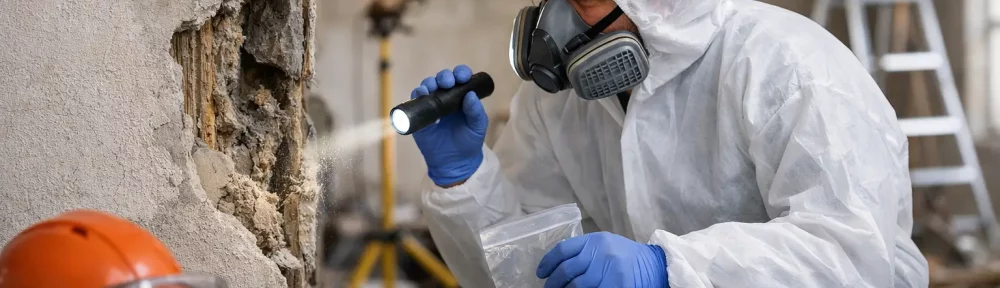
A pre-refurbishment asbestos survey is not a paper exercise to complete after plans are approved. It is the investigation that tells you whether planned work could disturb asbestos-containing materials hidden within a building. Without it, a seemingly routine kitchen refit, bathroom strip-out or roof alteration can expose workers, occupants and project budgets to an avoidable risk.
For homeowners, landlords, developers and contractors, the right survey provides clear evidence before intrusive work begins. It identifies where asbestos may be present, assesses the likely impact of the proposed works and helps the responsible parties plan removal, encapsulation or safe working methods before trades arrive on site.
What is a pre-refurbishment asbestos survey?
A pre-refurbishment asbestos survey is an intrusive inspection carried out before refurbishment, renovation, repair or alteration work. Its purpose is to locate, as far as reasonably practicable, asbestos-containing materials in the specific areas that the works will affect.
Unlike a management survey, which is intended to help manage asbestos safely during normal occupation, a refurbishment survey anticipates disturbance. The surveyor may need to lift floor finishes, open service risers, inspect ceiling and wall voids, examine boxing, remove small sections of fabric and take material samples for laboratory analysis. This level of access is necessary because asbestos is often concealed behind finishes or within building components.
The survey should be tailored to the proposed scope. If a project only involves remodelling a ground-floor kitchen, the survey may be limited to the kitchen and any routes affected by new services. A full internal refurbishment, loft conversion or structural alteration will usually require a much wider inspection. Surveying areas that will not be disturbed can add cost without improving safety, while surveying too narrowly can leave a serious gap in the project plan.
When is a pre-refurbishment asbestos survey needed?
A survey is normally required before work that could damage or disturb the building fabric in a property constructed or refurbished before 2000. This can include removing ceilings, chasing walls for electrical cables, replacing textured coatings, lifting old vinyl flooring, altering pipework, stripping a bathroom or opening up roof spaces.
Age alone does not prove asbestos is present. Equally, a property that looks modern may contain asbestos within original service ducts, flooring, insulation, fire protection or outbuildings. Materials were used in many forms, and later renovations can conceal them beneath newer finishes.
The key question is not simply, “Is this building old?” It is, “Will the planned work disturb materials that have not been confirmed as asbestos-free?” If the answer is yes, an appropriate survey should be arranged before the project is priced, programmed and started.
This is particularly relevant where contractors need to make assumptions to prepare a quotation. An unexplained insulating board ceiling, old floor tiles or cement soffits should not be treated as harmless by default. Survey findings allow contractors to price correctly, choose suitable controls and avoid a stop-work instruction once the job is underway.
Areas and materials a survey may uncover
Asbestos was used for insulation, fire resistance and durability, so it can appear in locations that are easy to overlook. During refurbishment inspections, common findings include asbestos insulating board in partition walls, ceiling panels or fire breaks; textured coatings on walls and ceilings; vinyl tiles and adhesive; pipe insulation; cement roof sheets, flues and rainwater goods; and insulation within old boilers, cupboards or service voids.
The condition of a material matters, but it is not the only factor. A firmly bonded asbestos cement sheet may present a relatively low risk while left undisturbed, yet cutting, drilling or breaking it changes the risk immediately. Friable materials, including some insulation products and damaged insulating board, demand more stringent control.
Laboratory sample results confirm whether asbestos fibres are present and, where relevant, the material type. A professional report should then set out the inspection areas, limitations, sample locations, findings and practical recommendations. Photographs and annotated plans can make the report far more useful to a contractor managing work on site.
Why a management survey is not always enough
Property owners sometimes assume an existing asbestos register or management survey covers all future work. It may be useful background information, but it is rarely sufficient for refurbishment without careful review.
A management survey is generally less intrusive because it supports ongoing occupation. It may record accessible materials while excluding hidden voids, areas behind fitted units or parts of the building where damage would be necessary to investigate. Those exclusions are precisely where refurbishment work often takes place.
An earlier report can also become less reliable after alterations, water damage or changes in building use. Before relying on it, compare its scope, date, stated limitations and surveyed areas against the drawings and method of work for the new project. If the works go beyond the original inspection, additional refurbishment surveying is likely to be needed.
The practical benefits before work begins
The most valuable outcome is certainty at the point when decisions are still affordable. If asbestos is identified before a contractor starts stripping out, the project team can obtain the right removal quotation, programme any specialist work and notify affected occupants where necessary.
This protects more than health and compliance. It reduces the risk of aborted works, delays to follow-on trades, emergency clean-up costs and disputes over who should pay. For a buyer planning extensive changes after completion, it can also reveal a cost that should be included in the overall refurbishment budget or reflected in negotiations.
For landlords and developers, documented survey information supports clearer contractor instructions and a more defensible audit trail. For homeowners, it replaces guesswork with a proportionate plan. The cost of a targeted survey is often small compared with the disruption caused by discovering asbestos after walls, ceilings or floor finishes have already been opened up.
What happens during the inspection?
A competent asbestos surveyor begins by understanding the proposed works. Providing plans, photographs and a concise description of the intended alterations helps define the right scope and avoids paying for unnecessary investigation.
The inspection itself may cause localised damage because concealed materials need to be accessed. This should be agreed in advance. In some cases, rooms need to be vacant, services isolated or fixtures removed before the survey can be completed safely and thoroughly. A refurbishment survey is often carried out in an unoccupied area, or after decanting, because the inspection can be disruptive.
Suspect materials are sampled using controlled methods and sent for analysis. The final report should distinguish confirmed asbestos findings from presumed materials, identify any areas that could not be accessed and explain what should happen before work proceeds. If asbestos removal is recommended, this must be undertaken by an appropriately competent contractor, with licensing requirements depending on the material and nature of the work.
A survey identifies asbestos. It does not, by itself, authorise removal or replace a contractor’s risk assessment and plan of work. Those steps remain essential before site activity begins.
Choosing the right scope and provider
The cheapest survey is not always the most cost-effective one. A report with broad disclaimers, limited sampling or unclear location details may leave contractors unable to act on it. The result is often another inspection, a delayed programme or costly uncertainty.
Look for a provider that can explain the difference between survey types in plain language, define exactly which rooms and elements will be inspected, and provide a clear report suitable for decision-making. Relevant competence, suitable sampling arrangements and practical knowledge of building construction all matter, especially where the project involves roofs, structural alterations or complex service routes.
HICH Ltd helps clients establish a proportionate inspection scope before refurbishment work starts, so findings can support safer planning, clearer repair decisions and realistic project costs.
Do not wait until strip-out starts
Asbestos issues are most manageable when they are found before work is committed, not when a contractor has exposed a suspect board or insulation layer halfway through the job. Arrange the survey early enough for results to inform design, quotations and programme dates.
If your plans involve opening up, removing, drilling, cutting or altering an older property, treat unknown materials as a project decision that needs evidence. A properly scoped survey gives everyone involved a clearer route forward and lets refurbishment proceed with fewer surprises.